Hydroelectric and geothermal account for most of electricity generation.
Month: December 2017
Cosmic Rays–Climate Link Found
Global agricultural boom: a million thanks to climate change

 Planting rice [image credit: BBC]
As the report concludes: ‘Both global warming and carbon dioxide have benefitted plant growth, and both are important contributors to the success of modern civilization.’
Global cereal (grain) production has reached record levels in 2017, says The GWPF.
Credit for the increase usually goes to agrochemicals and other advanced agricultural technology. However, there are two other key contributors — carbon dioxide and climate change.
World cereal production for 2017 is projected to reach 2,613.3 million tons, 5.8 million tons above 2016’s level and nearly one-fourth higher than 2008’s. Despite population growth, production per capita rose 13 percent over the last decade, from 0.31 to 0.35 tons per person.
View original post 351 more words
Beating World Hunger
How we are beating hunger in 5 graphs
It can be hard to remember that even in wealthy countries, food has not always been abundant, and in many parts of the world hunger remains a problem. Fortunately, we are making great headway towards solving it. Here are five charts summarizing the incredible progress that humanity has made against hunger.
1. According to data from the United Nations, as recently as 1992, over a quarter of the world’s population was undernourished. Since then, a dramatic decline in hunger has occurred, particularly in places like China where economic liberalization has led to rapid development. In 2015, the share of the world population suffering from undernourishment had fallen to about 18 percent, while in China it had fallen even further, to less than 10 percent. 2. Not only do fewer people go hungry as a share of the population, but the total number of people suffering from hunger has also declined. Despite population growth, the number of undernourished persons has fallen from over 950 million in 1992 to about 685 million in 2015. That’s almost 270 million fewer undernourished people or a 28 percent reduction. China saw a more dramatic reduction of 51 percent. In 2015, 150 million fewer Chinese were undernourished than in 1992.
 3. And even those who are malnourished are less severely malnourished. The average caloric shortfall among food-deprived persons (i.e., the number of calories by which they come up short of their daily requirement) has been shrinking. In 1992, a malnourished person typically consumed around 170 fewer calories per day than they needed. In China, the malnourished consumed 190 calories less than needed, on average. By 2015, the shortfall had decreased to about 100 calories worldwide and only 85 calories in China.
 4. How has all of this progress been possible? In order to decrease hunger and feed a growing population, humanity has stepped up to the challenge by producing more food. The amount of food produced per person worldwide is now 20 percent greaterthan what it was back in 2005. And back in 2005 it was almost double of what it was back in 1961. Thanks to the Green Revolution and subsequent innovations, crop yields (i.e., the amount of food produced per unit of land) have also risen. By producing more food per hectare, we are able to spare more land for other uses and better preserve the environment. Consider cereal yields:
 5. Importantly, as the food supply has risen, the cost of food has also fallen, on average. The price index shown below has been adjusted for inflation and represents a composite of eighteen crop and livestock prices weighted by their share of global agricultural trade. Despite an uptick in food prices since 2001, the long-term trend is clearly one of decline. Today, the cost of food is less than half of what it was back in 1900.
This article first appeared in CapX.
© Copyright 2017 HumanProgress.org
“In Searching For A New Enemy To Unite Us, We Came Up With The Threat Of Global Warming”

“The common enemy of humanity is man.
In searching for a new enemy to unite us, we came up
with the idea that pollution, the threat of global warming,
water shortages, famine and the like would fit the bill. All these
dangers are caused by human intervention, and it is only through
changed attitudes and behaviour that they can be overcome.
The real enemy then, is humanity itself.“
– Club of Rome,
premier environmental think-tank,
consultants to the United Nations
“Isn’t the only hope for the planet that the
industrialized civilizations collapse?
Isn’t it our responsiblity to bring that about?”
– Maurice Strong,
founder of the UN Environment Programme (UNEP)
•••
 Enter a caption
Anthropogenic “climate change”, and the control of carbon dioxide (energy) has deep roots in a radical, yet gravely misguided campaign to reduce the world’s population.
A misanthropic agenda engineered by the environmental…
View original post 2,652 more words
GREENPEACE Co-Founder : No Evidence Global Warming Is Caused By Humans
Warming fears are the “worst scientific scandal in the history…When people come to
know what the truth is, they will feel deceived by science and scientists.” – UN IPCC
Japanese Scientist Dr. Kiminori Itoh, an award-winning PhD environmental physical
chemist.
“It is a blatant lie put forth in the media that makes it seem there is only a fringe of
scientists who don’t buy into anthropogenic global warming.” – U.S Government
Atmospheric Scientist Stanley B. Goldenberg of the Hurricane Research Division of
NOAA.
“I am a skeptic…Global warming has become a new religion.” – Nobel Prize Winner for
Physics, Ivar Giaever.

EXCLUSIVE MUST-SEE interview with Greenpeace co-founder Patrick Moore via Fox News.
SEAN HANNITY, HOST: For years the left has been spinning their lies about global warming, all in an effort to push through their radical agenda. Watch this.
(BEGIN VIDEO CLIPS)
AL GORE, FORMER…
View original post 1,254 more words
THE Great Global Warming “Pause”
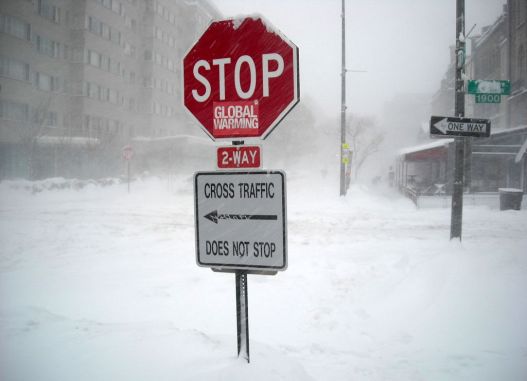
BETWEEN the start of 1997 and the end of 2014, average global surface temperature stalled. This 18-year period is known as the global warming “pause” or “hiatus” and has been the subject of much research and debate in peer-reviewed scientific journals.
THE rise in global temperatures that alarmed climate campaigners in the 1990’s had slowed so much that the trend was no longer statistically significant. This despite one-third of Man’s entire influence on climate since the Industrial Revolution occurring since February 1997.
THE pause took a pause during the 2015/16 super El Niño which was the strongest such event in recorded history and helped to make 2015 and 2016 the warmest years in the modern warm period. However, 2017 witnessed the biggest drop in global temps in recorded history, seen across most data sets, bringing temps back inline with 1997-2014 averages, rendering “the pause” alive and well, to date.
THERE…
View original post 1,262 more words
 Science is distorted by progressive philosophy