Facts about Zika virus and Microcephaly

Facts about Zika virus and Microcephaly.microcephaly

Is there a cause and effect link or merely a correlation of unrelated events? Here is the story and the facts so far.  In October 2015 an increase in microcephaly was reported in Brazil. A Brazilian doctor, Adriana Melo, at IPESQ, a research insti­tute in Campina Grande, was the first to report a firm link between Zika and microcephaly. Several months before, there had been an outbreak of Zika virus throughout Brazil. The increase in microcephaly cases occurred only in a coastal state in the northeast of the country. Why not the entire Zika epidemic region?

90% of the 1709 cases of microcephaly and birth defects were concentrated in this limited area. Of this number 1153 were diagnosed as microcephaly. There was no increase in other parts of the country, including an adjoining coastal state with a similar population, which only had 3 cases. This suggests there may be other contributing factors. Socio-economic factors may contribute since most of the mothers of the microcephalic babies were young, single, black and poor, living in small cities near larger cities. Additionally, this same northeastern region has always had the highest incidence of microcephaly in Brazil.

A study by the Latin American Collaborative Study of Congenital Malformations (ECLAMC) called for more controlled studies, and concluded that the data so far is inconclusive of a cause and effect link between Zika infection in the first trimester of pregnancy and microcephaly and similar nervous system defects. For an English translation of the original Portugese summary of the ECLAMC studies, see http://www.nature.com/polopoly_fs/7.33594!/file/NS-724-2015_ECLAMC-ZIKA%20VIRUS_V-FINAL_012516.pdf

This report discusses weaknesses in the methods used by IPESQ, recommendations for further studies and several other factors that may have caused or contributed to the birth defects as listed below.

  • Rumor may have caused over reporting due to active searches and over diagnosis. Brazil health authorities estimate that as many as 2/3 of cases are normally not reported to authorities. If the estimate is correct, this would partially account for an increase, but not the degree reported, so other factors must be involved. However, Brazil reports a rate of 0.5 per 10,000 births compared to EUROCAT of 2.85 per 10,000 births, indicating a gross under reporting.
  • Broadened criteria for microcephaly diagnosis from 3 standard deviations to 2 standard deviations below normal average age and sex adjusted head circumference, and no confirming follow up brain scans or autopsies in most cases.
  • Zika infection in the first trimester of pregnancy cannot be confirmed at the time of birth because the virus is short-lived in the body and will not be present in the mother. Unless the mother was diagnosed early in her pregnancy, occurrence and connection cannot be confirmed.
  • In the original studies other known causes were not ruled out such as STORCH (syphilis, toxoplasmosis, “other,” rubella, cytomegalovirus, herpes simplex), prematurity, diabetes of the mother and fetal alcohol syndrome, a major cause of microcephaly in Brazil.
  • Also not ruled out are possible co-infections with dengue or chikungunya, both present in the population in recent outbreaks. The dengue virus is similar to the Zika virus and difficult to differentiate in tests.
  • A low rate of yellow fever vaccination also seems to correlate to this incident. Yellow fever virus is similar to Zika virus and vaccination may offer some immunity to it.
  • At IPESQ Bovine diarrheal virus (BVDV) was found in brain tissue of 3 fetuses in a later study. This virus does not usually infect humans but is known to cause birth defects in cattle. If true, this may be significant, but Dr. Adriana Melo suspects it may be a contaminant in the sampling or testing procedures.
  • Contaminated water was not considered, although it is common for small cities without proper sanitation and water purification to have biologically contaminated water.
  • Nutrition was not considered in this study other than a mention of general socio-economic influences, although the CDC, NIH and other agencies recognize folic acid (a B vitamin) deficiency as one of the leading causes of neural tube defects (NTD), including microcephaly, anencephaly, and spina bifida. In a recent NIH study they found that other micronutrients may decrease the risk of NTD occurrence, including thiamin (B1), riboflavin (B2), niacin (B3), pyridoxine (B6), betaine (a B vitamin), vitamin A, retinol (A1), vitamin C, vitamin E and iron.

In conclusion, the “link” between Zika virus and microcephaly is far from proven because the original studies lacked scientific discipline and controls. More studies are needed to clarify what role the virus may play in these birth defects. However, it is probably best to take a precautionary approach until more is known.

Is it time to bring back DDT to eradicate the mosquitos that carry Zika and other diseases such as malaria, dengue fever, chikungunya, yellow fever and other diseases? Over 80% of infectious diseases are caused by insects. Assumed adverse environmental and health effects of this important insecticide have failed to materialize in many repeated controlled studies over the last 40 years. See “DDT: A Case Study in Scientific Fraud,” by J. Gordon Edwards, PhD entomology, Journal of American Physicians and Surgeons Volume 9 Number 3 Fall 2004, at http://www.jpands.org/vol9no3/edwards.pdf
References:

“Eclamc Final Document – V.3, Summary and conclusions of Documents 1-5,” December 30th, 2015 http://www.nature.com/polopoly_fs/7.33594!/file/NS-724-2015_ECLAMC-ZIKA%20VIRUS_V-FINAL_012516.pdf

“Neural Tube Defects and Maternal Intake of Micronutrients Related to One-Carbon Metabolism or Antioxidant Activity,” US National Institute of Health, Angela L. Chandler1, Charlotte A. Hobbs1, Bridget S. Mosley1, Robert J. Berry2, Mark A.Canfield3, Yan Ping Qi2, Anna Maria Siega-Riz4, Gary M. Shaw5, and National Birth Defects Prevention Study, in Birth Defects Res A Clin Mol Teratol. 2012 November ; 94(11): 864–874. doi:10.1002/bdra.23068.

  1. Department of Pediatrics, College of Medicine, University of Arkansas for Medical Sciences, Arkansas Children’s Hospital Research Institute, Little Rock, AR 72202
  2. Centers for Disease Control and Prevention, Atlanta, Georgia
  3. Birth Defects Epidemiology and Surveillance Branch, Texas Department of State Health Services, Austin, Texas
  4. Departments of Epidemiology and Nutrition, University of North Carolina School of Public Health, Chapel Hill, North Carolina
  5. Department of Pediatrics, Division of Neonatal and Developmental Medicine, Stanford University School of Medicine, Palo Alto, California

“Brazil’s birth-defects puzzle, Zika virus might not be only factor in reported microcephaly surge.” By Declan Butler, 28 July 2016, Nature, Vol. 535, Page 475-6.

“Zika epidemic uncovers Brazil’s hidden birth defect problem,” by Alex Cuadros, March 1, 2016, Washington Post

Disease Transmission by Arthropods,” E. J. L. Soulsby and William R. Harvey, Science 176, no. 4039 (1972): 1153–1155.

“DDT: A Case Study in Scientific Fraud,” by J. Gordon Edwards, PhD entomology, Journal of American Physicians and Surgeons Volume 9 Number 3 Fall 2004, at http://www.jpands.org/vol9no3/edwards.pdf

Zika and Microcephaly scam used to push Brazil abortion law change

Is changing Brazil’s abortion laws the real purpose for the claims of a Zika and microcephaly link?

See previous post The Truth About Zika Virus and Microcephaly for summary of the analysis showing failure to establish a cause and effect link between Zika & Microcephaly, and a broadening of the definition of Microcephaly.  WHO, other agencies and activists have ignored the original Latin American Collaborative Study of Congenital Malformations (ECLAMC) analysis invalidating the original research. See English translation at http://www.nature.com/polopoly_fs/7.33594!/file/NS-724-2015_ECLAMC-ZIKA%20VIRUS_V-FINAL_012516.pdf

Brazil, a Catholic nation, has allowed abortion only to save the life of the mother or rape, but recently allowed it for anencephaly (missing brain birth defect).  Was this a first step that prompted or preceded the bogus study and the alarming press releases?  The UN has gotten involved and is urging changing the abortion laws across Latin and South America.  Most of these countries are Catholic, so it could be considered an attack on the Church’s strict abortion stand.

See articles from the Guardian below about the campaign to change Brazil’s abortion laws and my notes in blue.


Zika emergency pushes women to challenge Brazil’s abortion law                   Sarah Boseley, The Guardian, Tuesday 19 July 2016

Women’s groups are set to challenge the law in the hope of making termination possible for women at risk of delivering a baby born with Zika-related defects. Women’s rights and gender equality supported by Women’s groups in Brazil are set to challenge the abortion laws this summer in the hope of making a safe and legal termination possible for women at risk of delivering a baby born with defects after exposure to the Zika virus.

“Women should be able to decide and have the means to terminate pregnancies because they are facing serious risks of having babies with microcephaly and also suffering huge mental distress during their pregnancies. They should not be forced to carry on their pregnancies under the circumstances,” said Beatriz Galli, a lawyer on bioethics and human rights who works for Ipas, a group dedicated to ending unsafe abortion.  (IPAS is an international abortion advocacy NGO.)

Lawyers for the organisations will present a legal challenge at the supreme court in the first week of August, when the court sits again after the winter break. They are coordinated by Anis Instituto de Bioética, which campaigns for women’s equality and reproductive rights. (founder of Anis worked with the group cited below)

The groups have obtained an opinion from lawyers at Yale University in the US, who argue that the Brazilian government’s policies on Zika and microcephaly have breached women’s human rights. The government “has failed to enact adequate measures to ensure that all women have access to comprehensive reproductive health information and options, as required by Brazil’s public health and human rights commitments”, says a review from the Global Health Justice Partnership, which is a joint initiative of the Yale Law School and the Yale School of Public Health. (“Health Justice” gives away the leftist, extreme position on “sexuality, gender and reproductive issues” of this group)

It is also critical of Brazil’s handling of the epidemic. Its “failure to ensure adequate infrastructure, public health resources and mosquito control programmes in certain areas has greatly exacerbated the Zika and Zika-related microcephaly epidemics, particularly among poor women of racial minorities”, the review says.

As of 7 July, there have been1,638 cases of reported microcephaly – an abnormally small head – and other brain defects in Brazil, according to the World Health Organisation. (almost all of these cases were in a small area in the northeast, but the Zika virus epidemic was country wide – a smoking gun against cause and effect) Women who do not want to continue their pregnancy because they have been infected, even if they have had a scan confirming brain defects in the baby, are unable to choose a legal termination. There is evidence of a rise in early abortions using pills obtainable online and fears that unsafe, illegal abortions will be rising too.

Galli said there were already about 200,000 hospitalisations of women who have undergone a clandestine termination every year, and a suspected 1 million illegal abortions before the epidemic. “We know that there are clinics operating in the very low-income poor settings in Rio and women are paying a lot of money and are risking their lives,” she said. (This appears to be an estimate based on a small number  of hospitals extrapolated to the entire country and scaled up by some arbitrary factor. From various sources the estimates vary widely.)

Campaigners who want to change the law are encouraged by a ruling the supreme court handed down in the case of babies with anencephaly in 2012. This is a condition where the foetus develops without a brain, making it impossible for the baby to be born alive. The case took eight years, but eventually the court voted eight to two in favour of making abortion legal in those circumstances. (Is this the precedent prompting the Zika-microcephaly scam?)

Before the ruling, there were two exceptions to the ban on termination in Brazil – when the pregnant woman’s life was at risk and when she had been raped. Anencephaly became the third, but campaigners acknowledge that it is not a simple precedent.

Debora Diniz, co-founder of Anis and professor of law at the University of Brasilia, said she was confident the court would understand that the situation is an emergency. They were not asking for the legalisation of abortion, she said, but “to have the right to abortion in the case of Zika infection during the epidemic”.

“It is not an abortion in the case of foetal malformation. It is the right to abortion in case of being infected by the Zika virus, suffering mental stress because you have this horrible situation and so few answers on how to plan and have a safe pregnancy,” she said. (emphasis added)

Campaigners have five demands: good information for women in pregnancy, improvements in access to family planning, giving women mosquito repellents, better social policies to help children born with birth defects because of Zika and financial support for parents.

Diniz points out that the worst hit are the poor. “The feeling in my well-to-do neighbourhood [in Brasilia] is that everything is fine,” she said. People have never met a woman with Zika or seen a baby with neurological defects. But when she goes to clinics in hard-hit areas such as Campina Grande in the north-east, everything revolves around Zika. (Zika is a mild disease with low fever and rash, and is often not even recognized. Zika has been seen in other countries for 40+ years with no birth defects.  Note the admission of limited area “affected.”)

“We have two countries in one country,” she said. “This is an emergency of unknown women. The trouble is they were unknown before the epidemic. I’m not being an opportunist. We have an epidemic and the epidemic shows the face of Brazilian inequality.”

https://www.theguardian.com/global-development/2016/jul/19/zika-emergency-pushes-women-to-challenge-brazil-abortion-law


UN tells Latin American countries hit by Zika to allow women access to abortion

Jonathan Watts in Rio de Janeiro, The Guardian, Friday 5 February 2016 (Note that the article above is 6 months after this one, but is still touting the same line)

Strict curbs on contraception and abortion are common in hard-hit nations but UN says women should have choice about degree of risk they’re willing to take

Women protest anti-abortion laws in El Salvador, which has one of the highest rates of Zika infection – and where even miscarriages can be treated as murder.

The United Nations high commissioner for human rights has called on Latin American countries hit by the Zika epidemic to allow women access to abortion and birth control, reigniting debate about reproductive rights in the predominantly Catholic region.

The rapidly spreading virus is suspected to have caused an uptick in foetal brain defects. Although this is not yet scientifically proven, many campaigners say women should have a choice about the degree of risk they are willing to take. (emphasis added. Note that this author at least admits the lack of scientific proof.)

This is currently very limited in Latin America due to strict controls on birth control and abortion, which range widely from country to country. On one extreme is El Salvador – which has one of the highest rates of Zika infection in the continent – where even miscarriages can be treated as murder.  On the other is Uruguay, where pregnancies can be terminated in any circumstances up to 12 weeks.

The UN commissioner is asking governments in Zika-affected areas to repeal policies that break with international standards on access to sexual and reproductive health services, including abortion.

“We are asking those governments to go back and change those laws,” said spokeswoman Cecile Pouilly on Friday. “Because how can they ask those women to become pregnant but also not offer them first information that is available, but the possibility to stop their pregnancies if they wish?”

The commissioner’s initiative was welcomed by the US-based NGO the Center for Reproductive Rights.

“Women cannot solely bear the burden of curbing the Zika virus,” said Charles Abbott, the group’s legal adviser for Latin America & the Caribbean. “We agree with the OHCHR that these governments must fulfil their international human rights obligations and cannot shirk that responsibility or pass it off to women. This includes adopting laws and policies to respect and protect women’s reproductive rights.”

Health authorities in at least five affected countries have advised women to avoid getting pregnant, with Colombia telling called on women to delay pregnancy for six to eight months, and El Salvador, suggesting women avoid getting pregnant for at least two years. (emphasis added)

Reproductive rights advocates say the recommendations to avoid pregnancy are irresponsible and do not take into account that most pregnancies in the region are unplanned.

This is not the only area of contention sparked by the rapid spread of the virus. Scientists in Brazil are also in disagreement about the significance of new studies – revealed on Friday – that show Zika is present in saliva, which some say should prompt warnings against kissing. (emphasis added)

The Fiocruz research institute in Rio de Janeiro said on Friday it had identified live samples of Zika in saliva and urine, which merited further research into whether these two fluids could be a source of contagion.

Until the outcome is known, Paulo Gadelha, president of the institute, suggested pregnant women should think twice about kissing anyone other than their partners or sharing drinking glasses or cutlery with people who might be infected.

Although he said this was “not a generalized public health measure”, the proposed precaution has been met with a mixture of fear and derision. Other scientists argue that it is extremely unlikely for the disease to spread in this way.

“The warning is crazy and unnecessary,” said Rubio Soares Campos, who co-identified the first case of Zika in Brazil.  “Just because the virus is present in saliva does not mean it can be transmitted that way.”

He argued that it was more likely to behave like dengue, another mosquito-borne disease that is found in human bodily fluids but cannot be spread that way.

But the latest news has increased the unease of the Brazilian public, who have watched with alarm as Zika has come from nowhere to infect an estimated 1.5 million people with an apparently growing range of suspected – but not yet scientifically proven – side-effects, including immune system disorders and brain defects in newborns. (emphasis added)

“It’s starting to scare the hell out of me,” said one Rio resident, Maria Teixeira. “At first everybody thought is was just a mild fever. Then, we were told it could develop into Guillain-Barré syndrome, and then that it was associated with horrible side-effects such as deformed babies. What’s next?”

https://www.theguardian.com/world/2016/feb/05/zika-virus-epidemic-abortion-birth-control-access-latin-america-united-nations

Bring back DDT – Save Africa and other impoverished areas

Bring back DDT – Save Africa and other impoverished areasmosquite-feeding

Over 80% of infectious diseases are caused by insects and other arthropods. DDT is desperately needed in impoverished countries where insect borne diseases kill and sicken millions every year, cutting lifespans and productivity.  Africa, India and South-Central Americas are most affected. This unpardonable crime amounts to continuing genocide of brown races by western powers.

Without these insect borne diseases, populations may increase at first, but better health will facilitate the building of infrastructure and industry that can raise millions out of poverty, ignorance and hopelessness.


“How much labor and waste of time these wicked insects do cause, but a ray of hope, in the use of DDT, is now held out to us.”            — Out of My Life and Thought: An Autobiography, Dr. Albert Schweitzer (translated from Ma Vie et Ma Pensee)


DDT worked so well that malaria and similar diseases were eradicated in most developed countries and were near eradication in poorer countries before DDT was banned in 1972 by EPA in spite of failure to find any harm to humans or the environment by an overwhelming body of research.


“To only a few chemicals does man owe as great a debt as to DDT. It has contributed to the great increase in agricultural productivity, while sparing countless humanity from a host of diseases, most notably, perhaps, scrub typhus and malaria. Indeed, it is estimated that, in little more than two decades, DDT has prevented 500 million deaths due to malaria that would otherwise have been inevitable. Abandonment of this valuable insecticide should be undertaken only at such time and in such places as it is evident that the prospective gain to humanity exceeds the consequent losses. At this writing, all available substitutes for DDT are both more expensive per crop-year and decidedly more hazardous.”

— National Academy of Sciences, Committee on Research in the Life Sciences of the Committee on Science and Public Policy, The Life Sciences: Recent Progress and Application to Human Affairs, The World of Biological Research, Requirements for the Future (Washington, D.C.: GPO, 1970), 432.                             (Emphasis added)


Rachel Carson’s 1962 book, Silent Spring, was filled with lies, half-truths, misinterpretation of research results and wild speculations.  Rather than being an attempt to protect humans and the environment as stated, it was really part of an effort to stop population increases in Africa, India and other impoverished countries.


“My own doubts came when DDT was introduced for civilian use. In Guyana, within two years it had almost eliminated malaria, but at the same time the birth rate had doubled. So my chief quarrel with DDT in hindsight is that it has greatly added to the population problem.”

                          —Alexander King, cofounder of the Club of Rome, 1990


Population Bomb by Paul Erilich (1968) was a another book based on Malthusian, eugenicist, racist lies, aka propaganda.


“The battle to feed all of humanity is over. In the 1970s hundreds of millions of people will starve to death in spite of any crash programs embarked upon now. At this late date nothing can prevent a substantial increase in the world death rate…”                              — Paul Ehrlich, The Population Bomb, 1968


Population control groups such as the Club of Rome, supported by charitable foundations such as the Rockefeller Foundation, continue to spread the myth of overpopulation.  Many rural areas have too few healthy people to build roads, other infrastructure and industry.

In 1972 DDT was banned by US EPA Administrator William Ruckelshaus in spite of overwhelming scientific evidence presented at hearings that refuted claims of harm by activist groups such as Environmental Defense Fund and Audubon Society.


“DDT is not a carcinogenic, mutagenic, or teratogenic hazard to man. The uses under regulations involved here do not have a deleterious effect on fresh water fish, estuarine organisms, wild birds, or other wildlife…and…there is a present need for essential uses of DDT.”                — EPA Administrative Law Judge Edmund Sweeney, after months of hearings, “In the Matter of Stevens Industries, Inc., et al., L.F. & R. Docket Nos. 63, et al.). Hearing Examiner’s Recommended Findings, Conclusions, and Orders, April 1972.” (40 CFR 164.32). (Consolidated DDT Hearings)  As summarized in Barrons, May 1, 1972


Beginning the 1970’s, US AID, UN WHO, UNESCO and the World Bank have pressured leaders of poor countries to discontinue DDT as a prerequisite to receiving essential aid. This continues to the present with exception of recently allowing limited spraying of interior wall in selected areas.

Although DDT is the most studied pesticide on the planet, it is still listed as an environmental toxin and possible carcinogen because the EPA listing has not changed, in spite of all of the studies that failed to find harmful effects on humans or the environment. It is much safer and more economical than any of the proposed replacements.

Verifying the Claims of Silent Spring

None of Rachel Carson’s “facts” about environmental and human harm were true. Most of the facts below, except where noted, are from “DDT: A Study in Scientific Fraud,” by J. Gordon Edwards, Journal of American Physicians and Surgeons Volume 9 Number 3 Fall 2004. (See link below)

Dr. Edwards examined each of Silent Spring’s claims and found them wrong and possibly fraudulent.

Not one person has been harmed or died from DDT.

  • The only death associated with DDT was a 3 yr. old child that drank a solution of DDT in kerosene, which is a hydrocarbon known to be toxic.
  • J. Gordon Edwards was a Ph.D. entomologist who sometimes ate a spoonful of DDT powder at his lectures as a demonstration of its safety. He suffered no significant ill effects and died of a heart attack at age 84 while hiking in the Rockies.

DDT is not carcinogenic, mutagenic or teratogenic

  • “Workers in the Montrose Chemical Company had 1,300 man-years of exposure, and there was never any case of cancer during 19 years of continuous exposure to about 17mg/man/day.”
  • “Concerns were sometimes raised about possible carcinogenic effects of DDT, but instead its metabolites were often found to be anti-carcinogenic, significantly reducing tumors in rats.”
  • Expected rise in leukemia in children and breast cancer years later in girls exposed during puberty never happened.

Bird deaths, thin egg shells and buildup in the environment have proven to be false.

  • Bird deaths at the University of Michigan, cited by Carson, were not from DDT, but were probably from soil fungicide containing mercury. In later tests, mercury was found in the soil and earthworms there. Other areas did not experience bird deaths from spraying of DDT. Carson’s Source was: Bird Mortality in the Dutch elm disease program in Michigan, Bulletin 41, Cranebrook Institute of Science by George John Wallace; Walter P Nickell; Richard F Bernard
  • According to Audubon Society Annual Christmas Bird Counts, bird populations actually increased during the thirty years of DDT use. Numbers rose from 90 birds seen per observer in 1941 to 971 birds seen per observer in 1960.
  • The eggshell thinning studies cited by Carson could not be replicated and had actually reduced dietary calcium, needed to build egg shells, of experimental birds to get that result.
  • Museum specimens compared to wild population eggs may have led to false claims of thinning because the museums used the best specimens available; natural variability in the wild may have been interpreted as thinning. “the whole idea that pesticides are concentrated as one moves up the food chain, which is crucial to Carson’s arguments about distant and delayed effects, has become increasingly dubious in the years that followed” (Fleming, New Conservation Movement, 31). Source: Reading Rachel Carson by Charles T. Rubin
  • DDT is not metabolized by birds and is rapidly excreted in their droppings.
  • “The counts of raptorial birds migrating over Hawk Mountain, Pennsylvania, indicated that there were many more hawks there during the “DDT years” than previously. The numbers counted there increased from 9,291 in 1946 (before much DDT was used) to 13,616 in 1963 and 29,765 in 1968, after 15 years of heavy DDT use.”

Aquatic life has not been harmed by DDT; it is practically insoluble in water, with only 1.2 parts per billion at saturation.

  • A study cited by Carson claimed 500 ppb DDT in seawater inhibited photosynthesis and killed algae. The problem with this study is that alcohol was added to the tank to dissolve the DDT in the water. Alcohol alone would do that.
  • The assumption of persistence of DDT in seawater for decades was also challenged. Tests showed DDT and its metabolites disappeared in as few as 38 days.

References:

See “DDT: A Study in Scientific Fraud,” by J. Gordon Edwards, Journal of American Physicians and Surgeons Volume 9 Number 3 Fall 2004. On the web at:

http://www.jpands.org/vol9no3/edwards.pdf

See also “The Truth about DDT and Silent Spring” by Robert Zubrin, adapted from Robert Zubrin’s Merchants of Despair: Radical Environmentalists, Criminal Pseudo-Scientists, and the Fatal Cult of Antihumanism, published in 2012, in New Atlantis Books series. On the web at:

www.thenewatlantis.com/publications/the-truth-about-ddt-and-silent-spring

Stanford Universities Paul Ehrlich Wanted To Poison Black Africans To Fight Climate Change

Stanford Universities Paul Ehrlich Wanted To Poison Black Africans To Fight Climate Change

Giving society cheap, abundant energy would be the
equivalent of giving an idiot child a machine gun
.”
– Prof Paul Ehrlich, Stanford University

•••

Stanford Universities population freak and climate catastrophist Paul Ehrlich recently featured as a guest on ABC Australia’s popular “Q and A” current affairs hour.

“Q and A’s” proud boast, popular with its majority Leftist audience, is being champions of equality, compassion and to strictly condemn, name and shame those who fit a predetermined racist bent. I.e conservatives.

That said, did any panel members or audience question Ehrlich about his preference to which colour should be eliminated first?

I thought “Black-Lives-Matter” or is that simply another victomhood slogan designed by the Left to divide and silence?

Screen Shot 2016-04-24 at , April 24, 8.18.18 AM.png

GST, Gonski, Population and Diversity | Q&A | ABC TV

•••

Stanford Universities Paul R. Ehrlich via Steve Goddard’s Real Science:

Ehrlich Wanted To Poison Africans In Order To Control His Own Neurosis

http://select.nytimes.com

The Evening News – Google News Archive Search

Notable comments from Climate Change / Global Warming fear-monger and population freak Paul Ehrlich :

  • “Giving society cheap, abundant energy would be the equivalent of giving an idiot child a machine gun.” – Malthusian, eco-alarmist Paul R. Ehrlich in The American Spectator, September 6, 1992
  • “In ten years all important animal life in the sea will be extinct. Large areas of coastline will have to be evacuated because of the stench of dead fish.” – Paul R. Ehrlich, Earth Day 1970
  • “The battle to feed humanity is over. In the 1970s the world will undergo famines . . . hundreds of millions of people (including Americans) are going to starve to death.” – Paul R. Ehrlich (Population Bomb 1960)
  • “I would take even money that England will not exist in the year 2000.” – Paul R. Ehrlich (1969)
  • “By 1985 enough millions will have died to reduce the earth’s population to some acceptable level, like 1.5 billion people.” – Paul R. Ehrlich (1969)
  • “We’ve already had too much economic growth in the United States. Economic growth in rich countries like ours is the disease, not the cure.” – Paul R. Ehrlich. Quoted by Dixy Lee Ray in her book Trashing the Planet (1990)

Alarmist Paul R. Ehrlich now works for The Royal Society, (to bolster their credibility /sarc) ~ “Nullius In Verba”

https://climatism.wordpress.com/2016/04/24/stanford-universities-paul-ehrlich-wanted-to-poison-black-africans-to-fight-climate-change/


Jamie Spry's avatarClimatism

Giving society cheap, abundant energy would be the
equivalent of giving an idiot child a machine gun
.”
– Prof Paul Ehrlich, Stanford University

•••

Stanford Universities population freak and climate catastrophist Paul Ehrlich recently featured as a guest on ABC Australia’s popular “Q and A” current affairs hour.

“Q and A’s” proud boast, popular with its majority Leftist audience, is being champions of equality, compassion and to strictly condemn, name and shame those who fit a predetermined racist bent. I.e conservatives.

That said, did any panel members or audience question Ehrlich about his preference to which colour should be eliminated first?

I thought “Black-Lives-Matter” or is that simply another victomhood slogan designed by the Left to divide and silence?

Screen Shot 2016-04-24 at , April 24, 8.18.18 AM.png

GST, Gonski, Population and Diversity | Q&A | ABC TV

•••

Stanford Universities Paul R. Ehrlich via Steve Goddard’s Real Science:

Ehrlich Wanted To Poison Africans In Order To Control…

View original post 396 more words

AGW Claims vs. Truth – 5. Developed countries are to blame for increased manmade carbon dioxide because they use most of the fossil fuels.

Global coal consumption

Truth: This is partially true. Industrialization is steadily increasing in developed and developing countries such as China and India. While developed countries are putting restrictions on themselves, international agreements exempt developing countries from such restrictions. These increases more than offset any gains from restrictions on developed countries.  However, see previous post AGW Claims vs. Truth – 2 & 2b for why we shouldn’t worry about increased CO2

In addition to industrialization, increased cooking fires and subsistence agriculture to feed an increasing population are also significant contributing factors. CO2 is CO2. There is no escape clause for renewable sources. It doesn’t matter whether it is from fossil fuels or burning dung or wood. Increased population in developing countries means more slash and burn agriculture and more cooking and heating by burning organic material. The modelers assume that renewable sources are exempt as causes because it is a renewable source. This is faulty thinking. Slash and burn agriculture of one acre releases a tenth of the carbon dioxide as ten acres. Subsistence agriculture is harmful to the environment because it results in depletion of soils so that it is necessary to clear more forest lands.

Subsistence farming requires burning to release the nitrogen for crops. Modern agriculture releases far less carbon dioxide than subsistence farming, so keeping people in poverty makes no sense unless your aim is to control or reduce the population in developing countries. It would be better if we helped developing countries develop modern agriculture and industry so they can clean up their act. When people are worried about how to feed their families, there is little time or incentive to do anything about pollution or the environment. In many underdeveloped countries the tradition of having as many children as possible is mostly due to the high rate of mortality in infancy and childhood from unchecked diseases, poor diet, indoor air pollution and poverty. Without the incentive of high infant and childhood mortality, family size and populations could naturally stabilize.

World Life Expectancy Map
World Life Expectancy Map which tracks well with Poverty Rates
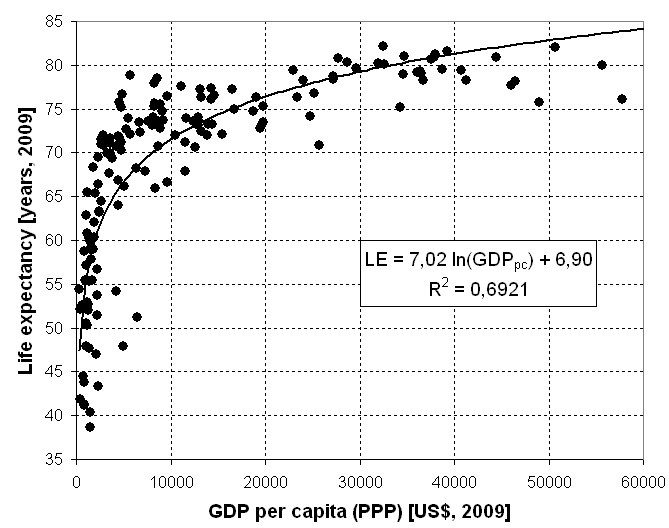
LifeExpectancy_GDPperCapita - wiki
Life Expectancy vs. GDP per capita, 2009, World Bank


Anti-humanism, Environmentalism and the Overpopulation Myth

The roots of environmentalism go back to the eighteenth century in the form of the overpopulation myth of Malthusianism, which was all about limiting the human population to prevent a predicted Malthusian Catastrophe, i.e. mass starvation, and for genetic purity, especially among supposedly genetically inferior groups e.g. certain races, cultures and the chronically poor. This is based on the progressive beliefs in materialism, (i.e. there is no spiritual side, only the material we can see and touch), and humanism, (i e. man is the measure of everything and determines morals to suit his circumstances).  From these progressive philosophies grew socialism, communism, fascism, the eugenics[1] movement and environmentalism, all of which are about control of the masses by an elite few, and all are basically anti-human, anti-development and anti-freedom.

In 1798 Thomas Malthus published An Essay on the Principles of Population[2]  in which he predicted future starvation based on the assumption that the rate of population growth would far surpass the growth rate of food supplies. Using this, he proposed draconian measures to “fix” an assumed overpopulation problem at a time when world population was below one billion.  Malthus made two major erroneous assumptions:

  1. Genetic inferiority and enhanced fertility of less accomplished peoples
  2. No improvement in crop yields per acre.

He assumed that the only way to grow more food was to increase the number of acres under cultivation, which limited the total “carrying capacity” of any region and indeed the world. We now know that yields have improved by orders of magnitude through things such as introduction of more prolific, disease resistant plant varieties and high yield hybrids, nitrogen and mineral fertilization, mechanization and control of insect and rodent pests. Nor did he foresee the natural reduction of family size that usually occurs when people are raised beyond near-starvation subsistence, and when diseases are controlled so that high childhood mortality is reduced.

Using these false assumptions as a “reason,” he advocated government measures to reduce population growth rates among the poor such as regulating marriage, educating for moral abstinence, as well as birth control and sterilization. However, he opposed nutritional relief and improved hospital access that would have reduced infant mortality and extended life spans among the poor.  In his opinion, helping the poor only made the supposed overpopulation problem worse.  He extended this same philosophy to Africa where he observed that the Tsetse fly and Malaria helped to keep human population numbers and lifespans low, which he saw as a good thing.

This same upside down philosophy persists today among progressives who only typically want to manage the poor while keeping them poor.  Malthus was pushing evolution and eugenics long before Charles Darwin[3] and Frances Galton[4].   In The Descent of Man, Charles Darwin assumed that the superior races (white Europeans) would eventually cause the extinction of the inferior races (black and brown). Francis Galton coined the term eugenics for a theory about improving the human race through selective breeding and exclusion from reproduction of supposedly genetically inferior groups.


“At some future period, not very distant as measured in centuries, the civilized races of man will almost certainly exterminate and replace the savage races throughout the world.

—Charles Darwin, Descent of Man


Because genetic inferiority of certain races, cultures and the poor has largely been rejected by more enlightened geneticists and the public in general, (but apparently not for powerful population control supporters), along with vastly improved food production rates, environmentalism is the latest cause celebre to cover brutal inhumanity to man in the form of forced or coerced population control in places like China, lndia and Africa.  The shift from eugenics or racial purity to environmentalism is based on the false assumption that the world is overpopulated, resulting in harm to the environment.  This makes environmentalism and population control a perfect match and a good fit for the progressive elite seeking control.

Is it true that the world overpopulated? Only if agriculture had remained as it was in the eighteenth century.  However, the advances in crop yields are more than enough to feed the world.  There is more than enough food for all.  The reason for starvation and poor nutrition is usually political mismanagement or worse, such as well-meaning environmental and population control philanthropic societies, NGOs, UN and local governments intentionally keeping the poorest in their disease ridden squalor without adequate infrastructure to provide for basic needs in order to control the people.  A healthy and educated population is much harder for a dictator to control and thereby remain in power.

The best way to stabilize population, if that is the goal, is to raise the standard of living by providing employment, transportation, electricity, medical care, education, clean water and adequate food. It is a well known fact that family size is naturally reduced when living standards are improved beyond the point where excess children are needed to insure replacement of those lost in early childhood to disease and malnutrition.  It can be argued that the population is too low in many areas to provide the cooperation and man power to provide better facilities without outside aid. Only cities are overpopulated, and that is usually by choice. As population numbers have grown, the world has seen an increase in the standard of living, as reflected in the global GDP per capita, due to division of labor and shared responsibility for both agriculture and developing infrastructure.  We should be doing all we can to raise the world’s poor out of poverty. Caring for the environment is the last thing on the minds of people who are having difficulty feeding their children.  Raising their standard of living is the best thing we could do to stabilize the population and protect the environment. Unfortunately, the progressives would rather do the opposite for ideological reasons.

I have seen the benefits of higher population and the negative side of low population myself. I grew up in an area of the Appalachian Mountains where population is low. Services that are available in the cities and towns a couple of hours away are not or only marginally available in these mountainous rural areas.  Even finding a plumber or electrician is difficult.  Although the situation is better now because of improvements in highways, many in the area still must travel to the cities for proper medical care.  Lower population means lower tax basis, fewer businesses, less opportunity. It has been difficult getting businesses, whether they are medical facilities, manufacturing, commercial or food and entertainment,  interested in locating in an area where the customer and workforce base are low.  It has been particularly difficult getting doctors to come and stay.  It hasn’t been that long since the first fast food restaurant came into the area.  I bring this up to illustrate the logic of raising the population to improve living standards.  Granted, this is a far cry from poor villages in other countries, but it still illustrates the point that higher population brings higher living standards.

[1] Eugenics is the “science” of improving the human race by selective breeding of genetically superior people and preventing supposedly genetically inferior people from reproducing.

[2] Thomas Robert Malthus, An Essay on the Principles of Population, 1798, London

[3] Charles Darwin, On the Origin of Species , 1858, London, The Descent of Man, 1871

[4] Francis Galton, 1865 article “Hereditary Talent and Character”, Hereditary Genius., 1869, Inquiries into Human Faculty and Its Development, 1883.