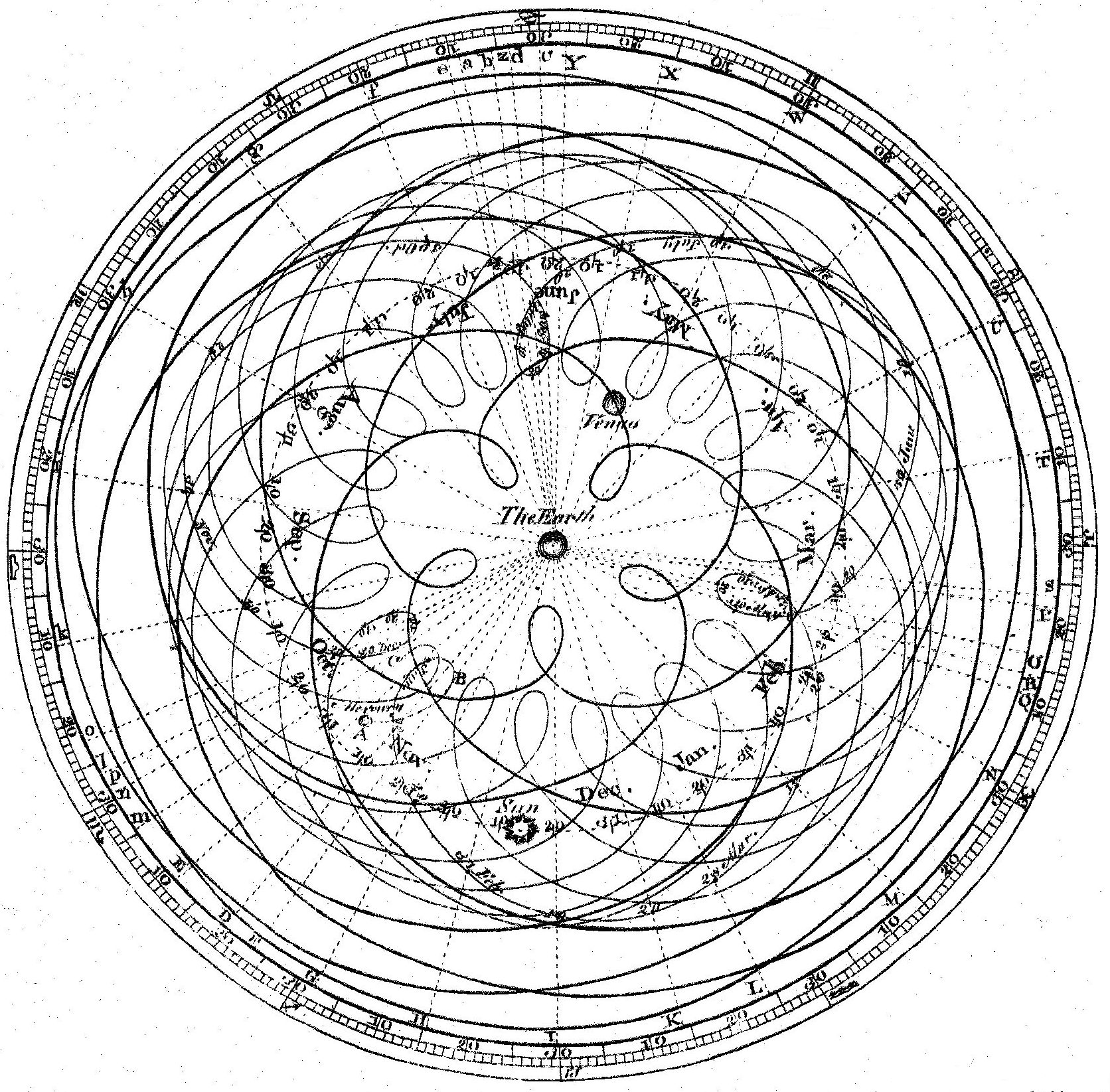
Giovanni Domenico Cassini, 1625–1712
Behind all other philosophies, there are two basic ways of looking at the universe, the materialistic and the transcendental views.
NOTE: Do not confuse transcendental as used here with the so-called Transcendentalism movement of the nineteenth century which was really a Naturalistic or agnostic philosophy.
NOTE: Materialism, in the philosophical sense, is not the love of things as the term is used today, having been corrupted by the popular culture. It is really the denial of the existence of anything beyond the material world.
The materialist view says the physical universe that we see and interact with is all that there is, and it is its own explanation for being. The transcendent view says there must be something more behind and above it all, an overarching force that is responsible for existence itself and the physical laws that give order to the universe. This blog reflects my transcendental beliefs that there must be something beyond the material that is beyond the reach of science. As a transcendentalist and a scientist, I have no reservations about science and religion being compatible.
“Try and penetrate with our limited means the secrets of nature and you will find that, behind all the discernible concatenations, there remains something subtle, intangible and inexplicable.”
Albert Einstein
Since materialists only believe in what they can see and touch, pure materialists are necessarily atheists and have a great deal of reservations about religion, especially as it relates to science. Even the agnostic, who is uncertain about a transcendent quality to the universe, is not comfortable with the notion that science and religion are compatible, since he believes that there is no way for us to know about anything outside the material world.
Joke: What do you get when you cross an insomniac agnostic and a dyslexic? Answer: A person who stays up all night wondering if there is a Dog.
Chico Marx (often attributed to Groucho Marx)
Science is the pursuit of truth about the predictable, repeatable and measurable aspects of the universe with which we can or could conceivably interact[1].
Anything beyond that is not science but philosophy, no matter how much mathematics or “supporting” data is attached. A one-time event that cannot be tested or repeated, such as the origin of the universe or the origin of life cannot be elucidated purely through science.
Materialists/atheists sometimes use the fact that we can only observe and test the physical world as proof that there is nothing else beyond that. Although science, in its truest sense, is an unbiased quest for the truth, that does not mean the people in the sciences are always unbiased or have no hidden agendas outside of science. Similarly, although religion seeks answers from a God centered perspective, man’s interpretations of God’s revealed truth may at times lead to error through misunderstandings or cultural bias.
As a Christian, I believe God’s revelations in the Bible are true, but I also believe that man’s interpretations can sometimes be wrong. An example of this from history is the supposed flat-Earth belief in the European Middle Ages, (which, by the way, is a nineteenth century myth[2]). Those few holding this belief had interpreted “… the four corners of the earth,” in Isaiah[3] and Revelation[4] to mean the Earth had four literal corners and was thus flat. What was obviously meant were the four directions.
Even at that time, the belief in a flat Earth was not widespread and a spherical Earth had been common knowledge[5] especially for sailors who clearly saw the curvature of the horizon and saw sails appear over it before the ships appeared. It was evident in earlier ages that the Earth cast a circular shadow on the moon, especially during lunar eclipses. The ancient Greeks and other cultures in antiquity knew the Earth was a sphere and actually calculated its circumference by triangulation.
“The discovery of truth is prevented more effectively, not by the false appearance things present and which mislead into error, not directly by weakness of the reasoning powers, but by preconceived opinion, by prejudice.”
Arthur Schopenhauer
Contrary to what you may have been taught, true science and Christianity are thoroughly compatible, and Christians have contributed greatly to the foundations of science. Anyone who believes in God must also believe that God invented science and gave us the ability to understand the laws of the universe. More than any other religion, Christianity taught that God had created an orderly, understandable universe that obeys natural laws. In this view, it is left to individuals to discover what that order and those laws are.
- Science seeks the truth of WHAT, WHERE, WHEN and HOW things happen.
- Religion seeks the truth of WHY things happen, WHO might have caused them and for “what” ultimate Purpose.
Therefore, we would not expect science to say anything at all about the why and who of religion, or for religion to necessarily seek spiritual answers in the what, where and how of science. The two are separate but complementary parts of the whole picture. They both seek to understand our “world” but approach it from different directions. Some agenda driven scientists who campaign against a belief in God have stepped beyond science into what amounts to a religion of evangelical atheism, which is also based on faith. Just because science can only study the material world does not mean there is nothing else outside it that is beyond the reach of science.
Because they choose not to believe in God or miracles, materialist atheists choose to define a miracle as breaking the physical laws of the universe. However, it is not necessary for God to break and act outside of his own physical laws to do things we don’t understand based on our limited knowledge and beliefs. Based on superior knowledge of a system he invented, God can use the natural laws in unique ways to do things seemingly impossible perhaps even including manipulating time and space. Similarly, magic acts appear to break the laws of logic but are really doing something else that is hidden from the audience.
A closed minded, dogmatic scientist is an oxymoron[6] and is not a true scientist at all regardless of her credentials. Science is a developing discipline where new knowledge sometimes radically changes accepted theories. The universe is filled with mysteries and unanswered or unanswerable questions. A true scientist must keep an open mind about all possibilities and admit that some things are not known or not even knowable. It is not necessary to make up clever stories to compensate for the missing knowledge, much less teach such speculative beliefs as settled science. It is OK to say “I don’t know” unless you are pushing an agenda other than truth. When scientists fill in gaps in knowledge with clever “just-so” stories, it is a Science of the Gaps[7] and is not science at all.
As a scientist, I use the tools of science to search for truth about our world. I think it is safe to say that there are prejudices and fiercely held beliefs on both sides. But beliefs are not facts no matter how many are convinced that they are true. It makes no sense to hold on to a view that has been shown to be in error, simply because it is “accepted and established.” Nor is it useful to stoop to name calling, slurs and other put-downs of those on the other side of an issue. Consensus is alien to science and is only properly used for opinions, not facts, in cultural and political settings. Consensus can lead into egregious errors. Remember, before Copernicus and Galileo the consensus was that the entire universe revolved around the Earth. Truth is never the result of a popular vote.
“To be a faultless member of the flock, first one must be a sheep.”
Albert Einstein
Nowhere is it more evident today than in the subjects of evolution and the origins of life and the universe. Both sides of these questions are often so steeped in their own emotional capital that their judgment and willingness to honestly debate may be clouded. For some, there are no grounds for discussion, much less any compromises. The other side is often viewed as either evil, ignorant or having sinister hidden motives. Science by definition is the quest for truth about our world; it has no business being closed minded and dogmatic to the point of preaching against religious belief or God based on materialist beliefs and prejudices.
The actions of a scientist are closer to a religion than true science when he insists that religion is bad and that everyone must believe as he does. Unfortunately, evangelical atheism has often used science to further its “religion.” This has also been true of the Progressive and Socialist political agendas that often go hand in hand with it. Both philosophies have effectively used the all too gullible press as a weapon in their war on both religion and truth. It is impossible to separate science, politics, popular culture, religion and the role of the press in the search for truth. They are all irreversibly entangled.
Because evolution is such an emotionally charged subject, when I started to write my book I was inclined to give it a minor role compared to other mysteries. However, when I studied it further from all sides, I realized that evolution was the beginning of and the role model for promoting most of the later dogma disguised as science, and belief disguised as truth. Its presentation in the popular press rather than peer reviewed scientific journals[8], the political style of rhetoric used to promote it, and the types of defensive arguments employed, taught later generations how to promote their points of view in other fields. In many areas, science has been hijacked by materialists who promote progressive and anti-God views through philosophical story-telling disguised as science.
Evolution is also a good example of entrenched dogma that the adherents insist must be accepted without question. As such, it is closer to myth than science. Science is never chiseled in stone. It is a changing discipline where nothing and no one are held sacred or inviolable. New knowledge is always to be encouraged and should never be seen as a threat. If any area of science does stifle dissenting views, it is not science anymore; it is a religion or at least a strongly held philosophy. Unfortunately, the fields of evolution, origin of life, cosmology and particle physics have become so dogmatic that dissent or differing views are attacked, defunded and blocked from publication in scientific journals.
“In view of such harmony in the cosmos which I, with my limited human mind, am able to recognize, there are yet people who say there is no God. But what makes me really angry is that they quote me for support of such views.”
Albert Einstein
[1] The Capricious Cosmos by Joe Rosen, 1991, Macmillan, New York.
[2] Popularized in A History of the Life and Voyages of Christopher Columbus, 1828, by Washington Irving.
[3] Bible: Isaiah 11:12 – “And he shall set up an ensign for the nations, and shall assemble the outcasts of Israel, and gather together the dispersed of Judah from the four corners of the earth.” (King James version)
[4] Bible: Revelation 7:1 – “And after these things I saw four angels standing on the four corners of the earth, holding the four winds of the earth that the wind should not blow on the earth, nor on the sea, nor on any tree.” (King James version)
[5] Bible: Isaiah 40:22 – “It is he that sitteth upon the circle of the earth, and the inhabitants therof are as grasshoppers; that streatcheth out the heavens as a curtain, and spreadeth them out as a tent to dwell in.” also Job 26: 7 – “He stretcheth out the north over the empty place, and hangeth the earth upon nothing.” (King James version)
[6] Oxymoron – a combination of contradictory or incongruous words such a “cruel kindness”
[7] A takeoff on the God of the Gaps claim of atheists to characterize any belief in a creator or design.
[8] Except for the original verbal presentation of a paper on the subject to the Linnean Society.

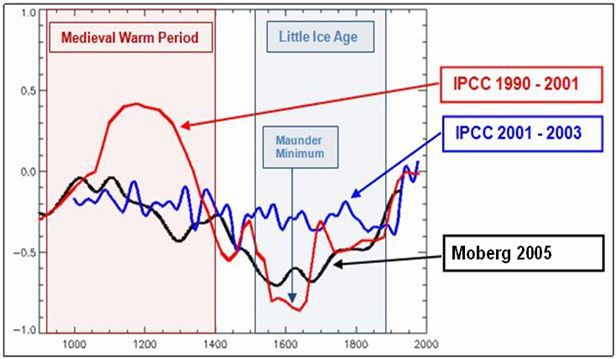
 Science is distorted by progressive philosophy