Opening Scientific Exploration

What do we really know about our world? What is fact and what is opinion? What is knowledge and what is belief, and can we know the difference? Isn’t science about facts and religion about faith? Well, not entirely. Science, with all of its trappings of mathematics, still is subject to interpretation, ie, belief, based on assumptions. There is as much faith in science as in anything else we do. Consensus and computer models do not change a belief into a fact.

DO WE KNOW:

  • that there was a Big Bang that started the universe?
  • that black holes, parallel universes, exotic dark matter or dark energy exist ?
  • how all of the elements and physical laws originated?
  • how the galaxies, stars, the solar system, planets, the Earth or the moon were formed?
  • the true distances to other galaxies?
  • the age of the universe, our galaxy or the Earth?
  • that the universe, including space itself, is expanding?
  • that the fourth dimension or multiple dimensions exist?
  • that a dimension known as space-time exists?
  • what gravity is?
  • what time is?
  • what life is?
  • that life spontaneously arose from a soup of chemicals?
  • that all species evolved gradually from a common ancestor?
  • that the mind is just a program created by the brain?
  • what consciousness, thought or memory are?
  • what sleep is?
  • what instinct is?
  • why we have free will and are not just robotic slaves to our genes?
  • why we have abilities and skills that are not necessary or are detrimental to survival?

The answer to most of these and many other questions about science and our understanding of our world is MAYBE, NO, or PROBABLY NOT.

The bad news is that we don’t know as much as we thought we knew.

The good news is that we don’t know as much as we thought we knew.

Bringing some accepted scientific “facts” or the evidence supporting them into question will not tear down our knowledge base. On the contrary, it will open doors to more exciting discoveries, unconstrained by fixed paradigms[1] or established systems into which they must be fitted. By questioning everything, we can look at all things with fresh eyes and with minds open to all possibilities, regardless of established beliefs. This should lead to more scientific study and discoveries, not less. Robust scientific theories and real facts will be strengthened by such questioning.

Only the theories without proper basis or support will suffer. Even those will benefit from fresh approaches that may come closer to solving some of the remaining mysteries than is currently possible. It is to our benefit that true understanding can develop unconstrained by dogma[2]. Fixed dogma tends to constrain and inhibit new knowledge, especially if the new knowledge does not fit neatly into the established picture.


“Michael Faraday warned against the tendency of the mind ‘to rest on an assumption’ and when it appears to fit in with other knowledge to forget that it has not been proved.”

W. I. B. Beveridge, The Art of Scientific Investigation


[1] Paradigm – A picture or view of reality into which all facts and beliefs must fit.

[2] Dogma –established opinion put forth as authoritative, especially without adequate grounds.

Materialist versus Transcendental Views

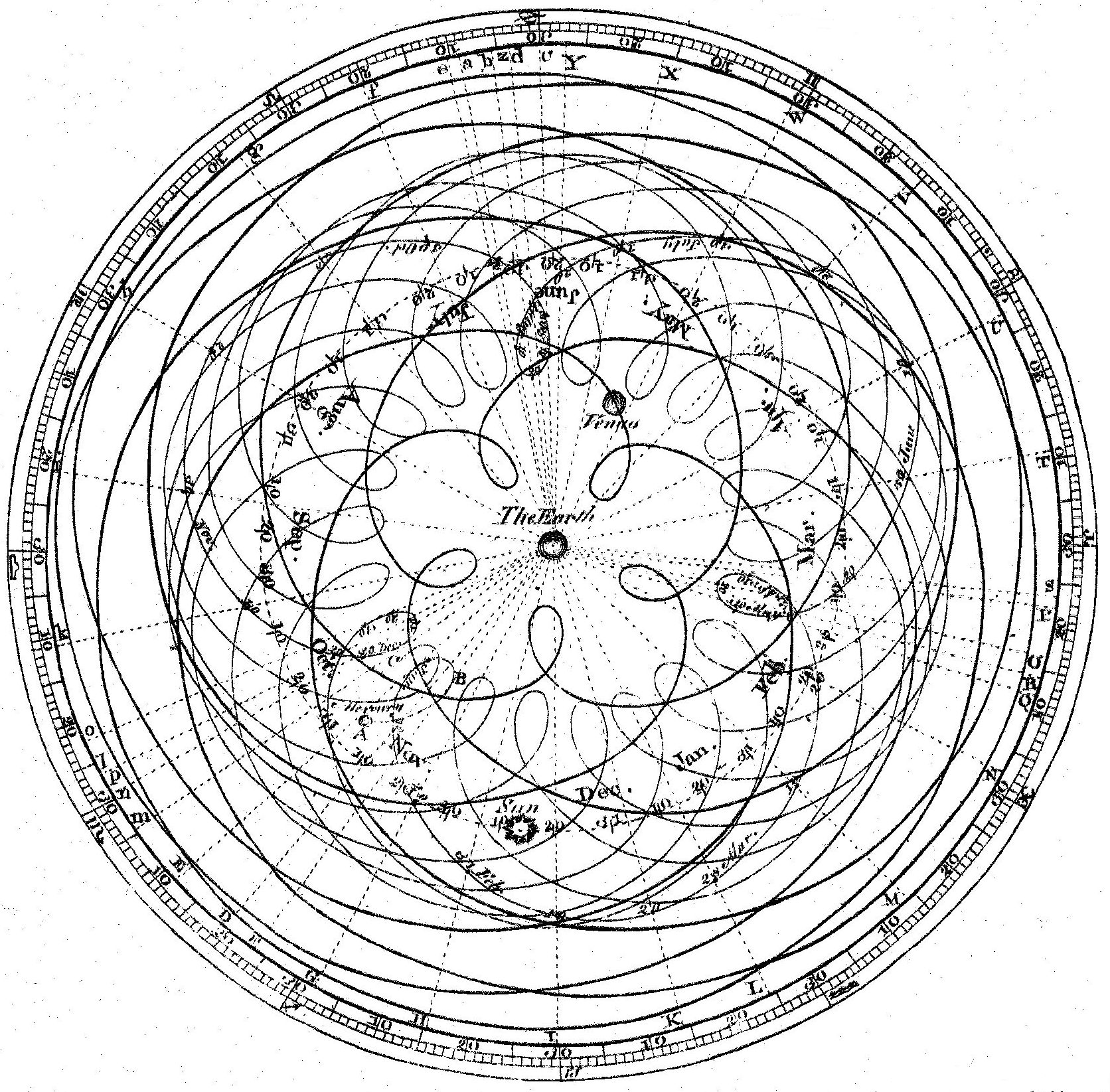
The apparent movement of sun and planets with Earth as center Giovanni Domenico Cassini, 1625–1712
The apparent movement of sun and planets with Earth as center
Giovanni Domenico Cassini, 1625–1712

Behind all other philosophies, there are two basic ways of looking at the universe, the materialistic and the transcendental views.


NOTE: Do not confuse transcendental as used here with the so-called Transcendentalism movement of the nineteenth century which was really a Naturalistic or agnostic philosophy.


NOTE: Materialism, in the philosophical sense, is not the love of things as the term is used today, having been corrupted by the popular culture. It is really the denial of the existence of anything beyond the material world.


The materialist view says the physical universe that we see and interact with is all that there is, and it is its own explanation for being. The transcendent view says there must be something more behind and above it all, an overarching force that is responsible for existence itself and the physical laws that give order to the universe. This blog reflects my transcendental beliefs that there must be something beyond the material that is beyond the reach of science. As a transcendentalist and a scientist, I have no reservations about science and religion being compatible.

      “Try and penetrate with our limited means the secrets of nature and you will find that, behind all the discernible concatenations, there remains something subtle, intangible and inexplicable.”                                                       

                                                                                    Albert Einstein

Since materialists only believe in what they can see and touch, pure materialists are necessarily atheists and have a great deal of reservations about religion, especially as it relates to science. Even the agnostic, who is uncertain about a transcendent quality to the universe, is not comfortable with the notion that science and religion are compatible, since he believes that there is no way for us to know about anything outside the material world.


Joke: What do you get when you cross an insomniac agnostic and a dyslexic?   Answer: A person who stays up all night wondering if there is a Dog.

                        Chico Marx (often attributed to Groucho Marx)


Science is the pursuit of truth about the predictable, repeatable and measurable aspects of the universe with which we can or could conceivably interact[1].

Anything beyond that is not science but philosophy, no matter how much mathematics or “supporting” data is attached. A one-time event that cannot be tested or repeated, such as the origin of the universe or the origin of life cannot be elucidated purely through science.

Materialists/atheists sometimes use the fact that we can only observe and test the physical world as proof that there is nothing else beyond that. Although science, in its truest sense, is an unbiased quest for the truth, that does not mean the people in the sciences are always unbiased or have no hidden agendas outside of science. Similarly, although religion seeks answers from a God centered perspective, man’s interpretations of God’s revealed truth may at times lead to error through misunderstandings or cultural bias.

As a Christian, I believe God’s revelations in the Bible are true, but I also believe that man’s interpretations can sometimes be wrong. An example of this from history is the supposed flat-Earth belief in the European Middle Ages, (which, by the way, is a nineteenth century myth[2]). Those few holding this belief had interpreted “… the four corners of the earth,” in Isaiah[3] and Revelation[4] to mean the Earth had four literal corners and was thus flat. What was obviously meant were the four directions.

Even at that time, the belief in a flat Earth was not widespread and a spherical Earth had been common knowledge[5] especially for sailors who clearly saw the curvature of the horizon and saw sails appear over it before the ships appeared. It was evident in earlier ages that the Earth cast a circular shadow on the moon, especially during lunar eclipses. The ancient Greeks and other cultures in antiquity knew the Earth was a sphere and actually calculated its circumference by triangulation.

     “The discovery of truth is prevented more effectively, not by the false appearance things present and which mislead into error, not directly by weakness of the reasoning powers, but by preconceived opinion, by prejudice.”

                                                                        Arthur Schopenhauer

Contrary to what you may have been taught, true science and Christianity are thoroughly compatible, and Christians have contributed greatly to the foundations of science. Anyone who believes in God must also believe that God invented science and gave us the ability to understand the laws of the universe. More than any other religion, Christianity taught that God had created an orderly, understandable universe that obeys natural laws. In this view, it is left to individuals to discover what that order and those laws are.

  • Science seeks the truth of WHAT, WHERE, WHEN and HOW things happen.
  • Religion seeks the truth of WHY things happen, WHO might have caused them and for “what” ultimate Purpose.

Therefore, we would not expect science to say anything at all about the why and who of religion, or for religion to necessarily seek spiritual answers in the what, where and how of science. The two are separate but complementary parts of the whole picture. They both seek to understand our “world” but approach it from different directions. Some agenda driven scientists who campaign against a belief in God have stepped beyond science into what amounts to a religion of evangelical atheism, which is also based on faith. Just because science can only study the material world does not mean there is nothing else outside it that is beyond the reach of science.

Because they choose not to believe in God or miracles, materialist atheists choose to define a miracle as breaking the physical laws of the universe. However, it is not necessary for God to break and act outside of his own physical laws to do things we don’t understand based on our limited knowledge and beliefs.  Based on superior knowledge of a system he invented, God can use the natural laws in unique ways to do things seemingly impossible perhaps even including manipulating time and space.  Similarly, magic acts appear to break the laws of logic but are really doing something else that is hidden from the audience.

A closed minded, dogmatic scientist is an oxymoron[6] and is not a true scientist at all regardless of her credentials. Science is a developing discipline where new knowledge sometimes radically changes accepted theories. The universe is filled with mysteries and unanswered or unanswerable questions. A true scientist must keep an open mind about all possibilities and admit that some things are not known or not even knowable. It is not necessary to make up clever stories to compensate for the missing knowledge, much less teach such speculative beliefs as settled science. It is OK to say “I don’t know” unless you are pushing an agenda other than truth. When scientists fill in gaps in knowledge with clever “just-so” stories, it is a Science of the Gaps[7] and is not science at all.

As a scientist, I use the tools of science to search for truth about our world. I think it is safe to say that there are prejudices and fiercely held beliefs on both sides. But beliefs are not facts no matter how many are convinced that they are true. It makes no sense to hold on to a view that has been shown to be in error, simply because it is “accepted and established.” Nor is it useful to stoop to name calling, slurs and other put-downs of those on the other side of an issue. Consensus is alien to science and is only properly used for opinions, not facts, in cultural and political settings. Consensus can lead into egregious errors. Remember, before Copernicus and Galileo the consensus was that the entire universe revolved around the Earth. Truth is never the result of a popular vote.

     “To be a faultless member of the flock, first one must be a sheep.”

                                                                           Albert Einstein

Nowhere is it more evident today than in the subjects of evolution and the origins of life and the universe. Both sides of these questions are often so steeped in their own emotional capital that their judgment and willingness to honestly debate may be clouded. For some, there are no grounds for discussion, much less any compromises. The other side is often viewed as either evil, ignorant or having sinister hidden motives. Science by definition is the quest for truth about our world; it has no business being closed minded and dogmatic to the point of preaching against religious belief or God based on materialist beliefs and prejudices.

The actions of a scientist are closer to a religion than true science when he insists that religion is bad and that everyone must believe as he does. Unfortunately, evangelical atheism has often used science to further its “religion.” This has also been true of the Progressive and Socialist political agendas that often go hand in hand with it. Both philosophies have effectively used the all too gullible press as a weapon in their war on both religion and truth. It is impossible to separate science, politics, popular culture, religion and the role of the press in the search for truth. They are all irreversibly entangled.

Because evolution is such an emotionally charged subject, when I started to write my book I was inclined to give it a minor role compared to other mysteries. However, when I studied it further from all sides, I realized that evolution was the beginning of and the role model for promoting most of the later dogma disguised as science, and belief disguised as truth. Its presentation in the popular press rather than peer reviewed scientific journals[8], the political style of rhetoric used to promote it, and the types of defensive arguments employed, taught later generations how to promote their points of view in other fields. In many areas, science has been hijacked by materialists who promote progressive and anti-God views through philosophical story-telling disguised as science.

Evolution is also a good example of entrenched dogma that the adherents insist must be accepted without question. As such, it is closer to myth than science. Science is never chiseled in stone. It is a changing discipline where nothing and no one are held sacred or inviolable. New knowledge is always to be encouraged and should never be seen as a threat. If any area of science does stifle dissenting views, it is not science anymore; it is a religion or at least a strongly held philosophy. Unfortunately, the fields of evolution, origin of life, cosmology and particle physics have become so dogmatic that dissent or differing views are attacked, defunded and blocked from publication in scientific journals.

   “In view of such harmony in the cosmos which I, with my limited human mind, am able to recognize, there are yet people who say there is no God. But what makes me really angry is that they quote me for support of such views.”

                                                                                Albert Einstein

[1] The Capricious Cosmos by Joe Rosen, 1991, Macmillan, New York.

[2] Popularized in A History of the Life and Voyages of Christopher Columbus, 1828, by Washington Irving.

[3] Bible: Isaiah 11:12 – “And he shall set up an ensign for the nations, and shall assemble the outcasts of Israel, and gather together the dispersed of Judah from the four corners of the earth.” (King James version)

[4] Bible: Revelation 7:1 – “And after these things I saw four angels standing on the four corners of the earth, holding the four winds of the earth that the wind should not blow on the earth, nor on the sea, nor on any tree.” (King James version)

[5] Bible: Isaiah 40:22 – “It is he that sitteth upon the circle of the earth, and the inhabitants therof are as grasshoppers; that streatcheth out the heavens as a curtain, and spreadeth them out as a tent to dwell in.” also Job 26: 7 – “He stretcheth out the north over the empty place, and hangeth the earth upon nothing.” (King James version)

[6] Oxymoron – a combination of contradictory or incongruous words such a “cruel kindness”

[7] A takeoff on the God of the Gaps claim of atheists to characterize any belief in a creator or design.

[8] Except for the original verbal presentation of a paper on the subject to the Linnean Society.

George Carlin on Global Warming

WHERE DO WE GO FROM HERE?

The problem:

A progressive, anti-God mindset has come to dominate science and many other aspects of our world. Magical thinking, hidden agendas and protection of turf have replaced the need and the pursuit of truth.

The progressive monopoly relies on three things: academia, media and government funding. Academia, rather than being the open forum for discussing diverse ideas it should be, has become a closed priesthood where dissenting opinions are repressed, punished and blocked from funding and from academic publication by biased editors and peer reviewers. The popular press, whether print or electronic, is gullible and all too eager to parrot the standard line of SQR (Status Quo Regurgitators) without question. This includes the entertainment industry. Government funding grants aimed at supporting the standard line and controlled by SQR department heads, control what research can and cannot be done.

Solutions:

A public awareness of the problems is needed, leading to an open debate and holding accountable those blocking the free pursuit of truth. More, not less, research and discovery would result. Daylight is a good disinfectant.

  • It will be very difficult to break through the progressive monopoly and inform the people of the problem so it may take a generation. That is why books like this are important. It is one more way to chip away at the imposing edifice of the progressive monopoly.
  • The public must demand that academic departments allow and encourage questions, debates and alternative research.
  • Peer reviewed publications must be held accountable for bias and advocacy that blocks publication of valid research based on alternative views.
  • The popular press and the entertainment industries must be held accountable by an informed public for biased reporting and propaganda disguised as entertainment.
  • Government funding should be minimized and scrutinized to assure that meaningful research is done and that outcomes reflect the unbiased truth.

Educate yourself so you can use logic and facts, not emotional appeals in the debate. Arguing based on the Bible won’t help your case with those that don’t believe; it will only give your opponents ammunition to claim that you are anti-science and superstitious. Stick to facts and logic. Find and support those publications, websites and blogs that point out bias and give voice to alternative views as one way of educating yourself. Be discerning about internet information sources so you don’t get misled by illogical, unsupported wild speculation on either side. Learn to recognize the difference between opinion and facts. Start blogs of your own to give others an outlet for dissent. Read the books and visit the websites in the bibliography of this book.

Tactics – Direct Confrontation:

This new challenge for each of us to reveal the truth won’t be easy. As a matter of fact, because of the typically harsh and defensive responses of the progressives, it will sometimes be downright unpleasant. Most people will avoid confrontation on those grounds, preferring to avoid conflict and remain silent. Many are aware of the problem, or at least some part of it, but few are bold enough to stand up to the elitist bullies who call them names, disparage their character and engage in hate-filled diatribes. Remember, it’s not about you. It’s about them defending their fragile egos, their territories and their control of the situation.

They will try to make you defensive and emotional like they are by attacking your character and intelligence. The key to discussing anything with them, assuming they are at all willing, is to remain calm and logical, not emotional (offended, hurt, angry, etc.). Don’t let them put you on the defensive. Stand your ground and continue to ask your questions and make your logical points in a relatively nonthreatening manner. As long as they don’t actually hit you, their tantrums and accusations mean nothing. If they manage to get you to address the issue emotionally, you have lost at least half of your argument. Not only will you be mischaracterized, but in any argument (discussion) when emotion enters, logic goes out the window.

For those of you who are confident enough, I would encourage you to enter those very debates without fear or dread with business-like or diplomatic composure. It may be useful to start with quiet discussions on milder aspects of their beliefs in private so they do not feel obligated to defend themselves in public. By all means, don’t try to defend yourself or give them counter examples to illustrate that you are not guilty of whatever their accusations are. You would be wasting your breath, falling into their trap and giving them ammunition to shoot back at you. By putting you on the defensive they have achieved half of their goal of sidetracking the discussion and making you look foolish. Their favorite game is “Got Ya!”

Let the vitriol flow over you without obvious effect. Address the facts and the possibility that their thinking might have some logical flaws or blind spots. When they lose their composure or spew slanderous remarks, that is a sign that you are on the right track because they are attempting to use intimidation to shut you up. Remain calm and repeat your point in a gentle, composed manner. Point out the logic of both points of view without sinking to their emotional level. Whatever the outcome, thank them for being willing to discuss the issue.

If you are a student, you may have to repeat the status quo line and not be too outspoken until after you get your passing grade. Remember, the professor is protecting his image to the rest of the class. In those cases, it is probably best to wait until the class is over to raise your questions in private and in a relatively non-threatening way if at all. You will have to gradually judge their tolerance for dissenting voices to see how far you can go in educating them. Some have such fragile egos that you will not be able to engage them at all. They may be unwilling to discuss their beliefs, so some finesse may be required to keep the door to communication open. Some, however, will be at least somewhat open to discussion of their beliefs.

Department heads or deans need to hear from students about those professors who are abusing their positions to proselytize or indoctrinate instead of teach. If no one complains, these leaders really don’t know what is going on. One complaint may not have any effect, but complaints from numerous students may have some effect in reining in such abuse. Talk among other students and compare notes about the professor’s behavior. Encourage others to also complain, preferably after the course is completed.

Tactics – Indirect Campaigns:

Start contacting those who control the message and the money. Write letters, emails, comment on social media, websites or blogs and phone those who can affect change. Contact members of Congress, heads of government departments, academic deans and heads of academic departments, media producers and editors, as well as advertisers of biased media. Let them know that you do not accept the bias that is exhibited. Give logical arguments for free exchange of ideas and discussions of logical alternatives. One person contacting them may not have much effect, but numerous contacts cannot be ignored. Most of these leaders and politicians assume that one letter from a proactive person represents opinions of many others not willing or able to speak out.

Darwinian Evolution: Science or Philosophy? part 2

michelangelo-sistine-chapel-adam
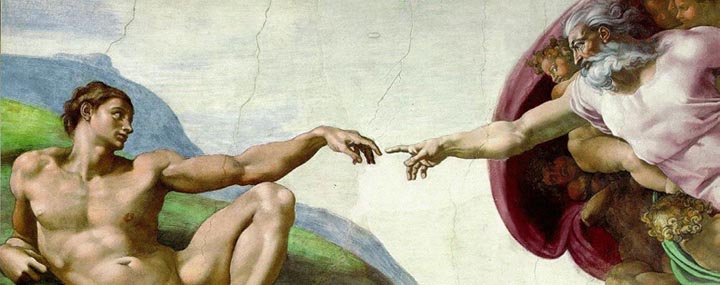
Adam by Michelangelo, Sistine Chapel

To be scientific, a theory must deal only with the matter or processes with which we can or possibly could interact, it must be verifiable, falsifiable and testable, and it should predict future outcomes based on experimental data. What question could possibly be asked to make Evolution falsifiable? Until recently we would say None. As we have seen, Evolution allows for survival of Panchronic species throughout time, but also allows for change through slight modifications. Neither can falsify the philosophy, so it is not science by this criteria.


“If it could be demonstrated that any complex organ existed which could not possibly have been formed by numerous, successive, slight modifications, my theory would absolutely break down. But I can find out no such case.”

— Charles Darwin


“If it could be proved that any part of the structure of any one species had been formed for the exclusive good of another species, it would annihilate my theory, for such could not have been produced through natural selection.”

— Charles Darwin


What about the biochemical complexity? If you include that, and allow that some structures or processes could not possibly be built up through generations of gradual change, could that falsify Evolution? Potentially, yes. The almost infinitely complex biochemistry of the cell, rather than supporting Evolution, is the greatest challenge to it. The more that we discover about the biochemistry of processes within living things, the less likely it is that undirected Evolution is the only or any explanation at all. Since each gradual step in a series of changes would have to make the organism more fit than its predecessors many generations before the resulting structure fills the function it will ultimately perform, any step that is not advantageous would not be selected, according to the theory.

OK, then if each step would exist well before the ultimate function, wouldn’t there be in each organism on earth a lot of junk DNA or nonfunctioning proteins or organs? The answer seems obvious: yes. Do we find this?   No. As for the proteins that perform all of the functions of the cell, useless or interfering material is usually only found in defective cells causing disease, e.g. PKU or Sickle Cell. Useless enzymes are quickly destroyed if they are formed at all. Enzymes are only produced in response to current needs as defined by a complex system of feedback communication within the cell.

As for DNA, we don’t know yet whether there are actual proto-genes lurking there. Genes, which are sections of DNA wrapped around companion proteins (Histones), are separated by sections of so-called “junk” DNA (Introns) for which we, as yet, know next to nothing about their functions. Could Introns be the missing nonfunctioning proto-genes? Possibly, and that is the assumption of some Evolutionists. But remember that any “junk” must also have a survival advantage over predecessors, so it must function in some way. Regardless of what you may have read in the popular press, we are just scratching the surface on understanding the DNA code (or codes).

The only sections we really know anything about are those that encode for proteins ( about 1%) used as either structural elements or enzymes that perform various cell functions, along with certain signals such as start, stop, zip and unzip used in replication or repair. We don’t even understand why the units encoding for certain enzymes are broken up into sections, sometimes on separate genes along the DNA strand or why the RNA that is assembled from the DNA template is usually cut and/or rearranged before it carries the instructions from the nucleus to the ribosomes where the proteins are assembled from component amino acids. Development is another important area where we lack understanding. How does a fertilized egg differentiate to form a complete creature? We can describe what happens at each step, but have yet to formulate a comprehensive theory of how the instructions are timed, given and received. Much research is being done in this area, but results are sketchy and incomplete at this time.

Intelligent Design and Creationism(s)

If Evolution is a philosophy or belief system and not fully science, what about Intelligent Design, and what is it anyway? Intelligent Design (ID), like Evolution, is a philosophy that uses science as its basis. It is a theory that the very complexity and improbability of the universe and life processes necessarily implies an intelligence or greater principle behind it all. ID does not say what (or who) that intelligence is or connect it with any particular faith based belief system. ID proponents accept the possibility that some of Evolution’s claims are true, but challenge the validity of other conclusions, particularly unguided chance as the only source of biological progress.

If gradual assembly, step by step, of complex systems, from DNA to hearts, by random chance is statistically impossible or implausible, it rules out chance as a cause. That leaves necessity and design as possible causes. ID contends that the very implausibility and complexity strongly imply that some intelligence (design) or as yet undiscovered guiding principle (necessity) must be at work to overcome the statistical barriers. Necessity fits in with the Progressive philosophy of inevitable progress built into the universe. NeoDarwinian Evolution states that life and the universe only LOOK designed[1]. ID is the most significant challenger to Evolutionary theory at this time and some of the observations and experimentally derived facts could eventually lead to falsification or at least modification of Evolution as it is defined today.

The media tend to lump ID and Creationism together because the Evolutionists associate them in an attempt to discredit ID. ID accepts all scientific facts, whether it is the age of the universe and the ages assigned to the fossil record or biochemical or astronomical knowledge. ID acknowledges the appearance of design and infers that it necessarily implies an intelligence or guiding principle. The implication is that of purpose, not blind purposeless chance. This teleological[2] view is one of the things that makes ID a philosophy, not a hard science. However, most of the proponents are competent scientists who use valid scientific principles in scientific studies into the validity or lack of validity of Darwinian Evolution’s random chance claims. Whether Darwinian Evolution or ID is (more) valid, is a matter of opinion at this point. Expressed differently, ID could be an attempt to falsify Evolution as arising only from random chance.   Statistical arguments of the improbability of random processes explaining life and complexity are quite convincing. Note that progressivism, espoused by Darwinians, also implies teleology because everything is believed to be naturally progressing toward perfection.

Biblical Creationism comes in two major forms: Young Earth and Old Earth. Young Earth Creationism declares that the universe and the earth were created some 6000 years ago in seven twenty-four hour days by a strictly literal interpretation of Biblical Genesis. Old Earth Creationism accepts the ages of the universe, the earth and the fossil record and interprets the Biblical Genesis account somewhat more figuratively than literally. As such, it is closer to Intelligent Design, but specifies the God of the Bible as the intelligence responsible for it all. A subdivision within Old Earth Creationism is one that assumes a literal seven day creation (or seven epochs) after the initial billions of years needed to form the universe and prepare the earth for that event. “In the beginning, God created the heavens and the earth.” – Genesis 1:1 is assumed to contain all of the history of the universe, the earth and the fossil record that had already taken place before the creation event that formed modern humans. This is sometimes called the Gap Theory, especially by its opponents. I tend to fall into the Old Earth camp, based on scientific probabilities and evidence, while leaving the length of the seven “days” as an open question. The same word is used for a 24 hour period and for an indefinite time period as “in the day of Moses.” “These are the Generations of the heavens and of the earth when they were created, in the day that the Lord God made the earth and the heavens.” – Genesis 2:4. Also, in 2 Peter 3:8[3] it is obvious that they did not limit a “day” to 24 hours.

It is easy to see that Creationism, based not on science but Biblical texts, is different from both Evolution and Intelligent Design. While it is true that some who believe in Intelligent Design are also Old Earth Creationists, it is not true for many of ID’s technologically and scientifically astute proponents. As a matter of fact, many proponents of Creationism, especially Young Earth Creationists, oppose Intelligent Design as a distortion and means of explaining away the literal interpretation of Biblical texts that they hold to be infallible. Questioning the literal interpretation of Genesis in this way is seen by them as opposing all of God’s truth in His word. In their opinion, rejection of literal seven day creation ex nihilo (from nothing) is tantamount to saying the Biblical texts, in their entirety, cannot be trusted to be true.   In their opinion, rejection of literal seven day creation ex nihilo (from nothing) is tantamount to saying the Biblical texts, in their entirety, cannot be trusted to be true. However, the actual text does not exclude longer periods or preparatory periods occurring before the seven days described except by assumptions of interpretation.  As a Christian, I believe in the literal interpretation as God’s inspired word, but recognize that our own understanding may be biased by preconceived assumptions not actually in it. As a scientist, I have to believe reliable scientific data, but question its reliability and some of the projections and philosophical assumptions.

Conclusions:

So, where does that leave us? We have three basically different philosophies for the development of the complexities of life, at least two of which base their beliefs on scientific inquiry and knowledge. Which is correct? The jury is still out. Neo-Darwinists see Intelligent Design, with its underpinnings of biochemical complexity and probability theory, as the greatest threat to their beliefs and rightly so. Rather that embrace Evolutionary philosophy and all its claims, ID proponents critically examine the evidence for and against guided and unguided development, including the incredibly complex biochemical nature of life and statistical probabilities of unguided or chance development of complex molecules, structures and functions. If Evolution is a robust theory and the aim is truth, such a challenge should be welcomed as a further development of understanding Evolution. The vitriol with which Evolutionists attack ID proponents can only be interpreted as religiously defending dogma that they feel may be vulnerable.

[1] Richard Dawkins defines biology as “… the study of complicated things that give the appearance of being designed.”

[2] Teleological definition: (Gk tele or telos = end, purpose) 1a: the study of evidences of design in nature; a doctrine that ends are immanent in nature; 1c: a doctrine explaining phenomena by final causes; 2: the fact or character attributed to nature or natural processes of being directed toward an end or shaped by a purpose; 3: use of design or purpose as an explanation of natural phenomena.

[3] “But, beloved, be not ignorant of this one thing, that one day is with the Lord as a thousand years, and a thousand years as one day.” 2 Peter 3:8

Evolution: Setting the Stage Part 4

Charnia Pre-Cambrian fossil

Evolution from the Beginning

When Charles Darwin published On the Origen of Species in 1859 evolutionary theories had been around for a long time. The third century BC Greek philosopher Epicurus derived a form of evolutionary theory from Democretus’ atomic theory. Lucretius, first century BC Roman poet, proposed it as a logical necessity of naturalism in order to explain life arising from nature alone without divine intervention. It was resurrected in the Renaissance through the Age of Enlightenment in a number of forms. See the table.

Charles Darwin had been introduced to evolutionary theories through his grandfather, Erasmus Darwin, a physician, inventor and poet. See an evolutionary verse in the box below. Erasmus Darwin was a friend of William Wordsworth and Samuel Coleridge and their contemporaries who admired his poetry. Mary Shelly wrote Frankenstein after reading of his galvanic experiments on animals. He was an advocate of evolution by acquired characteristics, a theory later popularized by Jean-Baptiste Lamarck and which was still later discredited as having no viable mechanism. Charles’ family was wealthy, being associated with the Wedgwood fortune. Both sides of the family were Unitarian free thinkers, but the Wedgwood side leaned toward Anglican, at least socially. In this environment and later through his brother Erasmus’ circle of friends, Charles was exposed to the intellectual elite of the day.


Organic life beneath the shoreless waves

Was born and nurs’d in ocean’s pearly caves;

First forms minute, unseen by spheric glass,

Move on the mud, or pierce the watery mass;

These, as successive generations bloom,

New powers acquire and larger limbs assume;

Whence countless groups of vegetation spring,

And breathing realms of fin and feet and wing.

— Erasmus Darwin, The Temple of Nature, 1803


 Evolution theories before Darwin (click to follow link)

Charles’ father Robert was a physician and wished for Charles and his older brother Erasmus Alvey Darwin to follow suite. The brothers attended medical training together at the University of Edinburgh. Erasmus graduated as a physician, but was retired on a pension at age 26 by his father because of his frail health. He spent the rest of his life entertaining the intellectual elite. Charles did badly in medicine, probably because his interests lay elsewhere. While there, he studied with naturalist Robert Edmund Grant who was a proponent of Lamarck’s acquired traits evolutionary theory and homology, a belief that similar form meant common ancestry. He learned stratigraphic geology from Robert Jameson and also studied plant classification and taxidermy.

Later, his father sent him to Christ’s College where he received a BA in theology. His father had procured a position for him as an Anglican pastor, but Charles never was ordained and did not practice. More interested in natural history, he studied botany and geology and aspired to travel for study in the tropics, a popular avocation of young men of independent means. One of his professors, John S. Henslow, got him an unpaid position on the HMS Beagle as gentleman’s companion to Captain Robert FitzRoy on a voyage to map the coastline of South America. Darwin spent his time collecting fossils, plants and animals from South America to the Galapagos Islands to Polynesia. Because Professor Henslow popularized the collections he sent back before his return, Darwin was a celebrity when he arrived home.

When Charles returned from his five year around the world trip in 1836, he published detailed journals of the trip, as well as other scientific books, and delivered papers to the Geological, Geographical and Zoological Societies. He spent another twenty years studying barnacles, pigeon breeding and similar subjects. He never addressed Evolution in any of these publications. He did not publish On The Origin of Species for 23 years! Supposedly he did not publish earlier because he feared reprisals, but being of independent means, being recognized as an authority in his field, and actively dialoging with leaders of the day about other theories of transmutation of species, this seems to be a thin excuse invented by later authors. This excuse was never alluded to in his book. Instead, he described working on it steadily over all those years and that he chose to publish his “abstract” (On the Origin of Species) due to failing health, although he said it would take three or four more years to complete his work.

It wasn’t until Alfred Russell Wallace, a naturalist and admirer, sent Darwin his observations and theory of Evolution while still away on a voyage to the Malay Archipelago and Borneo, that Darwin’s theory was (hurriedly?) presented and published, establishing primacy over Wallace. To his credit, when his friend Charles Lyell presented the joint papers[1] to the Linnaean Society, Darwin acknowledged Wallace as co-founder of the theory. Claiming to have sat on his theory for over twenty years, he rushed to publish On the Origin of Species which he described as an unfinished manuscript without supporting facts, acknowledgements or references[2]. This state was little improved even in the Sixth (and last) Edition, which was only minimally changed from the first edition except for historical recognition of others before him and attempts to address some of the most important scientific criticisms.

I have always wondered whether Wallace was the true originator of a theory that Darwin had overlooked in his own observations, although he had written letters to Joseph Hooker and Asa Gray earlier hinting at an evolutionary theory. Did Wallace provide the link that brought all his speculations together? Because he was backed up by his friends Joseph Hooker and Charles Lyell in his claim of primacy, we may never know. It is sure that the scientific reputation of Wallace declined, while Darwin’s grew. It is interesting to note that Wallace later rejected the theory as lacking both mechanism and sufficient evidence. Others have also speculated about Wallace being the true originator of the theory.

[1] Presented as On the Tendency of Species to form Varieties; and On the Perpetuation of Varieties and Species by Natural Means of Selection. It was composed of two papers, Wallace’s On the Tendencies of Varieties to Depart Indefinitely from the Original Type and Darwin’s Abstract Extract from an Unpublished Work on Species along with Abstract of a Letter to Asa Gray (to establish primacy).

[2] On the Origin of Species, first edition, Introduction, paragraph 3 & 4.

Evolution, Setting the Stage, Part 3

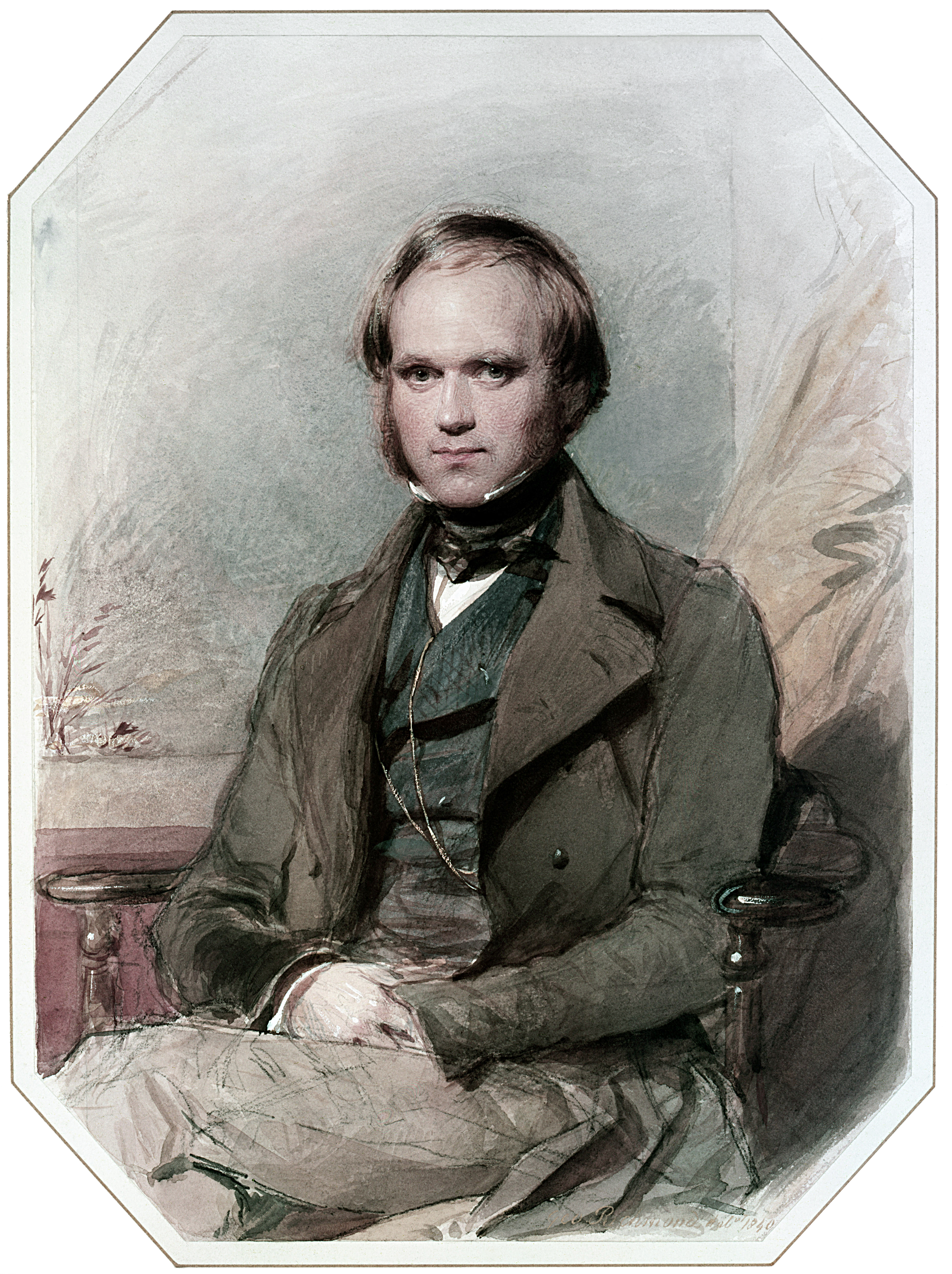
Charles Darwin
Charles Darwin

Darwin’s circle of friends and mentors was largely composed of the intellectual elite of the day, many of whom embraced progressivism, socialism, atheism or agnosticism and various other popular philosophies of the day. Darwin himself stated in some of his correspondence that one of his goals was to do away with religion.


…hardly see how anyone ought to wish Christianity to be true: for if so, the plain language of the text seems to show that the men who do not believe, and this would include my father, brother and almost all my best friends, will be everlastingly punished. And this is a damnable doctrine.

— Darwin, letters


After the initial presentation of a paper to the Royal Society, the philosophy, (theory), of Evolution was published in the popular press, much like other popular philosophies of the day, not in scientific journals. Its arguments were more philosophical than scientific, offering little evidence other than similarity of forms between fossil and living animals, and observations that the existing forms were well suited to their functions, both of which had been widely accepted earlier. Contrary to popular accounts, from the beginning, many people in academia, the sciences, philosophy and the clergy enthusiastically embraced the new philosophy of Evolution. To the clergy, it was the means whereby God had created our world.   To the anti-religion elite, it meant God could be replaced altogether, along with any inconvenient moral limitations.

Championed more like a political campaign than a scientific theory, after some early opposition by other scientists it became accepted by the dominant elite, so that scientists had to either adopt it or become obsolete. Any opposition was branded as ignorance or religious tyranny in heated debates where Evolution proponents used a straw man[1] argument in which they presented Darwinian Evolution versus creation ex nihilo of each species.  Most people of the time recognized that changes had taken place,  so that their logical arguments actually involved a lack of scientific evidence for the theory as presented.

In some respects, that picture has prevailed to this day. It is this political tactic that has been repeated in other areas of science to promote new theories, to squash opposition to them and for junior scientists to unseat senior scientists from positions of authority. That is why progressivism and Darwinism, aka Evolution, is so important to later scientific philosophies and developments.


“I have read your book with more pain than pleasure. Parts of it I admired greatly; parts I laughed at till my sides were almost sore; other parts I read with absolute sorrow; because I think them utterly false & grievously mischievous — You have deserted—after a start in that tram-road of all solid physical truth—the true method of induction—& started up a machinery as wild I think as Bishop Wilkin’s locomotive that was to sail with us to the Moon. Many of your wide conclusions are based upon assumptions which can neither be proved nor disproved.  Why then express them in the language & arrangements of philosophical induction?”

— Adam Sedgewick, noted geologist who had taught Darwin, after reading Origin of Species


The theory of Evolution was based on the economic philosophy of Thomas Malthus whose book, An Essay on the Principles of Population, 1798, predicted that population would outgrow food supplies resulting in starvation. Like Malthusian philosophy, the mechanism of Evolution, survival of the fittest through natural selection, depended on competition for scarce resources as the basis of survival. In the introduction to the first edition of On the Origin of Species[2], Darwin explains Evolution as “this is the doctrine of Malthus applied to the whole animal and vegetable kingdoms[3].”

At the time, there were two opposing theories about the development of the earth. One was catastrophism; the other was uniformitarianism. Catastrophism, supported by Georges Cuvier, the father of paleontology, proposed that the earth had gone through repeated sudden upheavals. Uniformitarianism, promoted by Charles Lyell, geologist and friend of Darwin, proposed an earth where no major changes had taken place except gradual modification over vast periods of time. Darwin had taken the first volume of Lyell’s book, Principles of Geology, on his voyage around the world. Needless to say, Darwin favored Lyell’s position. Later, Darwin accepted Lyell’s theory as supporting his claims of gradual changes over vast periods of time. Cuvier, who had died before Darwin’s time, had opposed uniformitarianism and the earlier evolutionary theories, to be discussed in the next post.   Evolution needed long eons of time for the proposed changes to take place, so uniformitarianism was the chosen philosophy that would facilitate it.

It is interesting to note that until the late twentieth century, uniformitarianism was the accepted dogma[4]. Today, as the best explanations for the fossil record and evolutionary changes, long periods of uniformity interspersed by brief catastrophic events of various sorts are favored. Thus, catastrophism is favored along with elements of uniformitarianism in the form of plate tectonics, formerly known as continental drift[5] which had been rejected earlier. The renewed interest in catastrophism was fostered by the recognition of meteorite strikes and craters as a prehistoric reality that would fit past mass extinctions best.

I have witnessed the acceptance of catastrophism, widespread meteorite craters and plate tectonics, since the 1970s. When I first started my independent studies into science and earth’s mysteries, catastrophism, widespread meteorite craters and continental drift were considered fringe theories. Serpent Mound, an earthwork by the prehistoric Hopewell culture in southern Ohio, is on the edge of an ancient four mile wide weathered meteorite crater. When I first visited Serpent Mound in the early 1980s, the visitor center still had the display claiming it was a crypto-volcanic crater. Although the strata were of dolomite and other sedimentary limestones with no hints of volcanic rock, the prevailing theory proposed an underground gas explosion caused by cryptic or hidden volcanism. Since that time, over 200 meteorite craters have been identified, most of them not readily recognizable due to weathering or other obscuring forces, including the one off the coast of Yucatan that is credited with the extinction of the dinosaurs at the end of the Cretaceous era.

The re-acceptance of these theories is an example of how science should work. In science, inconsistencies in current theories are met by new data, and questions are answered by formation of new theories or acceptance of once rejected old ones. That is not to say that politics had nothing to do with it. On the contrary, the plate tectonics theory was pushed through in the popular press in the same way that Darwinian Evolution was. Established geologists that did not immediately go along with the theory were publicly ridiculed and defamed in a way that could only be described as scandalous. It was a scientific revolution in geological circles.

 [1] Straw man argument is one where an easily defeated weaker premise is substituted for the real opposition view in order to appear to win the argument, i.e. the author attacks an argument different from (and weaker than) the opposition’s best argument

[2] Complete title and subtitles of the book is On the Origin of Species by Means of Natural Selection or the Preservation of Favoured Races in the Struggle for Life, published by John Murray, London, 1859.

[3] Introduction, paragraph 8, describing Chapter 3, Struggle for Existence.

[4] Dogma – established opinion put forth as authoritative, especially without adequate grounds.

[5] Alfred Wegener, 1912, and earlier proponents.

The Evidence that CO2 is Not the Problem

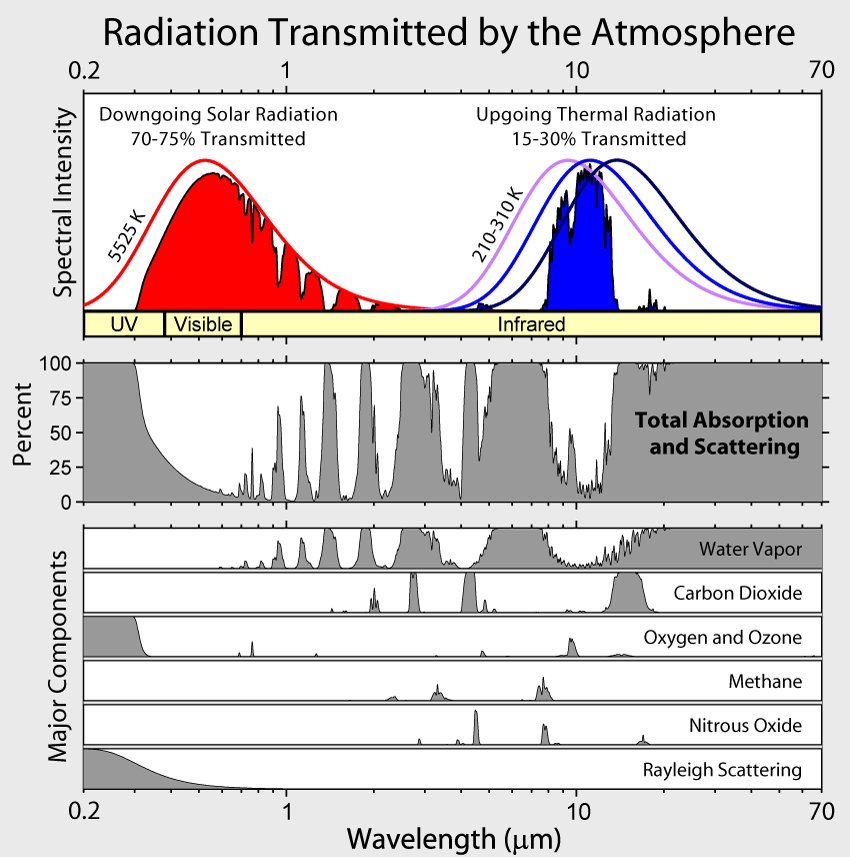
Atmospheric Transmission of Different Gases

http://www.globalwarmingart.com/wiki/File:Atmospheric_Transmission_png

Source: Robert A. Rohde (Dragons flight at English Wikipedia) – This figure was created by Robert A. Rohde from published data and is part of the Global Warming Art project. http://www.atmo.arizona.edu/stud

This figure requires a bit of explaining. The top spectrum shows the wavelengths at which the atmosphere transmits light and heat as well as the “black body” idealized curves for no absorption. It is a little misleading because the data is not based on actual solar and earth data. It is based on two experimental heat sources, one centered at 5525 K (5252o C or 9485o F), the approximate temperature of solar radiation, and one centered in the range of 210 to 310 K (-63o C to 36.8o C or -82oF to 98o F), the approximate temperature range of re-radiated heat from the earth. In reality solar radiation power, (Watts/m2/micron), shown in red, is six million times as strong as the power of re-radiated heat from the earth, shown in blue.

The other spectra are absorption[1] spectra. The top one shows the relative percent absorption by total atmospheric gases at various wavelengths, (note that this spectrum is practically the inverse of the transmission spectrum above it), and the spectra below that show the absorption wavelength ranges of individual atmospheric gases, but not the relative strength of that absorption in reality. As experimental, not real atmospheric, data they can only tell us the wavelength ranges of the absorption, not their relative strengths.

Note that CO2 absorbs in the 15 micron range[2], which is within both the range of re-radiated heat and the strong absorption by water vapor, of which the CO2 peak forms a mere shoulder. This is used to claim forcing of water vapor by CO2, without regard to the real near-saturation level of CO2 absorption.  Lesser CO2 peaks in the 2.7 and 4.3 micron ranges also only contribute in a minor way, the first is completely covered by a water vapor absorption peak and the second forms a shoulder in another water vapor peak. These minor peaks occur in a region where both solar radiation and re-radiation are minimized. Methane and nitrous oxide are also shown to be minor players, having narrow absorption ranges and low concentrations. Note too that ozone blocks most of the ultraviolet light from the sun.

The CO2 hypothesis is based on bad science; first that of John Tyndall, 1862, and then of Gilbert Plass, 1955.

  1.  In 1872 John Tyndall measured the heat absorption of various atmospheric gases over the entire wavelength range of his heat source. He found that water vapor and CO2 absorbed more strongly than other atmospheric gases such as oxygen and nitrogen. Oxygen and nitrogen, major components of the atmosphere, had little or no absorption of heat in the range tested. It is important to note that his experiments did not separate the heat into specific wavelengths.

Quote: “…if, as the above experiments indicated, the chief influence be exercised by the aqueous vapour, every variation of this constituent must produce a change of climate. Similar remarks would apply to the carbonic acid [CO2] diffused through the air… they constitute true causes, the extent alone of the operation remaining doubtful.”

Contributions to Molecular Physics in the Domain of Radiant Heat, John Tyndall, 1872, Cambridge University Press


2.  In 1955 Gilbert Plass claimed that a doubling of CO2 would result in a 3.6 degree temperature increase.


Quotes:  “ … average surface temperature of the earth increases 3.6o C if the CO2 concentration in the atmosphere is doubled …”

 “The extra CO2, released into the atmosphere by industrial processes and other human activities may have caused the temperature rise during the present century. In contrast with other theories of climate, the CO2 theory predicts that this warming trend will continue, at least for several centuries.”

The Carbon Dioxide Theory of Climatic Change by Gilbert Plass, 1956, Johns Hopkins University


This was followed by mathematical climate models, originally in climate alarmism testimony before Congress, 1988, by James Hansen at NASAs Goddard Institute for Space Studies that was based on calculations that worked for Venusian atmospheric gases, Sulfuric Acid clouds and a thick, heavy CO2 atmosphere.  The models exclude clouds as a factor and claim a forcing of water vapor heat retention.  The premise  only works if evaporated vapor remains as low level vapor rather that forming clouds.

NOTE: Figure:  “Radiation Transmission by the Atmosphere” was reinserted 8/22/2020 because of a broken link in the original.


Evolution: Setting the Stage, Part 2

Marx_and_Engels

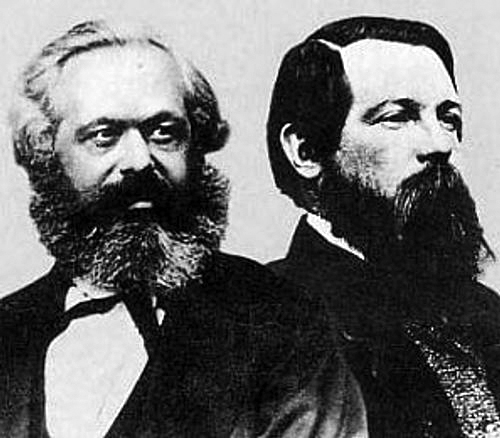
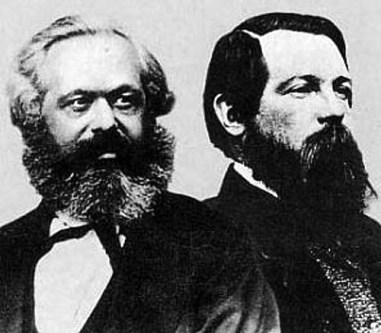
Karl Marx and Fredrick Engels    Source:  Wikipedia, Public Domain

Socialism / Communism

Socialist thought began to be accepted in the 17th century (or even earlier) and flourished in the 19th and early 20th centuries. Socialism is actually a kind of social Darwinism or social engineering. It is based on a misunderstanding of human nature and a belief that man’s very nature could be molded and improved. This was based on the belief that the world is naturally progressive and everything, including human nature, is being continually improved throughout time.

The socialist dream sounds wonderful: everyone working for the common good and no one going without. Unfortunately, this belief has proven again and again to be wrong. Human nature is basically Self-centered, and in general man is generous and altruistic only after personal needs and desires are met. Humans are motivated by a focus on Me first, then spouse and children, then extended family, then friends, then local tribe and only then extending to local and state authority, to country and to the greater global society last.

Man naturally is very compassionate and generous toward those in need of charity, but only after his basic needs are met. Socialism requires that man’s focus be on the state (or society as a whole), while putting himself and his own interests last. This is the exact opposite of man’s true, unchanging nature. Habits and attitudes can be taught to a certain degree, but it has been demonstrated many times that man’s basic selfish and imperfect nature cannot be changed.

As the Plymouth colony learned, (see Part 1), without personal rewards for his achievements, a person’s motivation to produce is reduced or eliminated along with most of his creativity and efficiency. At the same time, his selfishness, envy, resentment and deceit grow as a result of perceived inequities. In such a society, the lazy person who hardly contributes at all gets as much as the hard working person who produces most of what is shared.

In labor unions where all members are rewarded equally whether they are cracker-jack contributors or space filling dead wood, resentment is rampant and efficiency and productivity suffer. Such unions discourage excellence and encourage minimal or status quo contributions. In the absence of an overarching internally motivated altruism, socialist societies must be tightly and thoroughly controlled by the state, ultimately resulting in totalitarian dictatorships or at best dictatorial bodies of an elite class in order to force people to behave as is required to maintain the society.

Unfortunately, socialism/communism also leads to moral degradation wherein cheating, lying and other forms of deceit are used to gain perceived or actual basic needs or an advantage over others. A prime example is the old Soviet Union, where morals and ethics have suffered greatly from real or perceived deprivations. As a general rule, needy is greedy. Everyone may be equal, but everyone, except the elite, is poorer for it.

Essentially we are back to monarchies and privileged gentry oppressing serfs or slaves “for their own good.” So much for equality as espoused by socialism, communism and their ilk. It is a very old, very bad idea that results in a return to old oppressions and a loss of basic freedoms and inalienable human rights “endowed by our Creator.”

But wait, what about the utopian dream? Marx presented his philosophy as a series of steps where, through the principles of dialectical materialism[1], society progresses from original oppression by the bourgeois[2] under capitalism[3] through struggle to a “dictatorship of the proletariat[4]” to a utopian state where governments are unnecessary and fade away on their own. Unfortunately, it never goes beyond the dictatorship stage because the utopian dream is totally unrealistic, unworkable and unsustainable in the real world due to the inherent and unchangeable nature of man and to reality in general. Marx never explained how the society would take that final step from dictatorship to utopia. People in power want to stay in power. It is totally unrealistic to expect them to voluntarily give that up.

Even if utopia were attained, how would the utopian society be organized and maintained without essentially robotic altruism to the society[5] by every individual and (again) strict control from the top to keep it all going? Like monarchies and dictatorships it is still all about control by an elite group. In recent fiction, Star Trek is a model of a utopian society. Poverty has been eliminated and altruism is the norm. No one is envious or resentful of others’ successes, and everyone gladly obeys orders from a wise and benign leader toward a common goal. However, the real world is more like Babylon 5 with all of its intrigues, envy, resentment, prejudices, hatreds and inequities. Man’s nature cannot be denied, and control through coercion and rewards is necessary for even a “utopian” society to function. Heaven on earth is impossible as long as imperfect people are involved.

Unfortunately, even today there are those who would throw away their freedom, in the form of excessive regulation and government control, to gain a (false) sense of security under the control of a supposedly wiser elite. It seems there are some who are uncomfortable with freedom, with all its risks and opportunities, and who desire a nice safe cage. (Some intellectuals and elitists who espouse the socialist philosophy assume that they will be among the elite and are only uncomfortable that others are not controlled. However, most of these people will end up being the controlled, not the controllers.)


They, who can give up essential liberty to obtain a little temporary safety,  deserve neither liberty nor safety.                    —Benjamin Franklin


Christianity is built on the value and importance of the individual whereby everyone benefits freely as a result of freely practiced moral values such as duty, honor, charity, respect and equality of opportunity (not outcome, which is unrealistic)[6]. Socialism in its many forms, does not value the individual but rather sees people as groups that should (be compelled to) work for the greater good of the whole, regardless of whether it is good for any one individual. These two philosophies are diametrically opposed. Socialism can only succeed if Christianity is either eliminated or tightly controlled as a purely social ritual. That is why socialism and atheism are such good partners, and behind socialism is the ever-present progressivism.

The belief in a naturally progressive universe says that everything from the universe to molecules is evolving toward perfection, with no room for absolutes, not even moral ones.   If the entire universe is believed to be naturally progressive, then there is no need for a God to have caused or influenced it. It is its own reason for being. To those who espouse atheism or socialism in its various forms, progressivism is what gives meaning to life and their cause, essentially replacing God. It gives them a purpose and a satisfaction in furthering that assumed natural progress. That is why it has such a strong hold on its believers, especially those who wish to engineer a socialist utopia or stop evolution in its tracks to “save the planet.”

The progressive universe itself becomes their de facto god, and social change toward a dreamed-of perfect utopian paradise becomes the goal and their purpose in life. Since no cultural or social system has ever achieved the perfection envisioned, to the progressive the present system, whatever it may be, must be changed to further that perceived progress. This makes it a perfect philosophy for young radicals who wish things were better but lack the life experiences to see the broader picture or the unintended consequences of rampant social change.

However, remember the maxim: all progress is change, but all change is not progress. That is, unless you believe that progress is inevitable as do the progressives. But progress requires work while regress is the natural state of things. A boulder perched on the edge of a cliff, given enough time and erosion, will naturally roll down (regress) by necessity, but pushing it back up to the top (progress) requires work. Progress is not a natural thing; it must force its way against the regressive nature of the universe. The Second Law of Thermodynamics states that entropy always increases – that chaos or disorder always increases and usable energy always decreases. This is the opposite of the progressive philosophy. Dust, death and decay are natural results of the real world.

If the universe is naturally progressive, then everything must be interpreted as progressing or “evolving” toward perfection, whether it is molecules, life, earth, stars, galaxies or the universe.   The fixed laws and values of basic physics, such as the force of gravity or the mass of the proton, are a great mystery to those who reject all absolutes in favor of universal progress. These values are under constant attack by theorists using deductive reasoning, i.e. “pure” reason, rather than inductive reasoning based on reality, experiments and observation.

This is the case of cosmology and particle physics today. They start with an a priori[7] hypothesis, based on assumptions about how the universe must behave, and produce complex mathematical equations to model an imagined perfectly symmetrical, homogeneous and beautifully progressive universe. In areas where reality conflicts with the theory that is based on pure mathematics, the facts are either ignored as anomalies, reinterpreted to make them fit or new layers of complexity are added to their calculations. Never is the theory questioned.

Why all the expounding on progressivism and its partner socialism with its unrealistic view of human nature, and ultimately its tragic results? First of all, it is a perspective on the pseudoscientific theories discussed in this blog that are all about control of thought by an elite class of “experts” who are not to be questioned. Progressivism and Socialism have influenced or control the foundations of most of modern science and academia today.

That does not mean that real scientific achievement is not valid or does not advance our knowledge of our world; it means that real results are often interpreted to fit the prevailing progressive paradigm. For instance, if DNA of similar organisms is less different than dissimilar ones, which is expected if DNA determines form and function, it is not acceptable to just state the known facts and note the similarities and differences. The very real data must be fitted into the evolution paradigm by concluding that similar DNA means that they must have evolved from a common ancestor. While this may or may not be true, it is far from proven. It is a leap of faith and a philosophy based on existing paradigms.

Secondly, Darwinism and Eugenics[8]specifically have been used as tools and extensions of socialist philosophy throughout its history. Pre-Marx progressive socialist thought itself nurtured Darwinism. Darwin’s theory of Evolution by survival of the fittest (class struggle in socialist parlance) through natural selection arose amidst this nineteenth century pre-Marxist socialist-progressive era. In the context of the prevailing philosophies, this meant to the materialists and humanists that once and for all religion could be eliminated. It seemed to confirm their social ideas that the world was naturally progressive and did not need any outside forces to bring it about. Using the theory of Evolution, religion could be replaced by materialism, humanism and socialism as the new “religion” of the people.

[1] Dialectical materialism supposedly progresses from thesis (original idea) through antithesis (opposition) to synthesis (final form).

[2] Bourgeois (originally a resident of a town or burgh) is defined in Marxism as the (supposed oppressor) upper and middle classes as opposed to the Proletariat defined as the (supposedly oppressed) lower classes. (Proletariat is originally from the Latin proletarius, for citizens lacking property that were exempted from taxes and military service and could only contribute to the state by having children.) This assumes that there is a strict class order rather than a fluid classless society whereby individuals assume ever changing positions based on effort and ability.

[3] Capitalism was coined by early socialists from capital, which originally meant head and later meant property or money.

[4] Dictatorship of the proletariat is really a dictatorship by elites with special privileges over the masses which are tightly controlled.

[5] Only colony animals such as ants, bees and a few rare vertebrates behave like that without coercion.

[6] To be a Christian is to believe in Jesus Christ, repent of sins and rely on Him. Unlike all other religions, it is a religion of Faith, not works. The Christian does good works not to ensure his salvation, but to emulate Jesus, follow His teachings and please God, all done out of gratitude for salvation already gained through simple Faith.

[7] A priori means presumed from the beginning; self-evident; intuitively obvious.

[8] Eugenics is a “science” that deals with the improvement (as by control of human mating) of hereditary qualities of a race or breed. Systematized by Francis Galton, Charles Darwin’s half-cousin in the late 19th century in which he advocated controlled breeding to prevent mankind from falling into mediocrity by regression towards the mean. This system was later used by the Nazis (National Socialist Party) in their pursuit of the master race, and was used to justify the elimination of Jews and other “undesirables”.
Evolution: Setting the Stage, Part 1

gutenberg-and-fust-with-the-first-printing-press-germany-1450s

The decline of the Holy Roman Empire in the 5th century was followed by a period of absolute power and control by monarchs and the Catholic Church known later as the Middle Ages or Dark Ages, so called by those in succeeding generations who wanted to believe theirs was a more “enlightened” age. Starting with the Italian Renaissance, in the 14th century and continuing through the Age of Reason and the Enlightenment of the 16th through the 19th centuries, the Western world was in a state of constant turmoil and social change.

The invention of the printing press by Johann Gutenberg in 1450 made mass printings and translations of the Bible and other books possible so that they became accessible outside of elite circles. This furthered the Protestant Reformation which had begun in the 14th century with John Wycliff in England and Czech priest Jan Hus who was burned at the stake in 1415. These departures from Catholic tradition were followed by other reformers including Martin Luther, a Catholic priest, who posted his Ninety-five Theses in Wittenberg in 1517 condemning church abuses.

The Medieval Catholic Church, with its domination by rich and powerful men, had become more of a political and military force than a representation of Christ’s love and compassion as reflected by the apostles and the early church. This is not to say that the Church did not do many good things as exemplified by church run universities, hospitals, orphanages, observatories, libraries and other repositories of ancient and new knowledge.

Forced conversions, persecution of “heretics,” i.e. any form of Christianity[1], science or philosophy not sanctioned by the Church, excommunications, torture and death by burning and other means were all practiced at times by the Church. The reader should note that excommunication to the devoted Catholic of the time meant he had no chance of salvation and was doomed to hellfire forever – as opposed to Protestant belief that only God could ever decide that. (What a freeing concept!) Imprisonment, torture and even death were preferable to excommunication. Similarly, monarchies had absolute power over the people and could, almost at will, have anyone stripped of his position, his property, his freedom or his life. Only the Church had any power over monarchies.

Assisted by the rise of Protestantism, the alienation of the people by abuses and domination of the Catholic Church and the Monarchy eventually led to limitations or overthrow of monarchies and the rise of various types of social philosophies and experimentation within and outside the various churches. In this vacuum, many experimental philosophies were espoused, some of which were irreligious or openly hostile to religion. Some went so far as to throw out Christianity altogether. The Directory, set up in France after the French Revolution, is probably the best, though later, example of such an extreme view. For a period of time under this regime in the 18th century, religion, particularly Christianity, was actually outlawed in France, which led to persecution of Christians and Jews.

The Italian Renaissance, beginning in the 14th century, marked a return to classical thinking of the Greek philosophers such as Plato and Aristotle. This influenced the formation of humanist and materialist philosophies, which became popular among intellectuals. Materialist philosophy states that there is nothing beyond the material world that we can see and touch. Humanists[2] believed that man was basically good and was only corrupted by society. Materialism[3] said “down with god,” and Humanism said “up with man.”

The goodness and eventual perfection of man and society was/is an important part of the basic philosophy of Progressivism and was/is practiced by communists, socialists and their ilk. It is, in my view, a misinterpretation of human nature and a false belief in our ability to change it. This is Magical Thinking because it is contrary to experience. The unchanging nature of man is the reason that both Shakespearian and Greek plays still have relevance today. The circumstances and society are different, but the human reactions are the same. The Christian viewpoint was/is that man himself is imperfect and cannot be perfected by human endeavor, no matter how noble. If society is faulty, it is because imperfect man is its author.

Note that the word “progressive” has been corrupted from its original meaning. The progressive philosophy originally meant that progress was possible through work, learning and inspiration, built on the works of others progressively. This is contrary to today’s interpretation of progressivism as an inevitable quality of the universe, moving naturally from simpler to more complex and from imperfection to perfection and utopia, which is again Magical Thinking.

In the 19th century, socialist thought was dominated by the “man good, society bad” humanist philosophy of Rousseau, and was guided by the “scarcity and struggle” philosophy of economist Thomas Malthus[4]. The dominant theme of the day was social progress of the “noble savage” toward ultimate social perfection, once he was freed from the tyranny of governments and religion. This utopian dream was a perfect philosophy for radicals who wanted to overthrow, rather than reform, what they perceived to be the corrupt and corrupting society of the time. Many social experiments were carried out in which utopian socialist communities were formed, lived and ultimately failed.

A very early forerunner of this was the Plymouth colony in the 17th century, led by William Bradford. From the beginning they tried a form of communal living wherein all production was shared equally by everyone. When it became obvious that people would not produce well unless they were rewarded in proportion to their labors, this philosophy was quickly rejected, and was replaced by private ownership and free enterprise that quickly produced more prosperity and created wealth. Nineteenth century examples of these utopian socialist experiments include New Harmony, Indiana, Brook Farm, Massachusetts and North American Phalanx, New Jersey.

[1] Example: Waldensians were a group professing poverty, preaching, and opposed to image worship, relics, pilgrimages, intercession of the saints, etc. that were persecuted by the Roman Catholic Church beginning in the 12th century.

[2] Originally from the Italian word umanista for a teacher of classical Greek and Latin beginning in the 14th century and promoted by Petrarch.

[3] Note that the word Materialism has been corrupted by the left to mean living for gain of material things, not a philosophy that denies any spiritual aspects. Reinterpretation of words is a common practice of the left that blurs real meanings.

[4] An Essay on the Principles of Population, 1798, predicted starvation because populations were increasing exponentially while food supplies were increasing arithmetically. This philosophy assumed no improvements above subsistence level farming, no development of more prolific and disease resistant crops or mechanical means to increase production, and no other factors that would limit population such as disease and war.