“CLIMATE alarmism is a gigantic fraud: it only survives by suppressing dissent and by spending tens of billions of dollars of public money every year on pseudo-scientific propaganda.” – Leo Goldstein
EXCESSIVE or exaggerated alarm about a real or imagined threat is fundamental in driving the human CO2-induced global warming climate change narrative.
THE most popular climatic and weather-related events, as marketed by the Climate Crisis Industry, fall well within the bounds of natural variability. So, in order for such events to make the headlines, attract taxpayer funding for ‘research’, and advance the misanthropic, man-made climate change agenda, they must be accompanied by inflated language, an urgent tone, imagery of doom, and in many cases, fraudulent data.
IN this series we take an objective/sceptical look at ten of the more popular metrics used by warming alarmists to push…
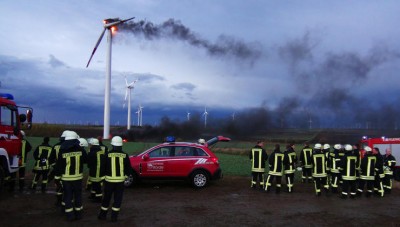
It doesn’t take a genius to work out that wind power is the greatest economic and environmental fraud of all time. All it takes is a little cognitive power and a sense of inquiry.
Once people work out that they’ve been conned, they never turn back.
In our travels we’ve met plenty who’ve started out in favour of wind power and turned against it; we’ve never found an example of the reverse.
STT dishes up the facts on a daily basis, much to the annoyance of the wind cult. Anyone looking for a solid set of reasons as to why wind power can never work, need look no further than this cracking little list put together by John Droz.
Twenty-One Bad Things About Wind Energy — and Three Reasons Why
Master Resource
John Droz
22 March 2018
Trying to pin down the arguments of wind promoters is a bit like…
The truth about Anthropogenic Global Warming aka Climate Change
The climate is changing as it always has.
The real question is
whether manmade Carbon Dioxide (CO2) is causing it,
whether it will have the dire consequences predicted and
whether we can or should do anything about it.
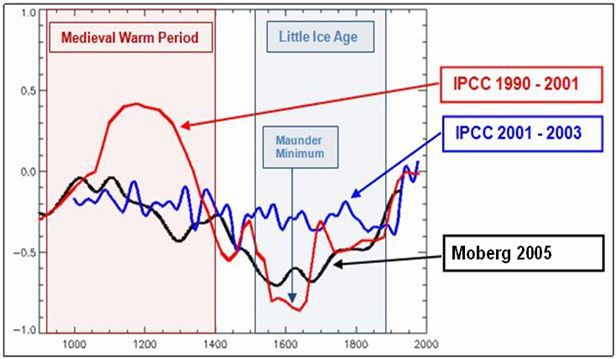
The earth has been warming since the Little Ice Age in the 18th century and has not reached the warmth of the Medieval Warm Period.
Recorded temperature throughout history (red) vs. IPCC model (blue)
Since the Little Ice Age, oceans have been rising steadily at 7 inches per century (<0.2 cm/yr.) and glaciers have been steadily receding with no recent acceleration.
Water, as vapor and clouds, is the major climate influence in the atmosphere. Water vapor can hold heat but also produces clouds that reflect heat back out into space. Precipitation from cooler high altitudes also helps in cooling. More clouds, more cooling.
In the narrow band where CO2 absorbs heat reflected from the earth, it has already blocked the escape of most of the heat that it can. Increases in CO2 will have little or no effect on warming.
Warmer oceans hold less CO2 than cooler oceans, so warming causes off gassing. CO2 may be a trailing rather than a leading indicator of warming oceans and climate.
Plants use carbon dioxide for photosynthesis and give off oxygen. Animals use oxygen and exhale carbon dioxide.
Increasing from an assumed 280 ppm to 400 ppm (ppm = parts per million) is still a miniscule amount, but has increased plant growth rates so that forests and oceans have a greening effect that is visible from space. (400ppm = 0.04%)
Greenhouses add CO2 by as much as 10 times normal to increase growth rates
During the Little Ice Age, the sun was quiet with no sunspots aka storms. This happened again around 1850 with a more modest cooling period. (Maunder Minimum and Dalton Minimum)
We appear to be entering a quiet period of the sun. That means a weaker solar wind so that more cosmic rays reach earth. Cosmic rays nucleate clouds. That means more clouds to cool the earth.
Other possible influences on climate include deviation of ocean currents, eg. Pacific Decadal Oscillation, which may be associated with more clouds, the wobbling (precession) of the earth’s axis and/or orbital eccentricity.
In Conclusion: CO2 is not the cause of recent warming. None of the scary predicted consequences have materialized, and judging from history, are not likely to occur. The climate is a very complex, poorly understood chaotic system. Increased CO2 has been a boon to crops, forests and ocean plankton, and reducing CO2 would be harmful to plant life.
It is probably not possible to do anything about the current warming trend.
Want to know more about this and other Modern Myths including climate change, evolution, origin of life, Big Bang cosmology or quantum physics? See related posts on this website or buy the book Perverted Truth Exposed: How Progressive Philosophy Has Corrupted Science in print or as e-book/Kindle on line at WND Superstore (the publisher) or at Amazon, Books-a-Million or Barnes & Noble .
Are solar and wind power the answers to future clean energy needs? If not, why not.
Solar and wind power are NOT the answers to clean energy for the future.
If environmentalists were serious about clean power, they would support hydroelectric, geothermal and nuclear power. All of which are clean, reliable and use well developed technologies.
If CO2 is not causing warming, (see previous post Why CO2 is not the cause of climate change ) hydrocarbons can provide clean energy with proper scrubbers to eliminate pollutants from smoke.
Solar and wind power, by their very nature, are intermittent and unpredictable. The sun is not always visible and the wind is not always blowing at ideal speeds.
You can’t run a hospital or a manufacturing plant on unpredictable intermittent and fluctuating power.
Fluctuating power can damage computers and electric motors in appliances like refrigerators, heat pumps, etc.
As primary power sources, solar and wind power require back up power from other more consistent sources. Their unpredictable nature makes it difficult to supply consistent power as needed through back up sources like fossil fuel and hydroelectric power plants, which cannot change their output quickly, and must run at less than peak efficiency to be ready when needed.
More realistically, wind and solar can only provide a small amount of supplementary power to other more reliable sources like fossil fuel or hydroelectric plants.
Solar and wind require covering large areas with turbines or solar arrays to supply power, which necessarily disrupts ecosystems.
Solar panels and wind generators require exotic “rare earth” minerals, whose extraction is very polluting due to the naturally dispersed nature of rare earths (thus the name).
Solar panels are very inefficient and short lived, e.g. typically less than 30% efficiency for 15 to 20 years with declining efficiency over time. Efficiency varies with the time of day/angle of the sun, latitude, prevalence of clouds and dust accumulation. Disposal of wastes are also problematic.
Solar plants using mirrors aimed at a steam generator are low tech but their high heat kills birds.
Wind turbines kill birds and bats and produce infra-sound that may be harmful to animals and humans.
Raptors sucked into wind turbine blades
10. Why do environmentalists hate hydroelectric power, which is the cleanest and most reliable power source
Environmentalists oppose hydroelectric power for two reasons.
The first and real reason is that their socialistic goal is to cripple economies and reduce populations that these sources would support.
(“Giving society cheap abundant energy would be the equivalent of giving an idiot child a machine gun.” – Paul Ehrlich or paraphrased: “Like giving a loaded gun to a child”)
They dream of a return to idealized more primitive times, which were, in reality, brutal and polluting.
In reality, the best way to protect the environment and stabilize family sizes is to raise poor people in developing countries out of their disease ridden squalor. They’re not lazy, just sick. Poverty, not population size, is the cause of environmental damage.
Africa, for example, has largely untapped hydroelectric capacity beyond their energy needs for the foreseeable future, but that would support a larger population, which the environmentalists fight against.
The second “reason,” aka excuse, is disruption of the environment.
They don’t seem to mind the environmental disruption by wind and solar farms.
Hydroelectric power using large to small waterfalls provides reliable power with minimal impact.
Hydroelectric dams require reservoirs that fill slowly to cover formerly dry land, (so the downstream river is not starved in the process), which temporarily disrupts ecosystems that historically have quickly adapted.
They prevent periodic downstream flooding that causes misery and death.
They provide water for homes, industry and agriculture, and jobs from fishing and tourism.
If there is a shortage of fresh water in the world, as claimed by environmentalists, it is because reservoirs are needed.
Environmental groups have prevented the construction of over 200 hydroelectric dams in Africa alone.
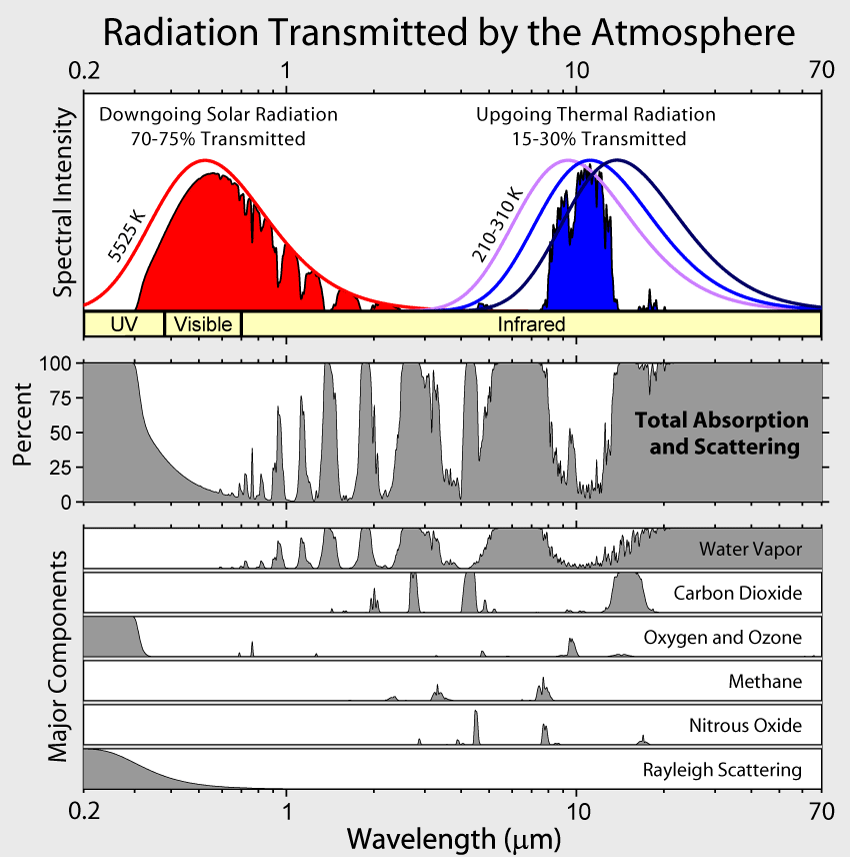
a) Carbon dioxide is a minor player in any further warming. It is uniformly distributed in the atmosphere but only absorbs infrared (heat) in a very narrow wavelength range. The CO2 wavelength range is outside the range of most of the solar radiance that penetrates our atmosphere. It falls roughly inside the wavelength range of temperatures re-radiated when solar radiation heats the earth’s surface. The atmospheric CO2 already absorbs almost all of the radiation that it can in that range. Most of the warming effect of CO2 has already occurred in the past and is one of the reasons our planet is not a frozen wasteland. Any increase in CO2 will have a very minor effect. With CO2 absorption near saturation, almost all of the re-radiated heat in that wavelength range is already being trapped, so it can have little or no effect on future increases in temperature or supposed forcing of water vapor. With CO2 essentially eliminated as a source, any increases in temperature must be from some other source.
Absorption of gases – note narrow CO2 bands & broad water bands.
This figure requires a bit of explaining. The top spectrum shows the wavelengths at which the atmosphere transmits light and heat as well as the “black body” idealized curves for no absorption. It is a little misleading because the data is not based on actual solar and earth data. It is based on two experimental heat sources, one centered at 5525 K (5252o C or 9485o F), the approximate temperature of solar radiation, and one centered in the range of 210 to 310 K (-63o C to 36.8o C or -82oF to 98o F), the approximate temperature range of re-radiated heat from the earth. In reality solar radiation power, (Watts/m2/micron), shown in red, is six million times as strong as the power of re-radiated heat from the earth, shown in blue.
The other spectra are absorption[1] spectra. The top one shows the relative percent absorption by total atmospheric gases at various wavelengths, (note that this spectrum is practically the inverse of the transmission spectrum above it), and the spectra below that show the absorption wavelength ranges of individual atmospheric gases, but not the relative strength of that absorption in reality. As experimental, not real atmospheric, data they can only tell us the wavelength ranges of the absorption, not their relative strengths.
Note that CO2 absorbs in the 15 micron range[2], which is within both the range of re-radiated heat and the strong absorption by water vapor of which the CO2 peak forms a mere shoulder. This is used to claim forcing of water vapor by CO2, without regard to the near-saturation level of CO2. Lesser CO2 peaks in the 2.7 and 4.3 micron ranges also only contribute in a minor way, the first is completely covered by a water vapor absorption peak and the second forms a shoulder in another water vapor peak. These minor peaks occur in a region where both solar radiation and re-radiation are minimized. Methane and nitrous oxide are also shown to be minor players, having narrow absorption ranges and low concentrations. Note too that ozone blocks most of the ultraviolet light from the sun.
b.) Water is by far the most important greenhouse gas/liquid in the form of vapor, high and low altitude clouds, rain and snow, which both absorb and reflect sunlight and re-radiated heat from the surface. Water vapor is not uniformly distributed in the atmosphere, being concentrated near the earth, but strongly absorbs heat in a wide range of wavelengths. More heat means more water vapor evaporating from the oceans. Sounds pretty scary, doesn’t it? Contrary to what is assumed by climate modelers, who use this to claim forcing by CO2, the extra vapor doesn’t remain as vapor. It quickly forms low altitude clouds that strongly reflect in-coming sunlight and heat into space. Any re-radiated heat from the surface that may be trapped by clouds is a small fraction compared to the in-coming solar radiation, so blocking solar radiance has a net cooling effect that overwhelms any increases in trapped re-radiation. High altitude clouds tend to trap heat from being re-radiated into space, but have little effect because the increases in cloud cover due to warming are mostly in low altitude clouds.
[1] Transmission and Absorption are inversely related by the formula A = 1/log T.
[2] The horizontal axis is a log scale in microns so that the 1 to 10 range is in units of 1 and the 10 to 70 range is in tens.
NOTE: Republished from July 22, 2015 Post (media link broken and here restored)
Want to know more about this and other Modern Myths including climate change, evolution, origin of life, Big Bang cosmology or quantum physics? See related posts on this website or buy the book Perverted Truth Exposed: How Progressive Philosophy Has Corrupted Science in print or as e-book/Kindle on line at WND Superstore (the publisher) or at Amazon, Books-a-Million or Barnes & Noble .
Is the universe expanding from a Big Bang or is it a misinterpretation of the redshift of light?
The Big Bang and the expanding universe probably are illusions that fit the progressive agenda of an ever evolving universe.
It also closes the door on the infinite series of cause and effect that requires a first cause outside the system to get it started, aka God/ creator/ overarching, pre-existing force. If time itself began with the Big Bang, there can be no “before,” thus cutting off any consideration of a first cause.
The Big Bang theory is based on three things:
1.) An interpretation of the redshift of light from other galaxies as speed of recession,
2.) One of many solutions to Einstein’s field equations that favored an expanding universe. Einstein’s own solution included a cosmological constant that resulted in a non-expanding universe.
3.) The Cosmic Microwave Background (or CMB) interpreted as the far red shifted afterglow of the Big Bang.
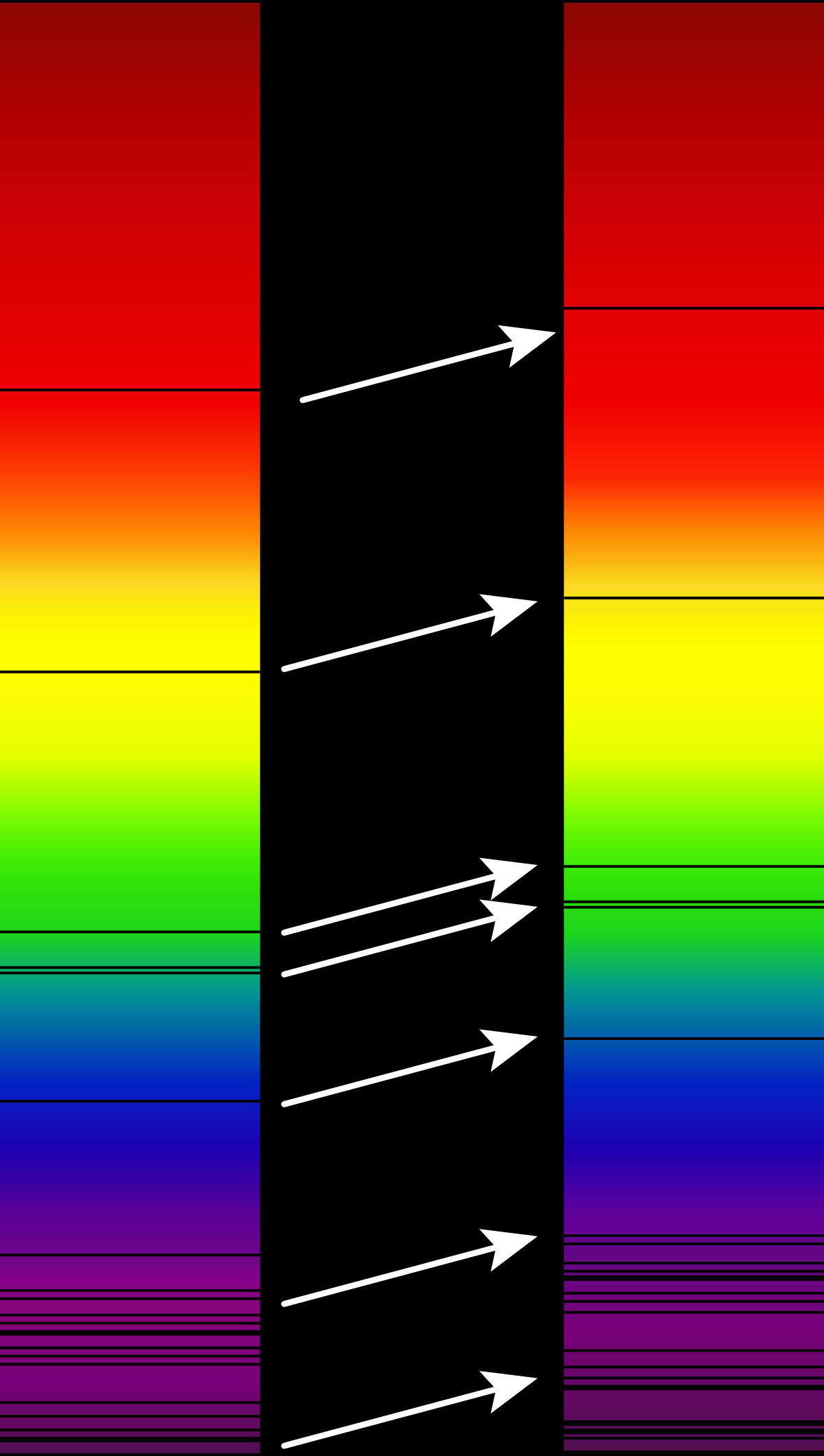
Redshift is really the shift of the dark absorption lines of elements to longer, redder, wavelengths. Hydrogen is usually used because of its abundance.
Before discussing redshift to distance let me set the stage. It’s the 1920s.
Before telescopes were powerful enough to see individual stars in other galaxies, our galaxy was assumed to be the entire universe and galaxies were assumed to be clouds of glowing gas called nebulae (meaning clouds) within our galaxy.
We now estimate there are over 100 billion galaxies in the observable universe.
Cepheid variable stars with the same variability period had been determined to be the same brightness everywhere, which made them a “standard candle” to determine distance, first in our galaxy and then in other galaxies. When individual stars were first seen in other galaxies, using the most powerful telescope of the time, nebulae were identified as other “island universes,” aka galaxies.
Redshift of galaxy cluster (right) vs. solar spectrum
Redshift of stars in our galaxy were determined to be caused by their speed moving away from us. The faster, the greater the redshift by the Doppler Effect, where light is “stretched” by the speed of the source.
Redshifts in nebulae (nearby galaxies) were known to be greater than redshifts within our own galaxy.
Edwin Hubble discovered the red shift to distance relationship for nearby galaxies, based on Cepheid variable stars within them. By this he calculated that farther is redder.
Because the redshift from nearby stars in our galaxy had been recognized as indicating their speed away from us, this new redshift was assumed to mean speed of recession of galaxies.
Hubble noted that the redshift to distance relationship was only linear if he assumed fixed, not receding galaxies.
He was also uncomfortable with the extreme speeds calculated from redshift which were rapidly approaching the speed of light with increasing distance.
His redshift to distance calculations resulted in very small universe with a “Big Bang” point of origin only 2 billion years ago, which is less than the calculated age of the earth at 4.5 billion years. Later adjustments extended it to 13.7 years ago, which is still only 3 times the age of the earth.
He spent the rest of his life trying to convince others that they were wrong about redshift meaning speed of recession.
Today’s redshift calculations exclude nearby galaxies as being affected by gravity of the Local Group of galaxies.
Cosmological and relativistic terms have been added to the calculations, so the relationship is no longer linear
A redshift of 1, as a simple ratio, is equal to the speed of light; we now have redshifts greater than 8.
This made it necessary for cosmologists to assume that space itself between galaxies is expanding faster than the speed of light, the upper limit of speed for ordinary matter.
Fritz Zwicky, a contemporary of Hubble, proposed that the red shift is from loss of energy by gravitational interaction over time that fits observations better than other non-speed related theories.
To be a valid theory, the redshift must occur uniformly for the entire spectrum and not blur or obscure distant objects by scattering light. All theories based on repeated collisions in space do not fit these requirements.
History rewritten: Modern cosmologists claim Zwicky’s theory was about collisions. His original paper[1] discussed collision related theories and eliminated them in favor of gravitational influence over time and distance.
More recently Steven Weinberg and others have raised speculation that mirrored Zwicky’s theory of gravitational influence over time causing red shifts, but they were not ready to abandon the expanding universe paradigm.
“The frequency of light is also affected by the gravitational field of the universe, and it is neither useful nor strictly correct to interpret the frequency shifts of light…in terms of the special relativistic Doppler effect.” Steven Weinberg and Jaylant Narlikar and John Wheeler, quoted in “Galaxy Redshifts Reconsidered,” by Sten Odenwald and Rick Fienberg, Sky &Telescope, February 1993 issue.
The Cosmic Microwave Background (CMB) is interpreted as the far red shifted afterglow of the Big Bang. However, the temperature of thinly dispersed matter in space as a result of residual starlight was earlier calculated and predicted by Guillaume, (5 K < T < 6 K),26 Eddington, (T = 3.1 K), Regener and Nernst, (T = 2.8 K), McKellar and Herzberg, (T = 2.3 K), Finlay-Freundlich and Max Born, (1.9 K < T < 6.0 K) based on a universe in dynamical equilibrium without expansion.[2] Penzias and Wilson experimentally found the cosmic microwave background radiation to be consistent with a temperature of 2.7 K. Gamow, who had claimed to be the originator of the Big Bang Theory, also erroneously claimed he had been the first to predict the background temperature and claimed the result as evidence for the Big Bang. However, his estimate was not only not the first, but was 7 K with an upper limit of 50K.
Did Einstein really say his cosmological constant (for a non-expanding universe) was his biggest mistake?
The so-called Einstein quote that his cosmological constant was the “biggest blunder” of his life was only claimed by George Gamow in 1970, 15 years after Einstein died.
Einstein’s friends and research associates denied it but claimed that, if he said it, it was a joke. (the polite way to avoid calling Gamow a liar.)
Conclusion: If the universe is not expanding from a Big Bang, it can be far larger and much older than the Big Bang theory allows. The observable universe, observed back to approx. 13.5 billion years, may be a small corner of a much grander universe, which could allow more time for formation of galaxies and larger structures without the proposed dark matter influence. Exotic inventions such as expanding space, dark energy and dark matter may not be necessary. Recent work using near-infrared data from the Spitzer space telescope to more accurately estimate mass of numerous galaxies explains galaxy rotation speeds without resorting to exotic dark matter.[3]
[1] Original Report: “On the Red Shift of Spectral Lines Through Interstellar Space,” By F. Zwicky, Norman Bridge Laboratory Of Physics, California Institute Of Technology, August 26, 1929
[2] History of the 2.7 K Temperature Prior to Penzias and Wilson” A. K. T. Assis, Instituto de Fisica “Gleb Wataghin” Universidade Estadual deCampinas 13083-970 Campinas, Sao Paulo, Brasil M. C. D. Neves Departamento de Fisica Universidade Estadual de Maringa 87020-900 Maringa, PR, Brasil
[3] “The Radial Acceleration Relation in Rotationally Supported Galaxies,” by Stacy S. McGaugh and Federico Lelli, Department of Astronomy, Case Western Reserve University, James M. Schombert, Department of Physics, University of Oregon (Dated: September 21, 2016) arXiv: 1609.05917v1 astro-physics. GA
Want to know more about this and other Modern Myths including climate change, evolution, origin of life or quantum physics? See related posts on this website or buy the book Perverted Truth Exposed: How Progressive Philosophy Has Corrupted Science in print or as e-book/Kindle on line at WND Superstore (the publisher) or at Amazon, Books-a-Million or Barnes & Noble .