Antihumanism, Communism, Environmentalism and the Overpopulation Myth

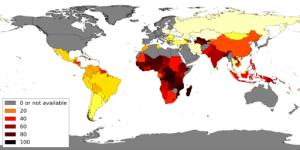
Countries by Poverty Rate – World Bank

The roots of environmentalism go back to the eighteenth century in the form of the overpopulation myth of Malthusianism, which was all about limiting the human population to prevent a predicted Malthusian Catastrophe, i.e. mass starvation, and for genetic purity, especially among supposedly genetically inferior groups e.g. certain races, cultures and the chronically poor. This is based on the progressive beliefs in materialism, (i.e. there is no spiritual side, only the material we can see and touch), and humanism, (i e. man is the measure of everything and determines morals to suit his circumstances).  From these progressive philosophies grew socialism, communism, fascism, the eugenics[1] movement and environmentalism, all of which are about control of the masses by an elite few, and all are basically anti-human, anti-development and anti-freedom.

In 1798 Thomas Malthus published An Essay on the Principles of Population[2]  in which he predicted future starvation based on the assumption that the rate of population growth would far surpass the growth rate of food supplies. Using this, he proposed draconian measures to “fix” an assumed overpopulation problem at a time when world population was below one billion.  Malthus made two major erroneous assumptions:

  1. Genetic inferiority and enhanced fertility of less accomplished peoples
  2. No improvement in crop yields per acre.

He assumed that the only way to grow more food was to increase the number of acres under cultivation, which limited the total “carrying capacity” of any region and indeed the world. We now know that yields have improved by orders of magnitude through things such as introduction of more prolific, disease resistant plant varieties and high yield hybrids, nitrogen and mineral fertilization, mechanization and control of insect and rodent pests. Nor did he foresee the natural reduction of family size that usually occurs when people are raised beyond near-starvation subsistence, and when diseases are controlled so that high childhood mortality is reduced.

Using these false assumptions as a “reason,” he advocated government measures to reduce population growth rates among the poor such as regulating marriage, educating for moral abstinence, as well as birth control and sterilization. However, he opposed nutritional relief and improved hospital access that would have reduced infant mortality and extended life spans among the poor.  In his opinion, helping the poor only made the supposed overpopulation problem worse.  He extended this same philosophy to Africa where he observed that the Tsetse fly and Malaria helped to keep human population numbers and lifespans low, which he saw as a good thing.

This same upside down philosophy persists today among progressives who only typically want to manage the poor while keeping them poor.  Malthus was pushing evolution and eugenics long before Charles Darwin[3] and Frances Galton[4].   In The Descent of Man, Charles Darwin assumed that the superior races (assumed to be white Europeans) would eventually cause the extinction of the inferior races (assumed to be black and brown peoples). Francis Galton coined the term eugenics for a theory about improving the human race through selective breeding and exclusion from reproduction of supposedly genetically inferior groups.


“At some future period, not very distant as measured in centuries, the civilized races of man will almost certainly exterminate and replace the savage races throughout the world.

—Charles Darwin, Descent of Man


Because genetic inferiority of certain races, cultures and the poor has largely been rejected by more enlightened geneticists and the public in general, (but apparently not for powerful population control supporters), along with vastly improved food production rates, environmentalism is the latest cause celebre to cover brutal inhumanity to man in the form of forced or coerced population control in places like China, lndia and Africa.  The shift from eugenics or racial purity to environmentalism is based on the false assumption that the world is overpopulated, resulting in harm to the environment.  This makes environmentalism and population control a perfect match and a good fit for the progressive elite seeking control.

Is it true that the world is overpopulated? Only if agriculture had remained as it was in the eighteenth century.  However, the advances in crop yields are more than enough to feed the world.  There is more than enough food for all.  The reason for starvation and poor nutrition is usually political mismanagement or worse, such as well-meaning but misguided environmentalism and population control by philanthropic societies, NGOs, UN and local governments intentionally keeping the poorest in their disease ridden squalor without adequate infrastructure to provide for basic needs in order to control the people.  A healthy and educated population is much harder for a dictator to control and thereby remain in power.

The best way to stabilize population, if that is the goal, is to raise the standard of living by providing employment, transportation, electricity, medical care, education, clean water and adequate food. It is a well known fact that family size is naturally reduced when living standards are improved beyond the point where excess children are needed to insure replacement of those lost in early childhood to disease and malnutrition.  It can be argued that the population is too low in many areas to provide the cooperation and man power to provide better facilities without outside aid. Only cities are overpopulated, and that is usually by choice. As population numbers have grown, the world has seen an increase in the standard of living, as reflected in the global GDP per capita, due to division of labor and shared responsibility for both agriculture and developing infrastructure.  We should be doing all we can to raise the world’s poor out of poverty. Caring for the environment is the last thing on the minds of people who are having difficulty feeding their children.  Raising their standard of living is the best thing we could do to stabilize the population and protect the environment. Unfortunately, the progressives would rather do the opposite for ideological reasons.

I have seen the benefits of higher population and the negative side of low population myself. I grew up in an area of the Appalachian Mountains where population is low. Services that are available in the cities and towns a couple of hours away are not or only marginally available in these mountainous rural areas.  Even finding a plumber or electrician is difficult.  Although the situation is better now because of improvements in highways, many in the area still must travel to the cities for proper medical care.  Lower population means lower tax basis, fewer businesses, less opportunity. It has been difficult getting businesses, whether they are medical facilities, manufacturing, commercial or food and entertainment,  interested in locating in an area where the customer and workforce base are low.  It has been particularly difficult getting doctors to come and stay.  It hasn’t been that long since the first fast food restaurant came into the area.  I bring this up to illustrate the logic of raising the population to improve living standards.  Granted, this is a far cry from poor villages in other countries, but it still illustrates the point that higher population brings higher living standards.

[1] Eugenics is the “science” of improving the human race by selective breeding of genetically superior people and preventing supposedly genetically inferior people from reproducing.

[2] Thomas Robert Malthus, An Essay on the Principles of Population, 1798, London

[3] Charles Darwin, On the Origin of Species , 1858, London, The Descent of Man, 1871

[4] Francis Galton, 1865 article “Hereditary Talent and Character”, Hereditary Genius., 1869, Inquiries into Human Faculty and Its Development, 1883.

Overpopulation, The Deadly Myth Behind the Other Environmental Myths


Who says the world is overpopulated? And what does that mean anyway? Hunger?  Crowding? Environmental harm?  For over 200 years we’ve been told that the world is overpopulated. But is it? Check this out.

In 1798, Thomas Malthus thought the world was overpopulated when world population was under one billion. In his book, An Essay on the Principles of Population, he advocated not supporting the poor and controlling the population. He was wrong.

When world population was about 1.3 billion, Charles Darwin, who’s Theory of Evolution was based on Malthus’ book, thought the struggle for survival would cause the extinction of underdeveloped cultures by developed peoples. He was wrong.

Francis Galton, creator of Eugenics, the so-called science of improving the human race, thought the African races were so inferior genetically that Chinese should be settled in Africa to drive the Negro races to extinction and replace them. He was wrong.

Around 1920 when the population was about 1.9 billion, Margaret Sanger, founder of Planned Parenthood and a prominent eugenicist, believed we needed to get rid of “human weeds,” including dark skinned people from Southern Europe, Africa and India as well as the mentally or physically impaired. She advocated for sterilization, birth control, and abortion. She was wrong.

In the 1930s when world population was about 2 billion, Adolf Hitler believed the world was overpopulated and sought to gain “Lebensraum” (living room) by invading other countries and exterminating “inferior” people, including Jews and Gypsies. By doing so he sought to create a super race of Arian Germans.  He was wrong.

In 1966 when the world population was 3.3 billion, to control population, under President Johnson, US AID began requiring population control quotas as a condition for receiving foreign aid. Mass sterilization camps were set up in poor countries using equipment supplied by the UN and US. He was wrong.

Meanwhile, in the 1960s the Green Revolution of higher yield, more disease resistant and more nutritious varieties, increased crop yields by orders of magnitude, making it possible to feed the world without sacrificing forests and other pristine wilderness areas. 

When The Population Bomb was published in 1968 by Paul Ehrlich, world population was about 3.7 billion. He believed the world was overpopulated and required drastic action to reduce the population in order to prevent mass starvation and collapse of the society. He was wrong.

In 1972, after nearly 30 years of controlling disease carrying insects, DDT was banned by the EPA in spite of overwhelming evidence refuting claims of harm; the ban was based more on political fears of growing populations in developing countries than on real science or perceived harm. Before the ban DDT eliminated Malaria in the developed world. Developing countries were threatened with loss of foreign aid if they did not discontinue DDT use. Most did, but India did not comply.

Today the world population is over 8 billion(*). USAID, UNFPA, (UN Fund for Population Activities), UNESCO (UN Educational, Scientific and Cultural Organization), WHO, World Bank, International Planned Parenthood, Population Council, Marie Stopes and other groups continue the Overpopulation Myth with abortion, sterilization, IUD implantation and birth control activities in poor countries around the world.  They are still wrong.

So, is the world overpopulated? Not by any measure. Let’s look at what we mean by overpopulated.

Do we have enough food for everyone? Yes. Thanks to modern agricultural techniques and high yield crops there is more than enough for at least 11 billion people without any increase in acres cultivated.  Advancing technology will probably multiply the yield still further as it has in the past.  Myths against modern pesticides, herbicides, modern agricultural techniques and biotech crop enhancements (aka GMO) are used to keep poor countries on subsistence agriculture, which results in deforestation to replace depleted fields.

Is the food distributed fairly? No. Other than disasters and wars, hunger has more to do with local politics than with food supplies.  Corrupt governments, propped up by government to government foreign aid, which the poor rarely see, are incentivized to help with international population control schemes, but not to build infrastructure, attract investment and help to raise the standard of living of their own rural poor. As long as the people are kept poor, the aid money keeps coming, so corrupt governments have little or no incentive to improve conditions for their people. Foreign aid must be replaced by foreign and domestic investment in infrastructure with accountability.

Is there enough room for all the people? Compared to the land area of the earth, the population is very small. For perspective, if all the people in the world were placed in an area the size of Texas, each person would have almost 93 square meters.  A family of four would have 372 square meters. That’s about 4000 square feet, enough for a 2000 square foot house and a yard or garden.  This thought experiment puts population in perspective with the size of the earth. No one is suggesting we actually do this, except for the loony left who are grasping at straws to defeat this argument against the overpopulation myth. 

Global average population is 55 people per square kilometer of land area, excluding Antarctica. That’s 17.96 acres per family of four. In 2016, over 54% of the population lived in cities, which covers only 2.7% of the land.  That means that 46% of the population is rural and lives on 97.3% of the land area. That calculates to 26 people /km2 in rural areas or 38 acres per family of four.  Yes, I know that large areas are uninhabitable. Even if we assumed 50% uninhabitable, that’s still a lot of land per person.  The fact that only 10% of the land is actually inhabited doesn’t change the picture.  There is still a lot of land out there to accommodate and feed a larger population. All this doesn’t even count the 71% of the earth’s surface that is water, which is a food source and a highway between markets.

Is Overpopulation causing Climate Change? As a part of the biosphere, the human race is a small contributor to the total carbon and carbon dioxide gas, and is exceeded by orders of magnitude by land and sea vertebrate animals, and even more extremely by insects and other invertebrates, both in numbers and total mass. One estimate claims there are 300 pounds of insects for every human pound, or 1.4 billion insects per person. With almost 2 million different species described so far and possibly many more un-described, estimates vary widely, even for human populations, especially in poor countries. Corrupt governments may over estimate numbers and under report economic conditions to receive more foreign aid dollars.

Is the environment being harmed by too many people? No. Poverty, including subsistence farming, not population, causes environmental harm and deforestation.  Modern agriculture and higher yield crop varieties can end deforestation and provide surplus crops to sell.  Roads, electricity, clean water and disease control can provide a healthy workforce and energy to attract investors and run industry. Historically, improved infrastructure and opportunity also stabilize populations and reduce family size. By keeping the poor in poverty, environmentalists actually are doing more harm to the environment. Raising standards of living means people will be able to care for their environment.

Many developed countries have bought into the overpopulation myth to the point that their birth rates are below replacement value. Japan, which reached one of the lowest global fertility rates of 1.4 in 2014 (#), has started paying people to have children because of the looming demographic catastrophe of too few people to work and support the elderly who cannot work. Some of the highest density areas of the world are the richest.  Look at Shanghai. It is not only the most populated city in the world, 24 million, with an average population density of 2050/km2 (3854/km2 urban) but is one of the most prosperous. 

Rural poor areas in developing countries are underpopulated. With diseases from insects and contaminated water taking a high toll and attrition from migration into cities by the young and healthy, there are not enough healthy people to build infrastructure and markets and raise the standard of living of the rural poor.  They already have population control by disease and poverty.  They certainly don’t need birth control, sterilization and abortion. 

Is the planet overpopulated?  By all measures of overpopulation, the earth is far from capacity to support its people.  Since overpopulation advocates have been scaring us for 200 years, why should be believe what they keep saying?  Quit worrying about an assumed problem that has yet to materialize.  The real problem is with the population control advocates, the abortionists, the sterilizers and the international governmental and nongovernmental organizations that keep paying these organizations for killing off the hope of the future while keeping people in extreme poverty: poor, sick, isolated, ignorant and controlled. Free market solutions are the answer, not money given to prop up corrupt government officials, which the poor rarely see.

The rural poor in developing countries need disease control, electricity and roads to end isolation. They need Employment, Education, Investment, Infrastructure and Disease Control to join the 21st century.  It is possible and you can help.

How can you help? Get involved through charities, investments and campaigning against policies that hurt and oppress the poor.  Be an advocate for economic development and against population control.

* Population updated to 2022 estimated total.

#Fertility rate update for Japan is 1.3 children per woman for 2020; for US it is 1.6. Neither of which are at replacement levels.

Note: Previously posted as a guest author on What’s Up With That blog at https://wattsupwiththat.com/2019/05/25/overpopulation-the-deadly-myth-behind-the-other-modern-myths/

Updated from an earlier post, on Saving Africa from Lies That Kill blog at https://savingafricafromliesthatkill.com/2020/09/02/overpopulation-the-deadly-myth-behind-the-other-myths/

History of Climate and Overpopulation Alarms

For a great history of Climate Change and Population Control Alarms watch this video from realclimatescience.com and Steve Goddard’s Youtube channel by Tony Heller.  A little long but well worth watching.  All scares are politics, not science. The aim is socialist/communist control – control of population, economy, politics, every facet of your life.

FACTS:

  • The world is still not overpopulated.
  • Hunger is more about politics than scarcity. Modern agriculture can feed everyone.
  • The climate is always changing, but it is not dangerous. Warm is healthier than cold.
  • Carbon Dioxide (CO2) is plant food, and why earth is not one giant ball of ice.
  • Water vapor is a far stronger greenhouse gas than CO2.
  • Most of the greenhouse effect occurred in the distant past with an almost opaque blanket preventing heat loss to space. Any further increase in CO2 will have little to no effect.
  • Deserts and jungles are greening. Crop yields have increased 15 to 20% on average.
  • The oceans are not rising, except for 7 inches a century since the little Ice Age.
  • Ocean acidification is a myth. Oceans are buffered to maintain alkaline pH, not acid.
  • Storms, droughts, floods are not increasing in intensity or frequency.
  • Polar bears and other wildlife are thriving.

_____________________________________________________________________________________________

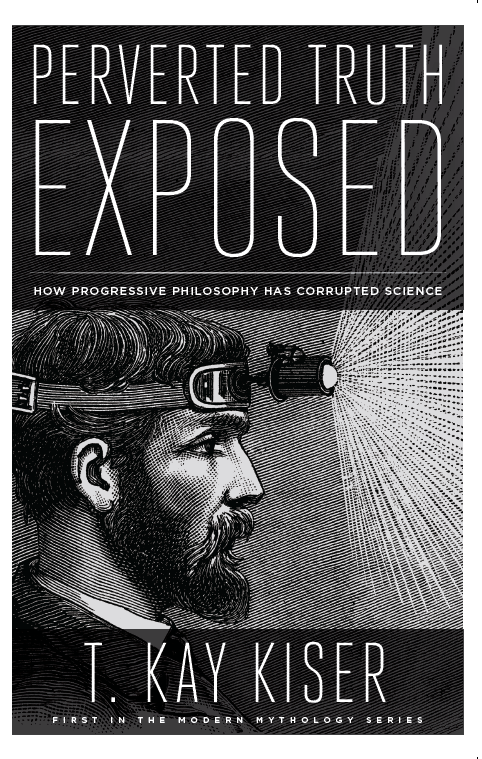
Check out my book Perverted Truth Exposed: How Progressive Philosophy has Corrupted Science on Amazon, and earlier posts here on this subject. The book covers some of the basic areas where science has been corrupted or replaced by philosophy disguised as science. The major scientific areas covered are Darwinian Evolution, Origin of Life Theories, Cosmology, Quantum Mechanics as the heart of Particle Physics, and the Climate Change debate.  I present facts and logic to make the point that these areas, regardless of the merit of the theories, are actually based on philosophy, not science, that fits an atheistic, anti-human, progressive political agenda.

Sign up to follow this blog by email and like my Facebook page.

Human Pollution: The Planet Is Doomed — Thongchai Thailand

PRINCIPLES AND PRECEPTS OF ECO FEAROLOGY PRINCIPLE #1: THE NATURAL AND THEREFORE THE DESIRABLE STATE OF THE PLANET IS ONE WITH NO HUMANS ON IT: A clean and pure pristine primeval planet earth existed for a billion years in natural perfection, wholeness, and wholesomeness – unpolluted, untainted, untarnished and uncorrupted in the perfection of the harmony […]

via Human Pollution: The Planet Is Doomed — Thongchai Thailand

History of Climate and Overpopulation Alarms

For a great history of Climate Change and Population Control Alarms watch this video from realclimatescience.com and Steve Goddard’s Youtube channel by Tony Heller.  A little long but well worth watching.  All scares are politics, not science. The aim is socialist/communist control – control of population, economy, politics, every facet of your life.

FACTS:

  • The world is still not overpopulated.
  • Hunger is more about politics than scarcity. Modern agriculture can feed everyone.
  • The climate is always changing, but it is not dangerous. Warm is healthier than cold.
  • Carbon Dioxide (CO2) is plant food, and why earth is not one giant ball of ice.
  • Water vapor is a far stronger greenhouse gas than CO2.
  • Most of the greenhouse effect occurred in the distant past with an almost opaque blanket preventing heat loss to space. Any further increase in CO2 will have little to no effect.
  • Deserts and jungles are greening. Crop yields have increased 15 to 20% on average.
  • The oceans are not rising, except for 7 inches a century since the little Ice Age.
  • Ocean acidification is a myth. Oceans are buffered to maintain alkaline pH, not acid.
  • Storms, droughts, floods are not increasing in intensity or frequency.
  • Polar bears and other wildlife are thriving.

Carbon Dioxide is plant food and increases growth rates

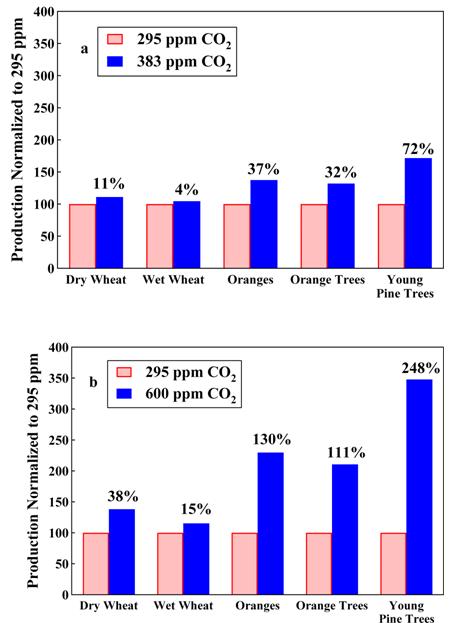
Animals exhale Carbon Dioxide (CO2) and breathe Oxygen (O2), while plants use CO2 and exhale O2. Professional greenhouses often add extra CO2 to increase growth rates. Increased plant growth removes much of the CO2 released into the atmosphere. Between pre-industrial and present times, studies show an average of 15% increase in plant growth rates, with some species increased many times that, e.g. young pine trees. Increased plant growth rates and wider distribution of arable (farmable) land due to warming as well as improved farming practices can solve the so-called overpopulation problem. If much of the data used in the climate models are based on proxy data from tree rings, and growth has been increased by CO2, does that mean that the data is artificially skewed toward “warmer” results? Hmmm.

Plant Growth Chart 1.png


Figure 1. Comparison of Plant Growth at Pre-industrial CO2 levels (295 ppm in pink), at 383 ppm and 600 ppm (in blue) in Dry Wheat, Wet Wheat, Oranges, Orange Trees and Young Pine Trees. Note Percent increases.
Source: Review Article: “Environmental effects of increased atmospheric carbon dioxide,” Willie Soon (1), Sallie L. Baliunas(1), Arthur B. Robinson (2), Zachary W.Robinson (2) Climate Research. 13, 149-164, (1999)  Affiliations: (1) Harvard-Smithsonian Center for Astrophysics, 60 Garden Street, Cambridge, Massachusetts 02138; (2) Oregon Institute of Science and Medicine, 2251 Dick George Road, Cave Junction, Oregon 97523

A. Critics created the “progressive nitrogen limitation hypothesis,” which assumes that increased growth rates of trees would deplete poor soils of nitrogen, thus mediating the positive effects of increased CO2. This is a scenario based on theory, not reality, which stubbornly refuses to support the hypothesis. Many studies[1] show that, contrary to the hypothesis, although roots grow deeper and produce more fine hairs, soil and forest floor are enriched in nitrogen from biological sources, i.e. increased root mass and leaf litter supporting beneficial microbes in the soil.

B. One benefit of increased CO2 is that the stomata (openings) of leaves, which take in CO2 and emit water vapor and oxygen, are reduced, leading to less water loss, enhanced water use and improved tolerance to dryer conditions. At elevated CO2 levels, stomata do not need to be open as far to allow sufficient CO2 in for photosynthesis and, as a result, less water is lost through transpiration[2]. In controlled studies, an additional benefit of reduced stomata openings is a reduction of ozone damage.

C. The increased rate of growth of plants, from forests to sea algae, results in more of certain cooling aerosols being produced. These include Carbonyl Sulfide (COS) from soil and seas that become highly reflective sulfate in the stratosphere to reflect more solar radiation back into space, Iodo-compounds from sea algae that nucleate clouds to reflect more solar radiation back into space, dimethyl sulfide (DMS), from seas that nucleates clouds and other aerosols such as isoprene from trees with similar effects.

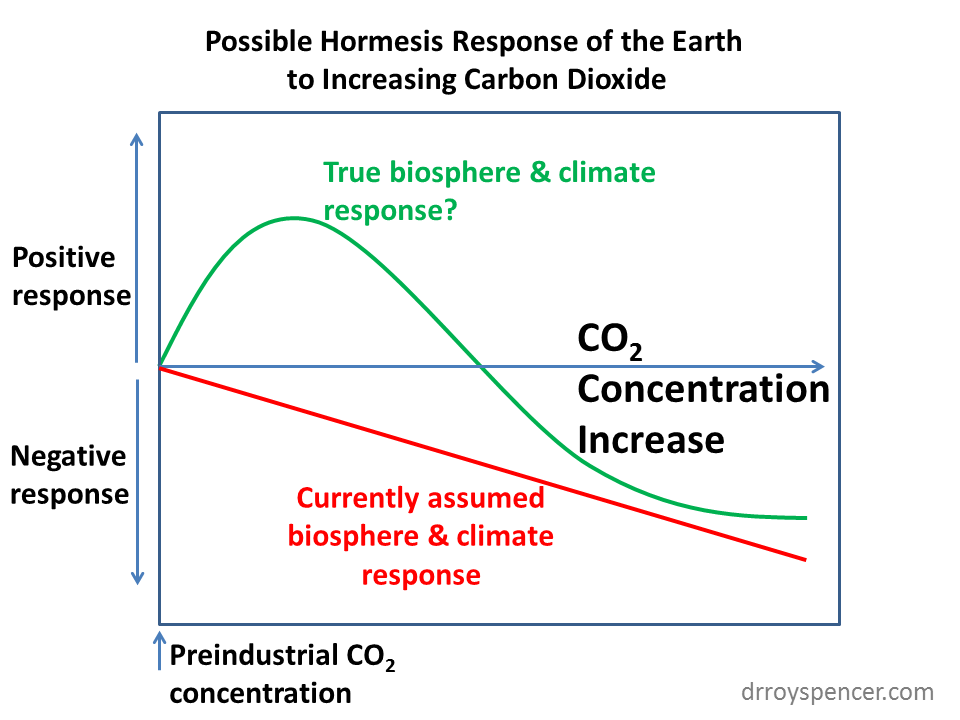
D.  Hormesis is a phenomenon, commonly seen in medicine and nutrition, where a low concentration or dose results in a positive effect, but a larger dose results in damage. For instance, some salt and water are necessary to good health, but beyond a certain point, ingesting more can be harmful or fatal. The effect of CO2 on plant life appears to be one such system. Increased CO2 obviously benefits plant life, but it is uncertain at what level CO2 might have a detrimental effect on growth. In professional greenhouses and experiments, even ten times the current level is still beneficial.

Hormesis Chart 1

Figure 2.  Illustration of how Carbon Dioxide is beneficial to plants through Hormesis. Horizontal Axis is Increasing CO2 level.

Source: http://www.drroyspencer.com/Earth’s Response to Increasing CO2: An Example of Hormesis? August 11th, 2014

As a matter of fact, CO2 below 400 ppm restricts growth, and below 150 ppm plants die en masse.  For a good summary of this, see post at http://notrickszone.com/2013/05/17/atmospheric-co2-concentrations-at-400-ppm-are-still-dangerously-low-for-life-on-earth/ by posted on 17. May 2013 :   Atmospheric CO2 Concentrations At 400 PPM Are Still Dangerously Low For Life On Earth 

[1] Example: Phillips, R.P., Finzi, A.C. and Bernhardt, E.S. 2011. “Enhanced root exudation induces microbial feedbacks to N cycling in a pine forest under long-term CO2 fumigation”. Ecology Letters 14: 187-194.

[2] See review article of research papers: “Responses of agricultural crops to free-air CO2 enrichment” Kimball, B.A., Kobayashi, K. and Bindi, M., Advances in Agronomy 77: 293-368 2002.

This article was first published in August, 2015. Some revisions/links have been added. Information is from my book Perverted Truth Exposed: How Progressive Philosophy has Corrupted Science, published June 2016, available online from Amazon.com

Anti-humanism, Environmentalism and the Overpopulation Myth

Control: Communism, Environmentalism and the Overpopulation Myth.    


The roots of environmentalism go back to the eighteenth century in the form of the overpopulation myth of Malthusianism, which was all about limiting the human population to prevent a predicted Malthusian Catastrophe, i.e. mass starvation, and for genetic purity, especially among supposedly genetically inferior groups e.g. certain races, cultures and the chronically poor. This is based on the progressive beliefs in materialism, (i.e. there is no spiritual side, only the material we can see and touch), and humanism, (i e. man is the measure of everything and determines morals to suit his circumstances).  From these progressive philosophies grew socialism, communism, fascism, the eugenics[1] movement and environmentalism, all of which are about control of the masses by an elite few, and all are basically anti-human, anti-development and anti-freedom.

In 1798 Thomas Malthus published An Essay on the Principles of Population[2]  in which he predicted future starvation based on the assumption that the rate of population growth would far surpass the growth rate of food supplies. Using this, he proposed draconian measures to “fix” an assumed overpopulation problem at a time when world population was below one billion.  Malthus made two major erroneous assumptions:

  1. Genetic inferiority and enhanced fertility of less accomplished peoples
  2. No improvement in crop yields per acre.

He assumed that the only way to grow more food was to increase the number of acres under cultivation, which limited the total “carrying capacity” of any region and indeed the world. We now know that yields have improved by orders of magnitude through things such as introduction of more prolific, disease resistant plant varieties and high yield hybrids, nitrogen and mineral fertilization, mechanization and control of insect and rodent pests. Nor did he foresee the natural reduction of family size that usually occurs when people are raised beyond near-starvation subsistence, and when diseases are controlled so that high childhood mortality is reduced.

Using these false assumptions as a “reason,” he advocated government measures to reduce population growth rates among the poor such as regulating marriage, educating for moral abstinence, as well as birth control and sterilization. However, he opposed nutritional relief and improved hospital access that would have reduced infant mortality and extended life spans among the poor.  In his opinion, helping the poor only made the supposed overpopulation problem worse.  He extended this same philosophy to Africa where he observed that the Tsetse fly and Malaria helped to keep human population numbers and lifespans low, which he saw as a good thing.

This same upside down philosophy persists today among progressives who only typically want to manage the poor while keeping them poor.  Malthus was pushing evolution and eugenics long before Charles Darwin[3] and Frances Galton[4].   In The Descent of Man, Charles Darwin assumed that the superior races (white Europeans) would eventually cause the extinction of the inferior races (black and brown). Francis Galton coined the term eugenics for a theory about improving the human race through selective breeding and exclusion from reproduction of supposedly genetically inferior groups.


“At some future period, not very distant as measured in centuries, the civilized races of man will almost certainly exterminate and replace the savage races throughout the world.

—Charles Darwin, Descent of Man


Because genetic inferiority of certain races, cultures and the poor has largely been rejected by more enlightened geneticists and the public in general, (but apparently not for powerful population control supporters), along with vastly improved food production rates, environmentalism is the latest cause celebre to cover brutal inhumanity to man in the form of forced or coerced population control in places like China, lndia and Africa.  The shift from eugenics or racial purity to environmentalism is based on the false assumption that the world is overpopulated, resulting in harm to the environment.  This makes environmentalism and population control a perfect match and a good fit for the progressive elite seeking control.

Is it true that the world overpopulated? Only if agriculture had remained as it was in the eighteenth century.  However, the advances in crop yields are more than enough to feed the world.  There is more than enough food for all.  The reason for starvation and poor nutrition is usually political mismanagement or worse, such as well-meaning environmental and population control philanthropic societies, NGOs, UN and local governments intentionally keeping the poorest in their disease ridden squalor without adequate infrastructure to provide for basic needs in order to control the people.  A healthy and educated population is much harder for a dictator to control and thereby remain in power.

The best way to stabilize population, if that is the goal, is to raise the standard of living by providing employment, transportation, electricity, medical care, education, clean water and adequate food. It is a well known fact that family size is naturally reduced when living standards are improved beyond the point where excess children are needed to insure replacement of those lost in early childhood to disease and malnutrition.  It can be argued that the population is too low in many areas to provide the cooperation and man power to provide better facilities without outside aid. Only cities are overpopulated, and that is usually by choice. As population numbers have grown, the world has seen an increase in the standard of living, as reflected in the global GDP per capita, due to division of labor and shared responsibility for both agriculture and developing infrastructure.  We should be doing all we can to raise the world’s poor out of poverty. Caring for the environment is the last thing on the minds of people who are having difficulty feeding their children.  Raising their standard of living is the best thing we could do to stabilize the population and protect the environment. Unfortunately, the progressives would rather do the opposite for ideological reasons.

I have seen the benefits of higher population and the negative side of low population myself. I grew up in an area of the Appalachian Mountains where population is low. Services that are available in the cities and towns a couple of hours away are not or only marginally available in these mountainous rural areas.  Even finding a plumber or electrician is difficult.  Although the situation is better now because of improvements in highways, many in the area still must travel to the cities for proper medical care.  Lower population means lower tax basis, fewer businesses, less opportunity. It has been difficult getting businesses, whether they are medical facilities, manufacturing, commercial or food and entertainment,  interested in locating in an area where the customer and workforce base are low.  It has been particularly difficult getting doctors to come and stay.  It hasn’t been that long since the first fast food restaurant came into the area.  I bring this up to illustrate the logic of raising the population to improve living standards.  Granted, this is a far cry from poor villages in other countries, but it still illustrates the point that higher population brings higher living standards.

[1] Eugenics is the “science” of improving the human race by selective breeding of genetically superior people and preventing supposedly genetically inferior people from reproducing.

[2] Thomas Robert Malthus, An Essay on the Principles of Population, 1798, London

[3] Charles Darwin, On the Origin of Species , 1858, London, The Descent of Man, 1871

[4] Francis Galton, 1865 article “Hereditary Talent and Character”, Hereditary Genius., 1869, Inquiries into Human Faculty and Its Development, 1883.

 

Solar and Wind are not reliable answers to clean energy

Are solar and wind power the answers to future clean energy needs? If not, why not.

  • Solar and wind power are NOT the answers to clean energy for the future.
  • If environmentalists were serious about clean power, they would support hydroelectric, geothermal and nuclear power. All of which are clean, reliable and use well developed technologies.
  • If CO2 is not causing warming, (see previous post Why CO2 is not the cause of climate change ) hydrocarbons can provide clean energy with proper scrubbers to eliminate pollutants from smoke.
  • Solar and wind power, by their very nature, are intermittent and unpredictable. The sun is not always visible and the wind is not always blowing at ideal speeds.
    • You can’t run a hospital or a manufacturing plant on unpredictable intermittent and fluctuating power.
    • Fluctuating power can damage computers and electric motors in appliances like refrigerators, heat pumps, etc.
  • As primary power sources, solar and wind power require back up power from other more consistent sources. Their unpredictable nature makes it difficult to supply consistent power as needed through back up sources like fossil fuel and hydroelectric power plants, which cannot change their output quickly, and must run at less than peak efficiency to be ready when needed.
  • More realistically, wind and solar can only provide a small amount of supplementary power to other more reliable sources like fossil fuel or hydroelectric plants.
  • Solar and wind require covering large areas with turbines or solar arrays to supply power, which necessarily disrupts ecosystems.
  • Solar panels and wind generators require exotic “rare earth” minerals, whose extraction is very polluting due to the naturally dispersed nature of rare earths (thus the name).
  • Solar panels are very inefficient and short lived, e.g. typically less than 30% efficiency for 15 to 20 years with declining efficiency over time. Efficiency varies with the time of day/angle of the sun, latitude, prevalence of clouds and dust accumulation. Disposal of wastes are also problematic.
  • Solar plants using mirrors aimed at a steam generator are low tech but their high heat kills birds.
  • Wind turbines kill birds and bats and produce infra-sound that may be harmful to animals and humans.

Raptors sucked into wind turbine blades

10. Why do environmentalists hate hydroelectric power, which is the cleanest and most reliable power source

  • Environmentalists oppose hydroelectric power for two reasons.
    • The first and real reason is that their socialistic goal is to cripple economies and reduce populations that these sources would support.
      • (“Giving society cheap abundant energy would be the equivalent of giving an idiot child a machine gun.” – Paul Ehrlich or paraphrased: “Like giving a loaded gun to a child”)
      • They dream of a return to idealized more primitive times, which were, in reality, brutal and polluting.
      • In reality, the best way to protect the environment and stabilize family sizes is to raise poor people in developing countries out of their disease ridden squalor. They’re not lazy, just sick. Poverty, not population size, is the cause of environmental damage.
      • Africa, for example, has largely untapped hydroelectric capacity beyond their energy needs for the foreseeable future, but that would support a larger population, which the environmentalists fight against.
    • The second “reason,” aka excuse, is disruption of the environment.
      • They don’t seem to mind the environmental disruption by wind and solar farms.
    • Hydroelectric power using large to small waterfalls provides reliable power with minimal impact.
    • Hydroelectric dams require reservoirs that fill slowly to cover formerly dry land, (so the downstream river is not starved in the process), which temporarily disrupts ecosystems that historically have quickly adapted.
      • They prevent periodic downstream flooding that causes misery and death.
      • They provide water for homes, industry and agriculture, and jobs from fishing and tourism.
        • If there is a shortage of fresh water in the world, as claimed by environmentalists, it is because reservoirs are needed.
        • Environmental groups have prevented the construction of over 200 hydroelectric dams in Africa alone.

Beating World Hunger

How we are beating hunger in 5 graphs

August 31, 2016
By Chelsea Follett

It can be hard to remember that even in wealthy countries, food has not always been abundant, and in many parts of the world hunger remains a problem. Fortunately, we are making great headway towards solving it. Here are five charts summarizing the incredible progress that humanity has made against hunger.

1. According to data from the United Nations, as recently as 1992, over a quarter of the world’s population was undernourished. Since then, a dramatic decline in hunger has occurred, particularly in places like China where economic liberalization has led to rapid development. In 2015, the share of the world population suffering from undernourishment had fallen to about 18 percent, while in China it had fallen even further, to less than 10 percent.Hunger graph 12. Not only do fewer people go hungry as a share of the population, but the total number of people suffering from hunger has also declined. Despite population growth, the number of undernourished persons has fallen from over 950 million in 1992 to about 685 million in 2015. That’s almost 270 million fewer undernourished people or a 28 percent reduction. China saw a more dramatic reduction of 51 percent. In 2015, 150 million fewer Chinese were undernourished than in 1992.Hunger graph 23. And even those who are malnourished are less severely malnourished. The average caloric shortfall among food-deprived persons (i.e., the number of calories by which they come up short of their daily requirement) has been shrinking. In 1992, a malnourished person typically consumed around 170 fewer calories per day than they needed. In China, the malnourished consumed 190 calories less than needed, on average. By 2015, the shortfall had decreased to about 100 calories worldwide and only 85 calories in China.Hunger graph 34. How has all of this progress been possible? In order to decrease hunger and feed a growing population, humanity has stepped up to the challenge by producing more food. The amount of food produced per person worldwide is now 20 percent greaterthan what it was back in 2005. And back in 2005 it was almost double of what it was back in 1961. Thanks to the Green Revolution and subsequent innovations, crop yields (i.e., the amount of food produced per unit of land) have also risen. By producing more food per hectare, we are able to spare more land for other uses and better preserve the environment. Consider cereal yields:Hunger graph 45. Importantly, as the food supply has risen, the cost of food has also fallen, on average. The price index shown below has been adjusted for inflation and represents a composite of eighteen crop and livestock prices weighted by their share of global agricultural trade. Despite an uptick in food prices since 2001, the long-term trend is clearly one of decline. Today, the cost of food is less than half of what it was back in 1900.Hunger graph 5

This article first appeared in CapX.

© Copyright 2017 HumanProgress.org

DDT is needed now more than ever (revised/reposted)

Bring back DDT – Save Africa and other impoverished areasAonpheles mosquito feeding

Over 80% of infectious diseases are caused by insects and other arthropods. DDT is desperately needed in impoverished countries where insect borne diseases kill and sicken millions every year, cutting lifespans and productivity.  Africa, India and South-Central Americas are most affected. This unpardonable crime amounts to continuing genocide of brown races by western powers.

Without these insect borne diseases, populations may increase at first, but better health will facilitate the building of infrastructure, agriculture and industry that can raise millions out of poverty, ignorance and hopelessness.  These changes will benefit the environment, because healthy people raised above dire poverty will be able to care for their environment.  Recent claims of mosquito resistance to DDT are grossly overblown and used as an excuse to prevent resumption for insect control.  WHO has required proof of NO resistance for its use in an area, but that requires proving a negative, which is impossible. The aim is not to kill every mosquito, but to reduce or eliminate the transmission of malaria and other diseases between insect vectors and humans.  Mosquitos emerge clean and must acquire malaria from infected people.  That’s why it did not return to countries where it was eliminated. Break the cycle to end the misery.


“How much labor and waste of time these wicked insects do cause, but a ray of hope, in the use of DDT, is now held out to us.”            — Out of My Life and Thought: An Autobiography, Dr. Albert Schweitzer (translated from Ma Vie et Ma Pensee)


DDT worked so well that malaria and similar diseases were eradicated in most developed countries and were near eradication in poorer countries before DDT was banned in 1972 by EPA in spite of failure to find any harm to humans or the environment by an overwhelming body of research.


“To only a few chemicals does man owe as great a debt as to DDT. It has contributed to the great increase in agricultural productivity, while sparing countless humanity from a host of diseases, most notably, perhaps, scrub typhus and malaria. Indeed, it is estimated that, in little more than two decades, DDT has prevented 500 million deaths due to malaria that would otherwise have been inevitable. Abandonment of this valuable insecticide should be undertaken only at such time and in such places as it is evident that the prospective gain to humanity exceeds the consequent losses. At this writing, all available substitutes for DDT are both more expensive per crop-year and decidedly more hazardous.”

— National Academy of Sciences, Committee on Research in the Life Sciences of the Committee on Science and Public Policy, The Life Sciences: Recent Progress and Application to Human Affairs, The World of Biological Research, Requirements for the Future (Washington, D.C.: GPO, 1970), 432.                             (Emphasis added)


Rachel Carson’s 1962 book, Silent Spring, was filled with lies, half-truths, misinterpretation of research results and wild speculations.  Rather than being an attempt to protect humans and the environment as stated, it was really part of an effort to stop population increases in Africa, India and other impoverished countries.


“My own doubts came when DDT was introduced for civilian use. In Guyana, within two years it had almost eliminated malaria, but at the same time the birth rate had doubled. So my chief quarrel with DDT in hindsight is that it has greatly added to the population problem.”

                          —Alexander King, cofounder of the Club of Rome, 1990


Population Bomb by Paul Erilich (1968) was a another book based on Malthusian, (overpopulation), eugenicist, racist lies, aka propaganda.


“The battle to feed all of humanity is over. In the 1970s hundreds of millions of people will starve to death in spite of any crash programs embarked upon now. At this late date nothing can prevent a substantial increase in the world death rate…”                              — Paul Ehrlich, The Population Bomb, 1968


Population control groups such as the Club of Rome, supported by charitable foundations such as the Rockefeller Foundation, continue to spread the myth of overpopulation.  Many rural areas have too few healthy people to build roads, other infrastructure and industry.

In 1972 DDT was banned by US EPA Administrator William Ruckelshaus in spite of overwhelming scientific evidence presented at hearings that refuted claims of harm by activist groups such as Environmental Defense Fund and Audubon Society.


“DDT is not a carcinogenic, mutagenic, or teratogenic hazard to man. The uses under regulations involved here do not have a deleterious effect on fresh water fish, estuarine organisms, wild birds, or other wildlife…and…there is a present need for essential uses of DDT.”                — EPA Administrative Law Judge Edmund Sweeney, after months of hearings, “In the Matter of Stevens Industries, Inc., et al., L.F. & R. Docket Nos. 63, et al.). Hearing Examiner’s Recommended Findings, Conclusions, and Orders, April 1972.” (40 CFR 164.32). (Consolidated DDT Hearings)  As summarized in Barrons, May 1, 1972


Note that this case was brought on behalf of the Environmental Defense Fund, an advocacy group that opposed any use of modern fertilizers and pesticides as harmful to the environment, regardless of evidence to the contrary.

Beginning in the 1970’s, US AID, UN WHO, UNESCO and the World Bank have pressured leaders of poor countries to discontinue DDT as a prerequisite to receiving essential aid. This continues to the present with exception of WHO recently allowing limited spraying of interior walls in selected areas.

Although DDT is the most studied pesticide on the planet, it is still listed as an environmental toxin and possible carcinogen because the EPA listing has not been changed, in spite of all of the studies that failed to find harmful effects on humans or the environment.  It is much safer and more economical than any of the proposed replacements.

Verifying the Claims of Silent Spring

None of Rachel Carson’s “facts” about environmental and human harm were true. Most of the facts below, except where noted, are from “DDT: A Study in Scientific Fraud,” by J. Gordon Edwards, Journal of American Physicians and Surgeons Volume 9 Number 3 Fall 2004. (See link below)

Dr. Edwards examined each of Silent Spring’s claims and found them wrong and possibly fraudulent.

Not one person has been harmed or died from DDT.

  • The only death associated with DDT was a 3 yr. old child that drank a solution of DDT in kerosene, which is a hydrocarbon known to be toxic.
  • J. Gordon Edwards was a Ph.D. entomologist who sometimes ate a spoonful of DDT powder at his lectures as a demonstration of its safety. He suffered no significant ill effects and died of a heart attack at age 84 while hiking in the Rockies.

DDT is not carcinogenic, mutagenic or teratogenic

  • “Workers in the Montrose Chemical Company had 1,300 man-years of exposure, and there was never any case of cancer during 19 years of continuous exposure to about 17mg/man/day.”
  • “Concerns were sometimes raised about possible carcinogenic effects of DDT, but instead its metabolites were often found to be anti-carcinogenic, significantly reducing tumors in rats.”
  • Expected rise in leukemia in children and breast cancer years later in girls exposed during puberty never happened.

Bird deaths, thin egg shells and buildup in the environment have proven to be false.

  • Bird deaths at the University of Michigan, cited by Carson, were not from DDT, but were probably from soil fungicide containing mercury. In later tests, mercury was found in the soil and earthworms there. Other areas did not experience bird deaths from spraying of DDT. Carson’s Source was: Bird Mortality in the Dutch elm disease program in Michigan, Bulletin 41, Cranebrook Institute of Science by George John Wallace; Walter P Nickell; Richard F Bernard
  • According to Audubon Society Annual Christmas Bird Counts, bird populations actually increased during the thirty years of DDT use. Numbers rose from 90 birds seen per observer in 1941 to 971 birds seen per observer in 1960.
  • The eggshell thinning studies cited by Carson could not be replicated and had actually reduced dietary calcium, needed to build egg shells, of experimental birds to get that result.
  • Museum specimens compared to wild population eggs may have led to false claims of thinning because the museums used the best specimens available; natural variability in the wild may have been interpreted as thinning. “the whole idea that pesticides are concentrated as one moves up the food chain, which is crucial to Carson’s arguments about distant and delayed effects, has become increasingly dubious in the years that followed” (Fleming, New Conservation Movement, 31). Source: Reading Rachel Carson by Charles T. Rubin
  • DDT is not metabolized by birds and is rapidly excreted in their droppings.
  • “The counts of raptorial birds migrating over Hawk Mountain, Pennsylvania, indicated that there were many more hawks there during the “DDT years” than previously. The numbers counted there increased from 9,291 in 1946 (before much DDT was used) to 13,616 in 1963 and 29,765 in 1968, after 15 years of heavy DDT use.”

Aquatic life has not been harmed by DDT; it is practically insoluble in water, with only 1.2 parts per billion at saturation.

  • A study cited by Carson claimed 500 ppb DDT in seawater inhibited photosynthesis and killed algae. The problem with this study is that alcohol was added to the tank to dissolve the DDT in the water. Alcohol alone would do that.
  • The assumption of persistence of DDT in seawater for decades was also challenged. Tests showed DDT and its metabolites disappeared in as few as 38 days.

References:

See “DDT: A Study in Scientific Fraud,” by J. Gordon Edwards, Journal of American Physicians and Surgeons Volume 9 Number 3 Fall 2004. On the web at:

http://www.jpands.org/vol9no3/edwards.pdf

See also “The Truth about DDT and Silent Spring” by Robert Zubrin, adapted from Robert Zubrin’s Merchants of Despair: Radical Environmentalists, Criminal Pseudo-Scientists, and the Fatal Cult of Antihumanism, published in 2012, in New Atlantis Books series. On the web at:

www.thenewatlantis.com/publications/the-truth-about-ddt-and-silent-spring