Spot the Vested Interest: The $1.5 Trillion Climate Change Industry – from JoNova website
Climate Change Business Journal estimates the Climate Change Industry is a $1.5 Trillion dollar escapade, which means four billion dollars a day is spent on our quest to change the climate. That includes everything from carbon markets to carbon consulting, carbon sequestration, renewables, biofuels, green buildings and insipid cars. For comparison global retail sales online are worth around $1.5 trillion. So all the money wasted on the climate is equivalent to all the goods bought online.
The special thing about this industry is that it wouldn’t exist if it weren’t for an assumption about relative humidity that is probably wrong. As such, it’s the only major industry in the world dependent on consumer and voter ignorance. This is not just another vested interest in a political debate; it’s vested-on-steroids, a mere opinion poll away from extinction. You can almost hear the captains of climate industry bellowing: “Keep ‘em ignorant and believing, or the money goes away!”.
To state the obvious:
Policy, or the anticipation of new policy, has been one of the biggest drivers of the industry, the report shows.
Most industries this size exist because they produce something the market wants. They worry that competitors might chip into their market share, but they don’t worry that the market might disappear overnight. Normal industries fear that a “bad” political outcome might reduce profits by ten or twenty percent, and sometimes they donate “both ways”. But the climate industry has literally a trillion on the table that depends on big-government policy and election outcomes. They are always one prime-time documentary away from disaster. What if the public saw that thermometers were next to industrial exhaust vents? What if they learned that the climate models are unskilled, broken, and non-functional, or that 28 million weather balloons show carbon reduction is fruitless pursuit? What if they knew historic records are wildly adjusted to make the current weather look warmer than it would? …
Nicholas Lewis gave a keynote lecture with the Title “How sensitive is the climate to greenhouse gases?” – Is it really necessary to reach zero emissions in 2050? At our “Ontgroeningsdag” event on 7 March 2019 in Amsterdam. Video follows.
By Paul Homewood Repost from Jo Nova: The NASA site used to have a page titled “What are the primary forcings of the Earth system?“. In 2010 this page said that the Sun is the major driver of Earth’s climate, that it controls all the major aspects, and we may be on the cusp […]
Stop The Climate Stupidity, by David Archibald. David lets rip in a longish lecture about what he thinks is likely to go on with climate and energy. Names some names on the Australian political scene. Let’s start with the question “has the world warmed?” The place to begin is global sea ice area. This is […]
Quoting from the report: ‘Mörner, meanwhile, cautioned promoters of the man-made warming hypothesis that they were going to ultimately be exposed, with catastrophic consequences for the scientific community.’ The United Nations Intergovernmental Panel on Climate Change (UN IPCC) is misleading humanity about climate change and sea levels, explained Dr. Nils-Axel Mörner, the retired head of […]
The wind industry’s rampant bird and bat slaughter is an inconvenient truth, to be sure. The wholesale slaughter of millions of birds and bats – includes rare, endangered and majestic species, like America’s iconic bald and golden eagles. The default response from the wind industry is to lie like fury and – when the corpses can no […]
Warming fears are the “worst scientific scandal in the history…When people come to know what the truth is, they will feel deceived by science and scientists.” – UN IPCC Japanese Scientist Dr. Kiminori Itoh, an award-winning PhD environmental physical chemist.
“I am a skeptic…Global warming has become a new religion.” – Nobel Prize Winner for Physics, Ivar Giaever.
•••
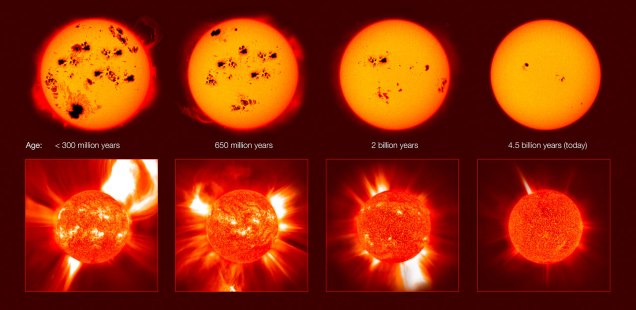
STARS similar to our Sun — “solar proxies” — enable scientists to look through a window in time to see the harsh conditions prevailing in the early or future Solar System, as well as in planetary systems around other stars. These studies could lead to profound insights into the origin of life on Earth and reveal how likely (or unlikely) the rise…
Elaine Dewar spent several days with Maurice Strong at the UN and concluded in her book The Cloak of Green that, “Strong was using the U.N. as a platform to sell a global environment crisis and the Global Governance Agenda.” Strong conjectured about a small group of world leaders […]
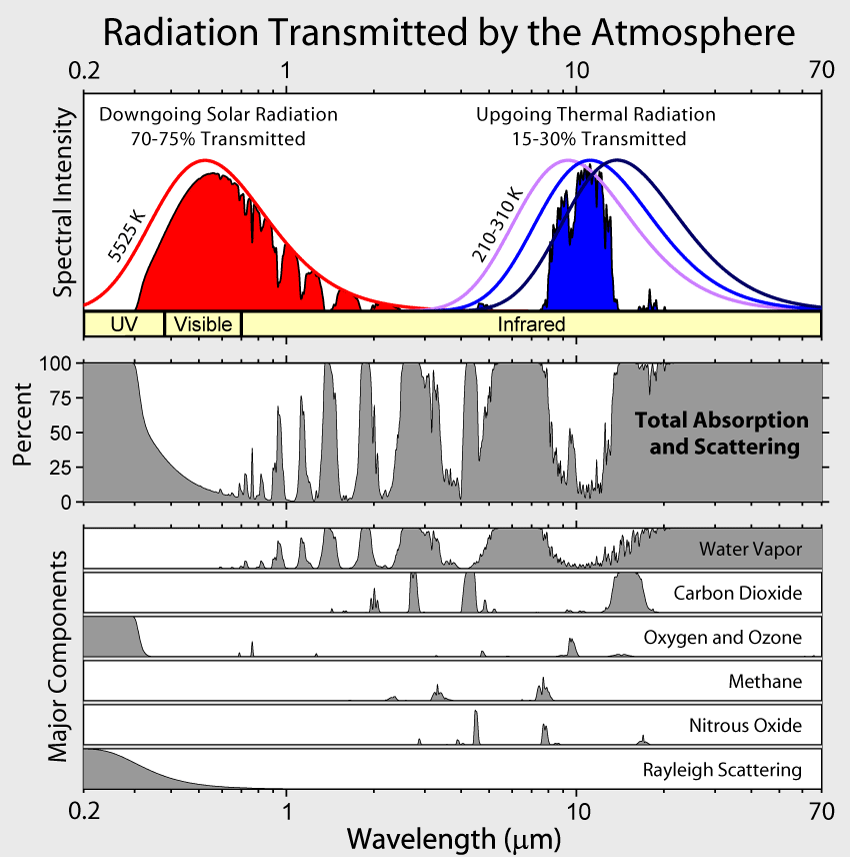
a) Carbon dioxide is a minor player in any further warming. It is uniformly distributed in the atmosphere but only absorbs infrared (heat) in a very narrow wavelength range. The CO2 wavelength range is outside the range of most of the solar radiance that penetrates our atmosphere. It falls roughly inside the wavelength range of temperatures re-radiated when solar radiation heats the earth’s surface. The atmospheric CO2 already absorbs almost all of the radiation that it can in that range. Most of the warming effect of CO2 has already occurred in the past and is one of the reasons our planet is not a frozen wasteland. Any increase in CO2 will have a very minor effect. With CO2 absorption near saturation, almost all of the re-radiated heat in that wavelength range is already being trapped, so it can have little or no effect on future increases in temperature or supposed forcing of water vapor. With CO2 essentially eliminated as a source, any increases in temperature must be from some other sources.
Absorption of gases – note narrow CO2 bands & broad water bands.
This figure requires a bit of explaining. The top spectrum shows the wavelengths at which the atmosphere transmits light and heat as well as the “black body” idealized curves for no absorption. It is a little misleading because the data is not based on actual solar and earth data. It is based on two experimental heat sources, one centered at 5525 K (5252o C or 9485o F), the approximate temperature of solar radiation, and one centered in the range of 210 to 310 K (-63o C to 36.8o C or -82oF to 98o F), the approximate temperature range of re-radiated heat from the earth. In reality solar radiation power, (Watts/m2/micron), shown in red, is six million times as strong as the power of re-radiated heat from the earth, shown in blue.
The other spectra are absorption[1] spectra. The top one shows the relative percent absorption by total atmospheric gases at various wavelengths, (note that this spectrum is practically the inverse of the transmission spectrum above it), and the spectra below that show the absorption wavelength ranges of individual atmospheric gases, but not the relative strength of that absorption in reality. As experimental, not real atmospheric, data they can only tell us the wavelength ranges of the absorption, not their relative strengths.
Note that CO2 absorbs in the 15 micron range[2], which is within both the range of re-radiated heat and the strong absorption by water vapor of which the CO2 peak forms a mere shoulder. This is used to claim forcing of water vapor by CO2, without regard to the near-saturation level of CO2. Lesser CO2 peaks in the 2.7 and 4.3 micron ranges also only contribute in a minor way, the first is completely covered by a water vapor absorption peak and the second forms a shoulder in another water vapor peak. These minor peaks occur in a region where both solar radiation and re-radiation are minimized. Methane and nitrous oxide are also shown to be minor players, having narrow absorption ranges and low concentrations. Note too that ozone blocks most of the ultraviolet light from the sun.
b.) Water is by far the most important greenhouse gas/liquid in the form of vapor, high and low altitude clouds, rain and snow, which both absorb and reflect sunlight and re-radiated heat from the surface. Water vapor is not uniformly distributed in the atmosphere, being concentrated near the earth, but strongly absorbs heat in a wide range of wavelengths. More heat means more water vapor evaporating from the oceans. Sounds pretty scary, doesn’t it? Contrary to what is assumed by climate modelers, who use this to claim forcing by CO2, the extra vapor doesn’t remain as vapor. It quickly forms low altitude clouds that strongly reflect in-coming sunlight and heat into space. Any re-radiated heat from the surface that may be trapped by clouds is a small fraction compared to the in-coming solar radiation, so blocking solar radiance has a net cooling effect that overwhelms any increases in trapped re-radiation. High altitude clouds tend to trap heat from being re-radiated into space, but have little effect because the increases in cloud cover due to warming are mostly in low altitude clouds.
[1] Transmission and Absorption are inversely related by the formula A = 1/log T.
[2] The horizontal axis is a log scale in microns so that the 1 to 10 range is in units of 1 and the 10 to 70 range is in tens.
NOTE: Republished from July 22, 2015 Post (media link broken and here restored)
Want to know more about this and other Modern Myths including climate change, evolution, origin of life, Big Bang cosmology or quantum physics? See related posts on this website or buy the book Perverted Truth Exposed: How Progressive Philosophy Has Corrupted Science in print or as e-book/Kindle on line at WND Superstore (the publisher) or at Amazon, Books-a-Million or Barnes & Noble .


 Climate Change Solar Cycles
 Science is distorted by progressive philosophy