Day of Reckoning for DDT Foes? NOT! Junkscience.com 2006

“…terrible toll in human lives (tens of millions dead — mostly pregnant women and children under the age of 5), illness (billions sickened) and poverty (more than $1 trillion dollars in lost GDP in sub-Saharan Africa alone) caused by the tragic, decades-long ban.”


Day of Reckoning for DDT Foes?  Reblog from Junkscience.com 2006

By Steven Milloy September 21, 2006, FoxNews.com

Last week’s announcement that the World Health Organization lifted its nearly 30-year ban on the insecticide DDT is perhaps the most promising development in global public health since… well, 1943 when DDT was first used to combat insect-borne diseases like typhus and malaria.

Overlooked in all the hoopla over the announcement, however, is the terrible toll in human lives (tens of millions dead — mostly pregnant women and children under the age of 5), illness (billions sickened) and poverty (more than $1 trillion dollars in lost GDP in sub-Saharan Africa alone) caused by the tragic, decades-long ban.

Much of this human catastrophe was preventable, so why did it happen? Who is responsible? Should the individuals and activist groups who caused the DDT ban be held accountable in some way?

Rachel Carson kicked-off DDT hysteria with her pseudo-scientific 1962 book, “Silent Spring.” Carson materially misrepresented DDT science in order to advance her anti-pesticide agenda. Today she is hailed as having launched the global environmental movement. A Pennsylvania state office building, Maryland elementary school, Pittsburgh bridge and a Maryland state park are named for her. The Smithsonian Institution commemorates her work against DDT. She was even honored with a 1981 U.S. postage stamp. Next year will be the 100th anniversary of her birth. Many celebrations are being planned.

It’s quite a tribute for someone who was so dead wrong. At the very least, her name should be removed from public property and there should be no government-sponsored honors of Carson.

The Audubon Society was a leader in the attack on DDT, including falsely accusing DDT defenders (who subsequently won a libel suit) of lying. Not wanting to jeopardize its non-profit tax status, the Audubon Society formed the Environmental Defense Fund (now simply known as Environmental Defense) in 1967 to spearhead its anti-DDT efforts. Today the National Audubon Society takes in more than $100 million per year and has assets worth more than $200 million. Environmental Defense takes in more than $65 million per year with a net worth exceeding $73 million.

In a February 25, 1971, media release, the president of the Sierra Club stated that his organization wanted “a ban, not just a curb” on DDT, “even in the tropical countries where DDT has kept malaria under control.” Today the Sierra Club rakes in more than $90 million per year and has more than $50 million in assets.

Business are often held liable and forced to pay monetary damages for defective products and false statements. Why shouldn’t the National Audubon Society, Environmental Defense, Sierra Club and other anti-DDT activist groups be held liable for the harm caused by their recklessly defective activism?

It was, of course, then-Environmental Protection Agency administrator William Ruckelshaus who actually banned DDT after ignoring an EPA administrative law judge’s ruling that there was no evidence indicating that DDT posed any sort of threat to human health or the environment. Ruckleshaus never attended any of the agency’s hearings on DDT. He didn’t read the hearing transcripts and refused to explain his decision.

None of this is surprising given that, in a May 22, 1971, speech before the Wisconsin Audubon Society, Ruckleshaus said that EPA procedures had been streamlined so that DDT could be banned. Ruckleshaus was also a member of — and wrote fundraising letters for — the EDF.


My note: This speech was before the seven months long EPA hearings before Judge Sweeney began in fall of 1971, so even though the hearings concluded DDT was not harmful to man or environment, Ruckelshaus  already had his mind made up.


The DDT ban solidified Ruckelshaus’ environmental credentials, which he has surfed to great success in business, including stints as CEO of Browning Ferris Industries and as a director of a number of other companies including Cummins Engine, Nordstrom, and Weyerhaeuser Company. Ruckelshaus currently is a principal in a Seattle, Wash., -based investment group called Madrona Venture Group.

Corporate wrongdoers — like WorldCom’s Bernie Ebbers and Tyco’s Dennis Kozlowski — were sentenced to prison for crimes against mere property. But what should the punishment be for government wrongdoers like Ruckleshaus who, apparently for the sake of his personal environmental interests, abused his power and affirmatively deprived billions of poor, helpless people of the only practical weapon against malaria?

Finally, there is the question of the World Health Organization itself. What’s the WHO been doing for all these years? There are no new facts on DDT — all the relevant science about DDT safety has been available since the 1960s. Moreover, the WHO’s strategy of mosquito bednets and malaria vaccine development has been a dismal failure. While the death toll in malarial regions has mounted, the WHO has been distracted by such dubious issues as whether cell phones and French fries cause cancer.

It’s a relief that the WHO has finally come to its senses, but on the other hand, the organization has done too little, too late. The ranks of the WHO’s leadership need to be purged of those who place the agenda of environmental elitists over the basic survival of the world’s needy.

In addition to the day of reckoning and societal rebuke that DDT-ban advocates should face, we should all learn from the DDT tragedy.

With the exception of Rachel Carson (who died in 1964), all of the groups and individuals above mentioned also promote global warming alarmism. If they and others could be so wrong about DDT, why should we trust them now? Should we really put the global economy and the welfare of billions at risk based on their track record?

Steven Milloy publishes JunkScience.com and CSRWatch.com. He is a junk science expert, an advocate of free enterprise and an adjunct scholar at the Competitive Enterprise Institute.

See “DDT: A Case Study in Scientific Fraud” by J. Gordon Edwards, PhD, 2004 at http://www.jpands.org/vol9no3/edwards.pdf

For more information see also my earlier blog – Bring back DDT – Save Africa and other impoverished areas
 

Political Corruption of Science Revealed in New Book

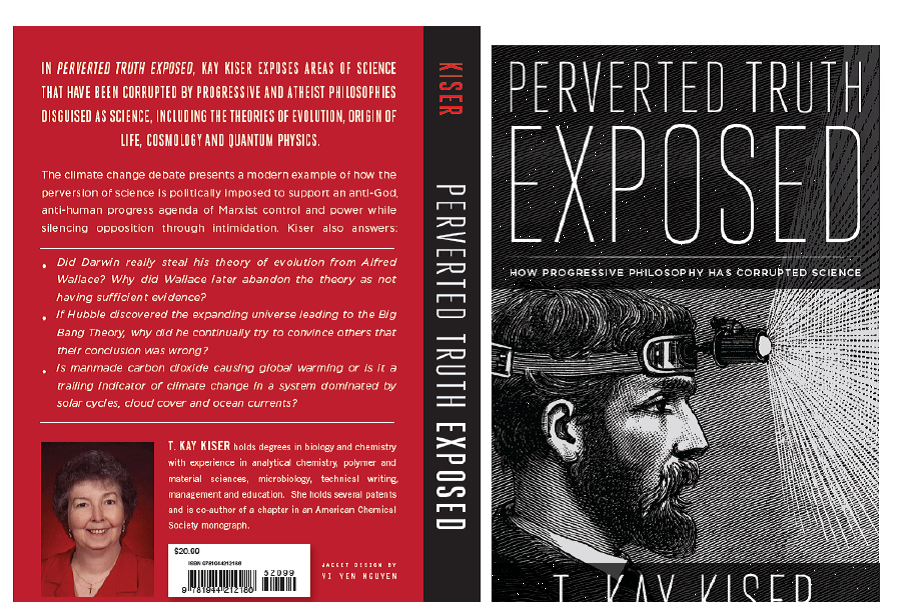
Perverted Truth Exposed cover image

In Perverted Truth Exposed, Kay Kiser exposes areas of science that have been corrupted by progressive and atheist philosophies disguised as science, including  evolution, origin of life, cosmology, quantum physics and climate change.

The climate change debate presents a modern example of how the perversion of science is politically imposed to support an anti-God, anti-human progress agenda of Marxist control and power while silencing opposition through intimidation. Kiser also answers:

  • Did Darwin really steal his theory of evolution from Alfred Wallace?
  • Why did Wallace later abandon the theory as not having sufficient evidence?
  • If Hubble discovered the expanding universe leading to the Big Bang Theory, why did he continually try to convince others that their conclusion was wrong?
  • Is man-made carbon dioxide causing global warming or is it a trailing indicator of climate change in a system dominated by solar cycles, cloud cover, and ocean currents?

Available online from the following outlets in print and as an eBook.

Facts about Zika virus and Microcephaly

Facts about Zika virus and Microcephaly.microcephaly

Is there a cause and effect link or merely a correlation of unrelated events? Here is the story and the facts so far.  In October 2015 an increase in microcephaly was reported in Brazil. A Brazilian doctor, Adriana Melo, at IPESQ, a research insti­tute in Campina Grande, was the first to report a firm link between Zika and microcephaly. Several months before, there had been an outbreak of Zika virus throughout Brazil. The increase in microcephaly cases occurred only in a coastal state in the northeast of the country. Why not the entire Zika epidemic region?

90% of the 1709 cases of microcephaly and birth defects were concentrated in this limited area. Of this number 1153 were diagnosed as microcephaly. There was no increase in other parts of the country, including an adjoining coastal state with a similar population, which only had 3 cases. This suggests there may be other contributing factors. Socio-economic factors may contribute since most of the mothers of the microcephalic babies were young, single, black and poor, living in small cities near larger cities. Additionally, this same northeastern region has always had the highest incidence of microcephaly in Brazil.

A study by the Latin American Collaborative Study of Congenital Malformations (ECLAMC) called for more controlled studies, and concluded that the data so far is inconclusive of a cause and effect link between Zika infection in the first trimester of pregnancy and microcephaly and similar nervous system defects. For an English translation of the original Portugese summary of the ECLAMC studies, see http://www.nature.com/polopoly_fs/7.33594!/file/NS-724-2015_ECLAMC-ZIKA%20VIRUS_V-FINAL_012516.pdf

This report discusses weaknesses in the methods used by IPESQ, recommendations for further studies and several other factors that may have caused or contributed to the birth defects as listed below.

  • Rumor may have caused over reporting due to active searches and over diagnosis. Brazil health authorities estimate that as many as 2/3 of cases are normally not reported to authorities. If the estimate is correct, this would partially account for an increase, but not the degree reported, so other factors must be involved. However, Brazil reports a rate of 0.5 per 10,000 births compared to EUROCAT of 2.85 per 10,000 births, indicating a gross under reporting.
  • Broadened criteria for microcephaly diagnosis from 3 standard deviations to 2 standard deviations below normal average age and sex adjusted head circumference, and no confirming follow up brain scans or autopsies in most cases.
  • Zika infection in the first trimester of pregnancy cannot be confirmed at the time of birth because the virus is short-lived in the body and will not be present in the mother. Unless the mother was diagnosed early in her pregnancy, occurrence and connection cannot be confirmed.
  • In the original studies other known causes were not ruled out such as STORCH (syphilis, toxoplasmosis, “other,” rubella, cytomegalovirus, herpes simplex), prematurity, diabetes of the mother and fetal alcohol syndrome, a major cause of microcephaly in Brazil.
  • Also not ruled out are possible co-infections with dengue or chikungunya, both present in the population in recent outbreaks. The dengue virus is similar to the Zika virus and difficult to differentiate in tests.
  • A low rate of yellow fever vaccination also seems to correlate to this incident. Yellow fever virus is similar to Zika virus and vaccination may offer some immunity to it.
  • At IPESQ Bovine diarrheal virus (BVDV) was found in brain tissue of 3 fetuses in a later study. This virus does not usually infect humans but is known to cause birth defects in cattle. If true, this may be significant, but Dr. Adriana Melo suspects it may be a contaminant in the sampling or testing procedures.
  • Contaminated water was not considered, although it is common for small cities without proper sanitation and water purification to have biologically contaminated water.
  • Nutrition was not considered in this study other than a mention of general socio-economic influences, although the CDC, NIH and other agencies recognize folic acid (a B vitamin) deficiency as one of the leading causes of neural tube defects (NTD), including microcephaly, anencephaly, and spina bifida. In a recent NIH study they found that other micronutrients may decrease the risk of NTD occurrence, including thiamin (B1), riboflavin (B2), niacin (B3), pyridoxine (B6), betaine (a B vitamin), vitamin A, retinol (A1), vitamin C, vitamin E and iron.

In conclusion, the “link” between Zika virus and microcephaly is far from proven because the original studies lacked scientific discipline and controls. More studies are needed to clarify what role the virus may play in these birth defects. However, it is probably best to take a precautionary approach until more is known.

Is it time to bring back DDT to eradicate the mosquitos that carry Zika and other diseases such as malaria, dengue fever, chikungunya, yellow fever and other diseases? Over 80% of infectious diseases are caused by insects. Assumed adverse environmental and health effects of this important insecticide have failed to materialize in many repeated controlled studies over the last 40 years. See “DDT: A Case Study in Scientific Fraud,” by J. Gordon Edwards, PhD entomology, Journal of American Physicians and Surgeons Volume 9 Number 3 Fall 2004, at http://www.jpands.org/vol9no3/edwards.pdf

References:

“Eclamc Final Document – V.3, Summary and conclusions of Documents 1-5,” December 30th, 2015 http://www.nature.com/polopoly_fs/7.33594!/file/NS-724-2015_ECLAMC-ZIKA%20VIRUS_V-FINAL_012516.pdf

“Neural Tube Defects and Maternal Intake of Micronutrients Related to One-Carbon Metabolism or Antioxidant Activity,” US National Institute of Health, Angela L. Chandler1, Charlotte A. Hobbs1, Bridget S. Mosley1, Robert J. Berry2, Mark A.Canfield3, Yan Ping Qi2, Anna Maria Siega-Riz4, Gary M. Shaw5, and National Birth Defects Prevention Study, in Birth Defects Res A Clin Mol Teratol. 2012 November ; 94(11): 864–874. doi:10.1002/bdra.23068.

  1. Department of Pediatrics, College of Medicine, University of Arkansas for Medical Sciences, Arkansas Children’s Hospital Research Institute, Little Rock, AR 72202
  2. Centers for Disease Control and Prevention, Atlanta, Georgia
  3. Birth Defects Epidemiology and Surveillance Branch, Texas Department of State Health Services, Austin, Texas
  4. Departments of Epidemiology and Nutrition, University of North Carolina School of Public Health, Chapel Hill, North Carolina
  5. Department of Pediatrics, Division of Neonatal and Developmental Medicine, Stanford University School of Medicine, Palo Alto, California

“Brazil’s birth-defects puzzle, Zika virus might not be only factor in reported microcephaly surge.” By Declan Butler, 28 July 2016, Nature, Vol. 535, Page 475-6.

“Zika epidemic uncovers Brazil’s hidden birth defect problem,” by Alex Cuadros, March 1, 2016, Washington Post

Disease Transmission by Arthropods,” E. J. L. Soulsby and William R. Harvey, Science 176, no. 4039 (1972): 1153–1155.

“DDT: A Case Study in Scientific Fraud,” by J. Gordon Edwards, PhD entomology, Journal of American Physicians and Surgeons Volume 9 Number 3 Fall 2004, at http://www.jpands.org/vol9no3/edwards.pdf

Genesis creation reconciled to an old earth

Creation Story reconciled to an old earth and scientific evidence:

The only disagreements between scientific truth and the Genesis account are based onmichelangelo-sistine-chapel-adam certain assumptions that everything, including the earth itself was created in the seven literal days described in the first chapter of Genesis. However, the first day of creation starts with Genesis 1:3.  According to Old Earth, Gap or Restoration creationists the entire history of the creation of the universe is contained in the Genesis 1:1. “In the beginning, God created the heaven and the earth.” This reconciles the Genesis account with the scientific record, whether the seven days after that are assumed to be 24 hour days or longer periods of time. The original word “Yom” means both a single day and a longer time, as in “…in the day that the Lord God made the earth and the heavens, …”  – Genesis 2:4


“In the beginning, God created the heaven and the earth.” –Genesis 1:1


In old earth creationism, this includes the whole history of the creation and formation of the universe, the galaxy, the solar system and the earth in the ages before the seven days’ account. It includes the entire fossil and stratified mineral record of the earth.  According to ruin and restoration creationism, as our story opens, the earth has been devastated, wiping out most or all life.


“And the earth was without form, and void; and darkness was upon the face of the deep. And the spirit of God moved upon the face of the waters.” – Genesis 1:2


This could describe a ruined planet, not necessarily a new planet without a history.   Picture, for example, a planet after an asteroid impact that raised so much dust, ash, water and smoke into the air that the light from the sun was blotted out.  We are not told most of the details, whether it is in this period or the seven days period.  Genesis describes what happened, not the details of how it happened.


“And He said unto them, I beheld Satan as lightening fall from heaven.” –Luke 10:18


In this quote from Jesus, it is possible that Satan, after his expulsion from heaven, kept distorting God’s creation causing God to erase it and start over; or maybe it was just a stage in the long process of preparing the earth for us with fertile soils, minerals and metals, an atmosphere with the right mix of gases, moisture and temperatures, and oceans with the right mineral content to sustain life.

God valued freedom of will so much that even Satan was allowed freedom of action, but could only distort, not create anything.  After his expulsion from heaven, Satan’s goal has been to spoil everything God does or loves.

What about the common belief that death only entered when man fell?


“But of the Tree of the Knowledge of good and evil, thou shalt not eat of it: for in the day that thou eatest thereof thou shalt surely die.” – Genesis 2:17


Since Adam and Eve did not physically die on the day they disobeyed, what that meant was obviously spiritual death, not physical death, which would come much later. Death was known to Adam or the words would have had no meaning to him.  However, after the fall, it was necessary to remove their access to the Tree of Life to keep Adam and Eve from living forever in their sinful state.  This is probably why Adam and several generations after him lived so long (until the effects of the Tree of Life had diminished).  Outside the garden, life was already a battle for existence, so that their expulsion from the garden thrust them into a daily struggle for food and other necessities.  God created plants as the ultimate source of food, but also created predators and other carnivores that ate herbivores, which used plants for food.

Let’s look at the seven days in this scenario of a ruined earth being reborn

Day 1 – LIGHT


“And God said, Let there be light: and there was light.” – Genesis 1: 3-5


This could have been that the dust settled enough to allow filtered light through the cloud cover distinguishing night from day.

Day 2 – ATMOSPHERE


“And God said, Let there be a firmament in the midst of the waters, and let it divide the waters from the waters.” – Genesis 1: 6-8


Clouds, rain and seas appear as the air clears further.

Day 3 – DRY LAND; PLANTS


“And God said let the waters under the heaven be gathered together into one place and let the dry land appear; and it was so.” Genesis 1:9-10


Seas, streams and dry ground appeared as the constant rain abated.


“And God said, Let the earth bring forth grass, the herb yielding seed, and the fruit tree yielding fruit after his kind, whose seed is in itself, upon the earth ; and it was so.” – Genesis 1:11-13.


As soon as dry ground appeared, plants began growing.

Day 4 – SUN, MOON AND STARS


“And God said, Let there be lights in the firmament of the heaven to divide the day from the night; and let them be for signs, and for seasons, and for days and years.” – Genesis 1:14-19


The only way this makes any sense, logically, is if the sun, moon and stars were already there, but had been hidden behind thick clouds.  Since plants grew and there was light before this, it doesn’t make any sense for the sun not to be created until the fourth day.  It can only mean that the air cleared enough so that the heavenly bodies became visible on earth at that time.

Day 5 – SEA CREATURES AND BIRDS


“And God said, let the waters bring forth abundantly the moving creature that hath life, and the fowl that may fly above the earth in the open firmament of heaven.” – Genesis 1: 20-22.


Animal life in the seas and the air appeared.

Day 6 – LAND ANIMALS AND HUMANS


“And God said, “Let the earth bring forth the living creature after his kind, cattle, and creeping thing, and beast of the earth after his kind: and it was so.” – Genesis 1:24-25.


Animals on the land appeared.


“And God said let us make man in our image, after our likeness; and let them have dominion over the fish of the sea, and over the fowl of the air, and over the cattle, and over all the earth, and over every creeping thing that creepeth upon the earth.” – Genesis 1: 25-27.


Men and women were created.


“And God blessed them and said unto them, Be fruitful and multiply, and replenish the earth, and subdue it: and have dominion over the fish of the sea, and over the fowl of the air, and over every living thing that moveth upon the earth.” – Genesis 1:28


God instructs men to multiply and replenish the earth.   This is a hint that the earth was formerly inhabited before the devastation occurred, whether by humans or only animals is not clear.  In some translations, the word is translated as “fill.” The other occurrences of the word in the Bible clearly mean to replenish or replace what was lost, not just to fill[1].   The verses that follow imply a vegetarian diet, but don’t explicitly say none of the animals would eat meat.

This description of the creation of humans has been debated by theologians for centuries. Is this separate from Adam and Eve? Were there other humans on the earth when Adam and Eve were placed in the Garden of Eden? Since Adam and Eve did not have children in the garden and were not told to replenish the earth, I would like to suggest that, after the six days of creation when man was first created, Satan again entered and distorted the creation, including man, into a wild, savage state. Whether Adam was included in this creation of man or was specially created later, is the only point debated. Most theologians today assume that this account is an alternate description of the creation of Adam as the first man.  However, in keeping with the text, it is possible that, after a day of rest, God created a special undefiled man (Adam) and placed him in a specially planted garden for his protection.


“And the Lord God formed man of the dust of the ground, and breathed into his nostrils the breath of life; and man became a living soul. And the Lord God planted a garden eastward in Eden; and there he put the man whom he had formed” – Genesis 2:7-8.


Note that Adam was made before he was placed in the garden. This implies that Adam experienced the savage, spoiled world before entering the garden.  The verses just before this say that there was no one to till the soil.  So if other men existed, they must have been hunter-gatherers or shepherds, not farmers. We are also not told how long Adam and Eve lived in the Garden before they aspired to be like God and fell from grace through willful disobedience.

Conclusions:  As you can see, it is fairly easy to reconcile the Genesis account of creation with known scientific facts.  God invented science, and He created an ordered and intelligible universe that man can study to learn its secrets.  Science is based on the assumption that the universal laws are the same everywhere and at any time in the past, present or future.  God, having created a logical world, doesn’t have to break these laws to accomplish His ends. God can use them to create, destroy or modify anything for His purposes.  Miracles, while outside our understanding, don’t necessarily have to break God’s laws either, only use them in unique ways we don’t understand.

To insist that the seven days described in Genesis 1:3-2:4 describe creation from nothing (ex nihilo) in contradiction to scientific facts, is at best naïve or traditional and at worst delusional. God didn’t ask us to suspend reason to believe in Him.  Nor is He a deceiver.  Young Earth beliefs are harmful because they ask Christians to reject science, make it difficult for thinking people to embrace Christianity and give our atheist, materialist enemies ammunition to discredit ALL of our beliefs, even a belief in the existence of God or any spiritual realm.

That is why our enemies would prefer us to reject science and insist on a seven literal days of creation from nothing, which was a straw man argument when presented by Darwin et al.  When we embrace science and reconcile it to the Bible, most of their arguments disappear.  In an effort to discredit the political arguments for Darwinian Evolution,  many Christians have fallen into the trap of embracing the straw man presented by our enemies instead of reasonably trying to reconcile science and the Bible.

[1] Isaiah 2:6; Jeremiah 31:25; Ezekiel 26:2

Zika and Microcephaly scam used to push Brazil abortion law change

Is changing Brazil’s abortion laws the real purpose for the claims of a Zika and microcephaly link?

See previous post The Truth About Zika Virus and Microcephaly for summary of the analysis showing failure to establish a cause and effect link between Zika & Microcephaly, and a broadening of the definition of Microcephaly.  WHO, other agencies and activists have ignored the original Latin American Collaborative Study of Congenital Malformations (ECLAMC) analysis invalidating the original research. See English translation at http://www.nature.com/polopoly_fs/7.33594!/file/NS-724-2015_ECLAMC-ZIKA%20VIRUS_V-FINAL_012516.pdf

Brazil, a Catholic nation, has allowed abortion only to save the life of the mother or rape, but recently allowed it for anencephaly (missing brain birth defect).  Was this a first step that prompted or preceded the bogus study and the alarming press releases?  The UN has gotten involved and is urging changing the abortion laws across Latin and South America.  Most of these countries are Catholic, so it could be considered an attack on the Church’s strict abortion stand.

See articles from the Guardian below about the campaign to change Brazil’s abortion laws and my notes in blue.


Zika emergency pushes women to challenge Brazil’s abortion law                   Sarah Boseley, The Guardian, Tuesday 19 July 2016

Women’s groups are set to challenge the law in the hope of making termination possible for women at risk of delivering a baby born with Zika-related defects. Women’s rights and gender equality supported by Women’s groups in Brazil are set to challenge the abortion laws this summer in the hope of making a safe and legal termination possible for women at risk of delivering a baby born with defects after exposure to the Zika virus.

“Women should be able to decide and have the means to terminate pregnancies because they are facing serious risks of having babies with microcephaly and also suffering huge mental distress during their pregnancies. They should not be forced to carry on their pregnancies under the circumstances,” said Beatriz Galli, a lawyer on bioethics and human rights who works for Ipas, a group dedicated to ending unsafe abortion.  (IPAS is an international abortion advocacy NGO.)

Lawyers for the organisations will present a legal challenge at the supreme court in the first week of August, when the court sits again after the winter break. They are coordinated by Anis Instituto de Bioética, which campaigns for women’s equality and reproductive rights. (founder of Anis worked with the group cited below)

The groups have obtained an opinion from lawyers at Yale University in the US, who argue that the Brazilian government’s policies on Zika and microcephaly have breached women’s human rights. The government “has failed to enact adequate measures to ensure that all women have access to comprehensive reproductive health information and options, as required by Brazil’s public health and human rights commitments”, says a review from the Global Health Justice Partnership, which is a joint initiative of the Yale Law School and the Yale School of Public Health. (“Health Justice” gives away the leftist, extreme position on “sexuality, gender and reproductive issues” of this group)

It is also critical of Brazil’s handling of the epidemic. Its “failure to ensure adequate infrastructure, public health resources and mosquito control programmes in certain areas has greatly exacerbated the Zika and Zika-related microcephaly epidemics, particularly among poor women of racial minorities”, the review says.

As of 7 July, there have been1,638 cases of reported microcephaly – an abnormally small head – and other brain defects in Brazil, according to the World Health Organisation. (almost all of these cases were in a small area in the northeast, but the Zika virus epidemic was country wide – a smoking gun against cause and effect) Women who do not want to continue their pregnancy because they have been infected, even if they have had a scan confirming brain defects in the baby, are unable to choose a legal termination. There is evidence of a rise in early abortions using pills obtainable online and fears that unsafe, illegal abortions will be rising too.

Galli said there were already about 200,000 hospitalisations of women who have undergone a clandestine termination every year, and a suspected 1 million illegal abortions before the epidemic. “We know that there are clinics operating in the very low-income poor settings in Rio and women are paying a lot of money and are risking their lives,” she said. (This appears to be an estimate based on a small number  of hospitals extrapolated to the entire country and scaled up by some arbitrary factor. From various sources the estimates vary widely.)

Campaigners who want to change the law are encouraged by a ruling the supreme court handed down in the case of babies with anencephaly in 2012. This is a condition where the foetus develops without a brain, making it impossible for the baby to be born alive. The case took eight years, but eventually the court voted eight to two in favour of making abortion legal in those circumstances. (Is this the precedent prompting the Zika-microcephaly scam?)

Before the ruling, there were two exceptions to the ban on termination in Brazil – when the pregnant woman’s life was at risk and when she had been raped. Anencephaly became the third, but campaigners acknowledge that it is not a simple precedent.

Debora Diniz, co-founder of Anis and professor of law at the University of Brasilia, said she was confident the court would understand that the situation is an emergency. They were not asking for the legalisation of abortion, she said, but “to have the right to abortion in the case of Zika infection during the epidemic”.

“It is not an abortion in the case of foetal malformation. It is the right to abortion in case of being infected by the Zika virus, suffering mental stress because you have this horrible situation and so few answers on how to plan and have a safe pregnancy,” she said. (emphasis added)

Campaigners have five demands: good information for women in pregnancy, improvements in access to family planning, giving women mosquito repellents, better social policies to help children born with birth defects because of Zika and financial support for parents.

Diniz points out that the worst hit are the poor. “The feeling in my well-to-do neighbourhood [in Brasilia] is that everything is fine,” she said. People have never met a woman with Zika or seen a baby with neurological defects. But when she goes to clinics in hard-hit areas such as Campina Grande in the north-east, everything revolves around Zika. (Zika is a mild disease with low fever and rash, and is often not even recognized. Zika has been seen in other countries for 40+ years with no birth defects.  Note the admission of limited area “affected.”)

“We have two countries in one country,” she said. “This is an emergency of unknown women. The trouble is they were unknown before the epidemic. I’m not being an opportunist. We have an epidemic and the epidemic shows the face of Brazilian inequality.”

https://www.theguardian.com/global-development/2016/jul/19/zika-emergency-pushes-women-to-challenge-brazil-abortion-law


UN tells Latin American countries hit by Zika to allow women access to abortion

Jonathan Watts in Rio de Janeiro, The Guardian, Friday 5 February 2016 (Note that the article above is 6 months after this one, but is still touting the same line)

Strict curbs on contraception and abortion are common in hard-hit nations but UN says women should have choice about degree of risk they’re willing to take

Women protest anti-abortion laws in El Salvador, which has one of the highest rates of Zika infection – and where even miscarriages can be treated as murder.

The United Nations high commissioner for human rights has called on Latin American countries hit by the Zika epidemic to allow women access to abortion and birth control, reigniting debate about reproductive rights in the predominantly Catholic region.

The rapidly spreading virus is suspected to have caused an uptick in foetal brain defects. Although this is not yet scientifically proven, many campaigners say women should have a choice about the degree of risk they are willing to take. (emphasis added. Note that this author at least admits the lack of scientific proof.)

This is currently very limited in Latin America due to strict controls on birth control and abortion, which range widely from country to country. On one extreme is El Salvador – which has one of the highest rates of Zika infection in the continent – where even miscarriages can be treated as murder.  On the other is Uruguay, where pregnancies can be terminated in any circumstances up to 12 weeks.

The UN commissioner is asking governments in Zika-affected areas to repeal policies that break with international standards on access to sexual and reproductive health services, including abortion.

“We are asking those governments to go back and change those laws,” said spokeswoman Cecile Pouilly on Friday. “Because how can they ask those women to become pregnant but also not offer them first information that is available, but the possibility to stop their pregnancies if they wish?”

The commissioner’s initiative was welcomed by the US-based NGO the Center for Reproductive Rights.

“Women cannot solely bear the burden of curbing the Zika virus,” said Charles Abbott, the group’s legal adviser for Latin America & the Caribbean. “We agree with the OHCHR that these governments must fulfil their international human rights obligations and cannot shirk that responsibility or pass it off to women. This includes adopting laws and policies to respect and protect women’s reproductive rights.”

Health authorities in at least five affected countries have advised women to avoid getting pregnant, with Colombia telling called on women to delay pregnancy for six to eight months, and El Salvador, suggesting women avoid getting pregnant for at least two years. (emphasis added)

Reproductive rights advocates say the recommendations to avoid pregnancy are irresponsible and do not take into account that most pregnancies in the region are unplanned.

This is not the only area of contention sparked by the rapid spread of the virus. Scientists in Brazil are also in disagreement about the significance of new studies – revealed on Friday – that show Zika is present in saliva, which some say should prompt warnings against kissing. (emphasis added)

The Fiocruz research institute in Rio de Janeiro said on Friday it had identified live samples of Zika in saliva and urine, which merited further research into whether these two fluids could be a source of contagion.

Until the outcome is known, Paulo Gadelha, president of the institute, suggested pregnant women should think twice about kissing anyone other than their partners or sharing drinking glasses or cutlery with people who might be infected.

Although he said this was “not a generalized public health measure”, the proposed precaution has been met with a mixture of fear and derision. Other scientists argue that it is extremely unlikely for the disease to spread in this way.

“The warning is crazy and unnecessary,” said Rubio Soares Campos, who co-identified the first case of Zika in Brazil.  “Just because the virus is present in saliva does not mean it can be transmitted that way.”

He argued that it was more likely to behave like dengue, another mosquito-borne disease that is found in human bodily fluids but cannot be spread that way.

But the latest news has increased the unease of the Brazilian public, who have watched with alarm as Zika has come from nowhere to infect an estimated 1.5 million people with an apparently growing range of suspected – but not yet scientifically proven – side-effects, including immune system disorders and brain defects in newborns. (emphasis added)

“It’s starting to scare the hell out of me,” said one Rio resident, Maria Teixeira. “At first everybody thought is was just a mild fever. Then, we were told it could develop into Guillain-Barré syndrome, and then that it was associated with horrible side-effects such as deformed babies. What’s next?”

https://www.theguardian.com/world/2016/feb/05/zika-virus-epidemic-abortion-birth-control-access-latin-america-united-nations

AGW Claims vs. Truth – Claim 10: World governments must take drastic action now to prevent catastrophic consequences.

Claim 10:  World governments must take drastic action now to prevent further warming and catastrophic consequences.

Truth:  The jury is still out as to whether warming is a good thing or a bad thing. More people die from cold weather-related events than from heat. Warming periods in the past such as the Medieval Warm Period were times of increased prosperity and peace. There is no indication that any sort of a tipping point is approaching that would cause the predicted catastrophic consequences. There has been no warming since 1998 and a possible cooling since 2005.

         It is not even certain that government action could have any effect on warming. If carbon dioxide is not the main cause of warming, then regulating it might be a fool’s errand. (See Claim 2.) Developed nations might curtail use of fossil fuels, but treaties proposed like Kyoto and Rio exempt developing countries. This includes China, India, and Mexico, among the largest and most industrialized developing countries in the world. Their output of carbon dioxide and pollutants from power plants and industry more than overpowers any gains from developed countries’ gains in efficiency or a change to “renewable” and “sustainable” solar and wind energy.

       Additionally, the money collected by the UN through these treaties is designated only for such unreliable energy development, not for improving the lives of impoverished peoples.  Improving the lives of these people would go much farther to protect the environment than any of these things. (Meanwhile, the development of over 200 hydroelectric dams in Africa have been prevented by activists within and outside the UN.)  People who have to worry about eating and feeding their families have no incentive to care for the environment.  Higher standards of living lead to more caring for the environment.

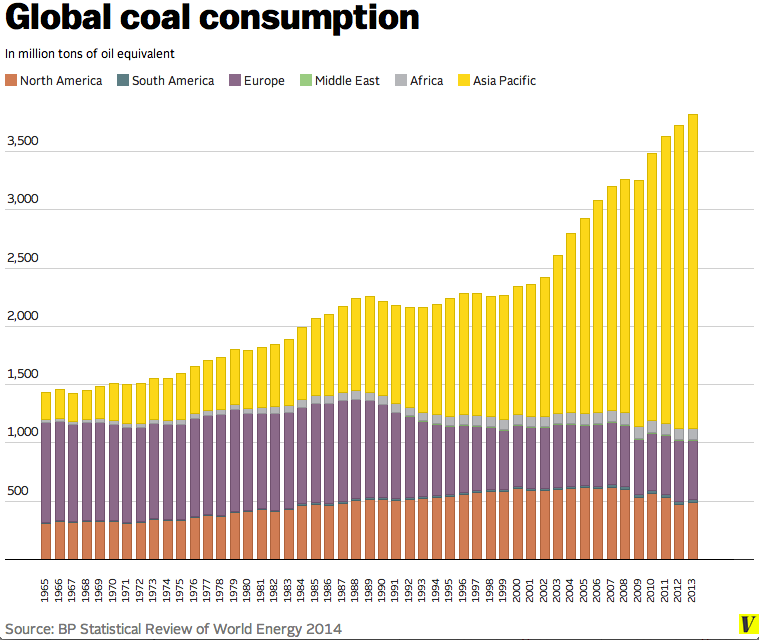
Global coal consumption


Bring back DDT – Save Africa and other impoverished areas

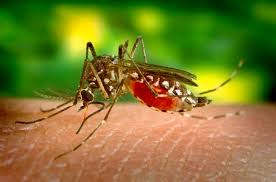
Bring back DDT – Save Africa and other impoverished areasmosquite-feeding

Over 80% of infectious diseases are caused by insects and other arthropods. DDT is desperately needed in impoverished countries where insect borne diseases kill and sicken millions every year, cutting lifespans and productivity.  Africa, India and South-Central Americas are most affected. This unpardonable crime amounts to continuing genocide of brown races by western powers.

Without these insect borne diseases, populations may increase at first, but better health will facilitate the building of infrastructure and industry that can raise millions out of poverty, ignorance and hopelessness.


“How much labor and waste of time these wicked insects do cause, but a ray of hope, in the use of DDT, is now held out to us.”            — Out of My Life and Thought: An Autobiography, Dr. Albert Schweitzer (translated from Ma Vie et Ma Pensee)


DDT worked so well that malaria and similar diseases were eradicated in most developed countries and were near eradication in poorer countries before DDT was banned in 1972 by EPA in spite of failure to find any harm to humans or the environment by an overwhelming body of research.


“To only a few chemicals does man owe as great a debt as to DDT. It has contributed to the great increase in agricultural productivity, while sparing countless humanity from a host of diseases, most notably, perhaps, scrub typhus and malaria. Indeed, it is estimated that, in little more than two decades, DDT has prevented 500 million deaths due to malaria that would otherwise have been inevitable. Abandonment of this valuable insecticide should be undertaken only at such time and in such places as it is evident that the prospective gain to humanity exceeds the consequent losses. At this writing, all available substitutes for DDT are both more expensive per crop-year and decidedly more hazardous.”

— National Academy of Sciences, Committee on Research in the Life Sciences of the Committee on Science and Public Policy, The Life Sciences: Recent Progress and Application to Human Affairs, The World of Biological Research, Requirements for the Future (Washington, D.C.: GPO, 1970), 432.                             (Emphasis added)


Rachel Carson’s 1962 book, Silent Spring, was filled with lies, half-truths, misinterpretation of research results and wild speculations.  Rather than being an attempt to protect humans and the environment as stated, it was really part of an effort to stop population increases in Africa, India and other impoverished countries.


“My own doubts came when DDT was introduced for civilian use. In Guyana, within two years it had almost eliminated malaria, but at the same time the birth rate had doubled. So my chief quarrel with DDT in hindsight is that it has greatly added to the population problem.”

                          —Alexander King, cofounder of the Club of Rome, 1990


Population Bomb by Paul Erilich (1968) was a another book based on Malthusian, eugenicist, racist lies, aka propaganda.


“The battle to feed all of humanity is over. In the 1970s hundreds of millions of people will starve to death in spite of any crash programs embarked upon now. At this late date nothing can prevent a substantial increase in the world death rate…”                              — Paul Ehrlich, The Population Bomb, 1968


Population control groups such as the Club of Rome, supported by charitable foundations such as the Rockefeller Foundation, continue to spread the myth of overpopulation.  Many rural areas have too few healthy people to build roads, other infrastructure and industry.

In 1972 DDT was banned by US EPA Administrator William Ruckelshaus in spite of overwhelming scientific evidence presented at hearings that refuted claims of harm by activist groups such as Environmental Defense Fund and Audubon Society.


“DDT is not a carcinogenic, mutagenic, or teratogenic hazard to man. The uses under regulations involved here do not have a deleterious effect on fresh water fish, estuarine organisms, wild birds, or other wildlife…and…there is a present need for essential uses of DDT.”                — EPA Administrative Law Judge Edmund Sweeney, after months of hearings, “In the Matter of Stevens Industries, Inc., et al., L.F. & R. Docket Nos. 63, et al.). Hearing Examiner’s Recommended Findings, Conclusions, and Orders, April 1972.” (40 CFR 164.32). (Consolidated DDT Hearings)  As summarized in Barrons, May 1, 1972


Beginning the 1970’s, US AID, UN WHO, UNESCO and the World Bank have pressured leaders of poor countries to discontinue DDT as a prerequisite to receiving essential aid. This continues to the present with exception of recently allowing limited spraying of interior wall in selected areas.

Although DDT is the most studied pesticide on the planet, it is still listed as an environmental toxin and possible carcinogen because the EPA listing has not changed, in spite of all of the studies that failed to find harmful effects on humans or the environment. It is much safer and more economical than any of the proposed replacements.

Verifying the Claims of Silent Spring

None of Rachel Carson’s “facts” about environmental and human harm were true. Most of the facts below, except where noted, are from “DDT: A Study in Scientific Fraud,” by J. Gordon Edwards, Journal of American Physicians and Surgeons Volume 9 Number 3 Fall 2004. (See link below)

Dr. Edwards examined each of Silent Spring’s claims and found them wrong and possibly fraudulent.

Not one person has been harmed or died from DDT.

  • The only death associated with DDT was a 3 yr. old child that drank a solution of DDT in kerosene, which is a hydrocarbon known to be toxic.
  • J. Gordon Edwards was a Ph.D. entomologist who sometimes ate a spoonful of DDT powder at his lectures as a demonstration of its safety. He suffered no significant ill effects and died of a heart attack at age 84 while hiking in the Rockies.

DDT is not carcinogenic, mutagenic or teratogenic

  • “Workers in the Montrose Chemical Company had 1,300 man-years of exposure, and there was never any case of cancer during 19 years of continuous exposure to about 17mg/man/day.”
  • “Concerns were sometimes raised about possible carcinogenic effects of DDT, but instead its metabolites were often found to be anti-carcinogenic, significantly reducing tumors in rats.”
  • Expected rise in leukemia in children and breast cancer years later in girls exposed during puberty never happened.

Bird deaths, thin egg shells and buildup in the environment have proven to be false.

  • Bird deaths at the University of Michigan, cited by Carson, were not from DDT, but were probably from soil fungicide containing mercury. In later tests, mercury was found in the soil and earthworms there. Other areas did not experience bird deaths from spraying of DDT. Carson’s Source was: Bird Mortality in the Dutch elm disease program in Michigan, Bulletin 41, Cranebrook Institute of Science by George John Wallace; Walter P Nickell; Richard F Bernard
  • According to Audubon Society Annual Christmas Bird Counts, bird populations actually increased during the thirty years of DDT use. Numbers rose from 90 birds seen per observer in 1941 to 971 birds seen per observer in 1960.
  • The eggshell thinning studies cited by Carson could not be replicated and had actually reduced dietary calcium, needed to build egg shells, of experimental birds to get that result.
  • Museum specimens compared to wild population eggs may have led to false claims of thinning because the museums used the best specimens available; natural variability in the wild may have been interpreted as thinning. “the whole idea that pesticides are concentrated as one moves up the food chain, which is crucial to Carson’s arguments about distant and delayed effects, has become increasingly dubious in the years that followed” (Fleming, New Conservation Movement, 31). Source: Reading Rachel Carson by Charles T. Rubin
  • DDT is not metabolized by birds and is rapidly excreted in their droppings.
  • “The counts of raptorial birds migrating over Hawk Mountain, Pennsylvania, indicated that there were many more hawks there during the “DDT years” than previously. The numbers counted there increased from 9,291 in 1946 (before much DDT was used) to 13,616 in 1963 and 29,765 in 1968, after 15 years of heavy DDT use.”

Aquatic life has not been harmed by DDT; it is practically insoluble in water, with only 1.2 parts per billion at saturation.

  • A study cited by Carson claimed 500 ppb DDT in seawater inhibited photosynthesis and killed algae. The problem with this study is that alcohol was added to the tank to dissolve the DDT in the water. Alcohol alone would do that.
  • The assumption of persistence of DDT in seawater for decades was also challenged. Tests showed DDT and its metabolites disappeared in as few as 38 days.

References:

See “DDT: A Study in Scientific Fraud,” by J. Gordon Edwards, Journal of American Physicians and Surgeons Volume 9 Number 3 Fall 2004. On the web at:

http://www.jpands.org/vol9no3/edwards.pdf

See also “The Truth about DDT and Silent Spring” by Robert Zubrin, adapted from Robert Zubrin’s Merchants of Despair: Radical Environmentalists, Criminal Pseudo-Scientists, and the Fatal Cult of Antihumanism, published in 2012, in New Atlantis Books series. On the web at:

www.thenewatlantis.com/publications/the-truth-about-ddt-and-silent-spring

The Truth about Zika Virus and Microcephaly

Facts about Zika virus and Microcephaly.microcephaly

Is there a cause and effect link or merely a correlation of unrelated events? Here is the story and the facts so far.  In October 2015 an increase in microcephaly was reported in Brazil. A Brazilian doctor, Adriana Melo, at IPESQ, a research insti­tute in Campina Grande, was the first to report a firm link between Zika and microcephaly. Several months before, there had been an outbreak of Zika virus throughout Brazil. The increase in microcephaly cases occurred only in a coastal state in the northeast of the country.

90% of the 1709 cases of microcephaly and birth defects were concentrated in this limited area. Of this number 1153 were diagnosed as microcephaly. There was no increase in other parts of the country, including an adjoining coastal state with a similar population, which only had 3 cases. This suggests there may be other contributing factors. Socio-economic factors may contribute since most of the mothers of the microcephalic babies were young, single, black and poor, living in small cities near larger cities. Additionally, this same northeastern region has always had the highest incidence of microcephaly in Brazil.

A study by the Latin American Collaborative Study of Congenital Malformations (ECLAMC) called for more controlled studies, and concluded that the data so far is inconclusive of a cause and effect link between Zika infection in the first trimester of pregnancy and microcephaly and similar nervous system defects. For an English translation of the original Portugese summary of the ECLAMC studies, see http://www.nature.com/polopoly_fs/7.33594!/file/NS-724-2015_ECLAMC-ZIKA%20VIRUS_V-FINAL_012516.pdf

This report discusses weaknesses in the methods used by IPESQ, recommendations for further studies and several other factors that may have caused or contributed to the birth defects as listed below.

  • Rumor may have caused over reporting due to active searches and over diagnosis. Brazil health authorities estimate that as many as 2/3 of cases are normally not reported to authorities. If the estimate is correct, this would partially account for an increase, but not the degree reported, so other factors must be involved. However, Brazil reports a rate of 0.5 per 10,000 births compared to EUROCAT of 2.85 per 10,000 births, indicating a gross under reporting.
  • Broadened criteria for microcephaly diagnosis from 3 standard deviations to 2 standard deviations below normal average age and sex adjusted head circumference, and no confirming follow up brain scans or autopsies in most cases.
  • Zika infection in the first trimester of pregnancy cannot be confirmed at the time of birth because the virus is short-lived in the body and will not be present in the mother. Unless the mother was diagnosed early in her pregnancy, occurrence and connection cannot be confirmed.
  • In the original studies other known causes were not ruled out such as STORCH (syphilis, toxoplasmosis, “other,” rubella, cytomegalovirus, herpes simplex), prematurity, diabetes of the mother and fetal alcohol syndrome, a major cause of microcephaly in Brazil.
  • Also not ruled out are possible co-infections with dengue or chikungunya, both present in the population in recent outbreaks. The dengue virus is similar to the Zika virus and difficult to differentiate in tests.
  • A low rate of yellow fever vaccination also seems to correlate to this incident. Yellow fever virus is similar to Zika virus and vaccination may offer some immunity to it.
  • At IPESQ Bovine diarrheal virus (BVDV) was found in brain tissue of 3 fetuses in a later study. This virus does not usually infect humans but is known to cause birth defects in cattle. If true, this may be significant, but Dr. Adriana Melo suspects it may be a contaminant in the sampling or testing procedures.
  • Contaminated water was not considered, although it is common for small cities without proper sanitation and water purification to have biologically contaminated water.
  • Nutrition was not considered in this study other than a mention of general socio-economic influences, although the CDC, NIH and other agencies recognize folic acid (a B vitamin) deficiency as one of the leading causes of neural tube defects (NTD), including microcephaly, anencephaly, and spina bifida. In a recent NIH study they found that other micronutrients may decrease the risk of NTD occurrence, including thiamin (B1), riboflavin (B2), niacin (B3), pyridoxine (B6), betaine (a B vitamin), vitamin A, retinol (A1), vitamin C, vitamin E and iron.

In conclusion, the “link” between Zika virus and microcephaly is far from proven because the original studies lacked scientific discipline and controls. More studies are needed to clarify what role the virus may play in these birth defects. However, it is probably best to take a precautionary approach until more is known.

Is it time to bring back DDT to eradicate the mosquitos that carry Zika and other diseases such as malaria, dengue fever, chikungunya, yellow fever and other diseases? Over 80% of infectious diseases are caused by insects. Assumed adverse environmental and health effects of this important insecticide have failed to materialize in many repeated controlled studies over the last 40 years. See “DDT: A Case Study in Scientific Fraud,” by J. Gordon Edwards, PhD entomology, Journal of American Physicians and Surgeons Volume 9 Number 3 Fall 2004, at http://www.jpands.org/vol9no3/edwards.pdf

References:

“Eclamc Final Document – V.3, Summary and conclusions of Documents 1-5,” December 30th, 2015 http://www.nature.com/polopoly_fs/7.33594!/file/NS-724-2015_ECLAMC-ZIKA%20VIRUS_V-FINAL_012516.pdf

“Neural Tube Defects and Maternal Intake of Micronutrients Related to One-Carbon Metabolism or Antioxidant Activity,” US National Institute of Health, Angela L. Chandler1, Charlotte A. Hobbs1, Bridget S. Mosley1, Robert J. Berry2, Mark A.Canfield3, Yan Ping Qi2, Anna Maria Siega-Riz4, Gary M. Shaw5, and National Birth Defects Prevention Study, in Birth Defects Res A Clin Mol Teratol. 2012 November ; 94(11): 864–874. doi:10.1002/bdra.23068.

  1. Department of Pediatrics, College of Medicine, University of Arkansas for Medical Sciences, Arkansas Children’s Hospital Research Institute, Little Rock, AR 72202
  2. Centers for Disease Control and Prevention, Atlanta, Georgia
  3. Birth Defects Epidemiology and Surveillance Branch, Texas Department of State Health Services, Austin, Texas
  4. Departments of Epidemiology and Nutrition, University of North Carolina School of Public Health, Chapel Hill, North Carolina
  5. Department of Pediatrics, Division of Neonatal and Developmental Medicine, Stanford University School of Medicine, Palo Alto, California

“Brazil’s birth-defects puzzle, Zika virus might not be only factor in reported microcephaly surge.” By Declan Butler, 28 July 2016, Nature, Vol. 535, Page 475-6.

“Zika epidemic uncovers Brazil’s hidden birth defect problem,” by Alex Cuadros, March 1, 2016, Washington Post

Disease Transmission by Arthropods,” E. J. L. Soulsby and William R. Harvey, Science 176, no. 4039 (1972): 1153–1155.

“DDT: A Case Study in Scientific Fraud,” by J. Gordon Edwards, PhD entomology, Journal of American Physicians and Surgeons Volume 9 Number 3 Fall 2004, at http://www.jpands.org/vol9no3/edwards.pdf


Dreaming of Carbon Free Living?

To the Student who is dreaming of a Carbon free life

  • First, sell your car, bicycle or other means of transportation – they were made using carbon based fuels, cars use fossil fuels and even crude handmade carts drawn by animals use and emit carbon (fodder – excrement & CO2). Even electric cars were made with carbon based fuels and use electricity from fossil fueled power plants.
  • Never buy or use solar panels or wind generators – they were produced using carbon based fuels and require fossil fueled power plants as back-up when sun and wind are absent.
  • Sell your house or give up your apartment – it was made by using carbon based fuels, uses fossil fuels to heat and cool, whether with carbon based electricity or directly from oil, gas, coal, wood. Never shelter from weather or use any heat in cold weather.
  • Sell your household goods – Chairs, tables, beds, sheets, towels, etc. – all were made using fossil fuels.
  • Sell your appliances and electronic gadgets – they were made using carbon based fuels and get their electricity from fossil fueled power plants.
  • Never drink purified water from a water system – pumps and purification all run on and were made using fossil fuels. Drink only “natural” water from streams, complete with parasites, bacteria and viruses.
  • Never buy or use any paper, plastic, cloth, wood, metal or glass products, including books and paper money, pens, pencils, dishes, pans, etc. –all are produced by using fossil fuels.
  • Never use any cleaning products, soap, cosmetics or shaving or hair care materials or implements – they were all made from and with carbon based fuels.
  • Remove and give away all of your clothes and shoes – they were made using fossil fuels, use water, detergents and electricity for cleaning and ironing.
  • Don’t buy food from stores – it was transported, processed and kept fresh using fossil fuels.
  • Never cook your food – it takes heat ultimately produced by carbon based fuels.
  • Stop eating – you are using carbon based foods and excrete carbon pollutants.
  • Stop breathing – you are emitting CO2.
  • Your short, miserable life is now over and your dead body is now polluting the planet.


AGW Claims vs Truth: Claim 9 Oceans are more acidic due to increased CO2

Ocean_park_wikiClaim 9: The oceans are becoming more acidic due to the increased CO2 and erosion of carbonate rocks by acidified rain, so that corals and other animals are being harmed or killed.

Truth: This is partially true, but not to the extent that is claimed. The oceans are naturally alkaline (non-acidic) and are buffered by minerals and by the activities of biological systems. (See below for explanations of pH and buffering.) The normal pH of the oceans is in the range of 8.1. Like the manmade global warming hypothesis and the progressive nitrogen limitation hypothesis, (see Claim 2b), the ocean acidification hypothesis is a model scenario based on theory, not real experimental data. The models in the IPCC reports project a maximum reduction in pH of 0.3 by 2100. They also claim that a reduction of pH will slow the growth rate of coral or worse. So, are the corals and shelled creatures in danger? Hardly.

These models use a purely geochemical approach and do not take into account the effect of living systems on pH. For example, photosynthesis is known to increase pH. Increased algae growth rate from increased CO2 can offset any drop in pH.  There is a temporary seasonal variation in pH from such processes that is greater than the projected pH changes from CO2[1]. Real experiments by bubbled CO2 through ocean water don’t result in the same pH changes projected by the models. In these experiments, no net negative effect on coral growth is seen even with actual acidification by adding hydrochloric acid. As a matter of fact, in these experiments a slight reduction in pH may have been beneficial.

As stated in Claim 2, item d, CO2 is less soluble in warmer water so temperature also affects pH. Warmer water means less CO2 is dissolved in it by giving off more CO2 to the atmosphere. A lower concentration of CO2 with warming should, if anything, raise the pH (less acid) not lower it (more acid). However, due to buffering, no net change in overall pH has been found other than temporary localized variations from other processes like photosynthesis and agricultural run-off.

CO2 becomes carbonic acid (HCO3 and H2CO3) in water. H2O + CO2 = H2CO3, a very weak acid, some of which splits to form HCO3 ions and H+. The free H+ is what erodes carbonate (CO3=) rocks. For example,  insoluble CaCO3 + H+ = Ca++ + HCO3 (both soluble).

 Understanding pH:

pH is a measure of the hydrogen ion (H+) concentration in a water solution. The more hydrogen ions there are the more acid the solution is.  However, pH is the negative log of hydrogen ion concentration, so that the higher the concentration, the lower the pH number. For example, a pH of 5 is a hydrogen ion concentration of 10-5. A pH of 8 is a hydrogen ion concentration of 10-8. With less hydrogen ions, the hydroxyl ions from water make the solution “basic” or alkaline. 10-5 = 0.00001 or 0.001 percent. 10-8 = 0.00000001 or 0.000001 percent. So pH 5 is 1000 times the hydrogen ion concentration of pH 8. Neutral water is pH 7 with equal amounts of hydrogen ions and hydroxyl ions.

Understanding buffering:

When water is buffered, it has at least two related molecules or ions in balance that resist changes in pH of the solution by changing their ionic state when acids or bases are added or when diluted. Any added hydrogen ions from a more acidic solution causes a change in the ratio of the two buffer species offsetting any tendency to change pH. Water exposed to the atmospheric carbon dioxide is never neutral pH 7. It is in the range of pH 5.4. Oceans are in the range of pH 8 so it is obvious that the oceans are “buffered” against changes in pH by rain that is naturally more acidic. Biological systems and a complex mixture of buffering molecules/ions contribute to the buffering of oceans and other bodies of water, so that pH remains relatively steady over long periods of time under various stresses from sources ranging from acid rain to volcanoes.

Example: CO2 combines with water to form one of three forms of carbonate/-ic depending on the direction the pH is being pushed. These reactions can go back and forth between species as needed to maintain a constant pH.

CO2 + H2O <=> H2CO3 <=>  H+ + HCO3_ < => CO3= + 2H+

carbonic acid      bicarbonate ion      carbonate ion

The CO2 to carbonate series is one of the most important buffer systems in the oceans and is supplemented by carbonate in its various forms from erosion of rock. This example is simplified for clarity by leaving out other ions that affect pH such as Calcium, Magnesium, sodium, chlorine and sulfite (Ca++, Mg++, Na+, Cl, SO3=). Chemicals produced by living organisms also affect buffering and overall pH.

[1] “Marine Photosynthesis and Oceanic pH,” Sherwood, Keith and Craig Idso, CO2 Science (online journal), Volume 10, Number 34: 22 August 2007 http://www.co2science.org/articles/V10/N34/EDIT.php Center for the Study of Carbon Dioxide and Global Change