Political Corruption of Science Revealed in New Book

Perverted Truth Exposed cover image

In Perverted Truth Exposed, Kay Kiser exposes areas of science that have been corrupted by progressive and atheist philosophies disguised as science, including  evolution, origin of life, cosmology, quantum physics and climate change.

The climate change debate presents a modern example of how the perversion of science is politically imposed to support an anti-God, anti-human progress agenda of Marxist control and power while silencing opposition through intimidation. Kiser also answers:

  • Did Darwin really steal his theory of evolution from Alfred Wallace?
  • Why did Wallace later abandon the theory as not having sufficient evidence?
  • If Hubble discovered the expanding universe leading to the Big Bang Theory, why did he continually try to convince others that their conclusion was wrong?
  • Is man-made carbon dioxide causing global warming or is it a trailing indicator of climate change in a system dominated by solar cycles, cloud cover, and ocean currents?

Available online from the following outlets in print and as an eBook.

Darwin, Pangenesis & Acquired Characteristics

Darwin’s Claims

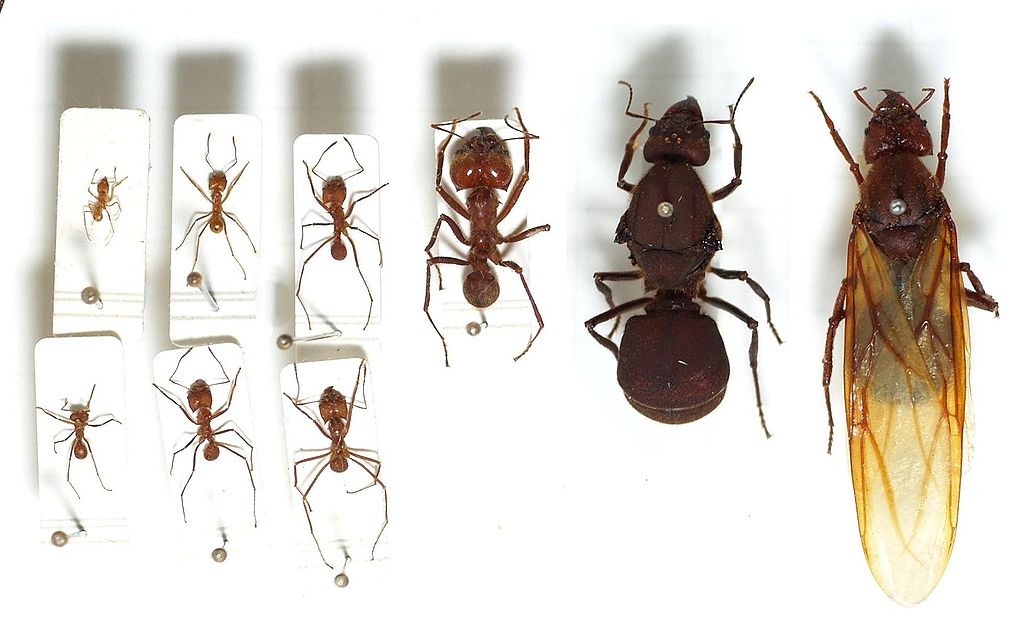
Worker ants of various castes and two large queens
Leaf Cutter Ants – Worker ants of various castes and two large queens

Darwin thought cells were simple bags of gel.  He knew nothing of DNA or any other cellular structures.  He believed that inheritance was through “Gemmules” that each cell shed and that traveled to the gametes (sperm and egg).  Since each cell “voted” it was called pangenesis. He believed that the life experiences of the parents were passed on to their offspring in this way. He believed evolutionary incremental changes occurred by passing these life experiences on to subsequent generations.

Darwin’s Dilemma

Colony insects were a problem for Darwin.  If life experiences were passed on, how does a queen ant, who has never experienced foraging for food, pass on the behavior of the worker ants who hunt for food and bring it back to the colony?

His theory of evolution taught that use and disuse along with adaptation to environmental changes experienced by parents were passed on and were responsible for the changes seen between species by gradual changes over time, coupled with natural selection aka survival of the fittest.  How is this any different from J-B Lamarck’s theory of acquired characteristics, which was discredited as having no foundation?  Did acceptance for Darwin’s theory and not Lamarck’s have more to do with politics and marketing than science?

Modern Evolutionary Biologists’ Dilemma

Obviously, modern evolutionary biologists found pangenesis and inheritance of acquired traits embarrassing, so, in the early 20th century they changed the theory to include genetics with an emphasis on natural selection and called it Neo-Darwinism or the Modern Synthesis. Later, they included DNA and an unsupported assumption that mutations over time gradually built up structures well before they were functional.  Although Darwin is still revered as if he had everything right, this form of Evolutionary theory is grossly different from the original Darwinian theory except for the assumption of natural selection and unlimited gradual changes producing new species over time.


Zika and Microcephaly scam used to push Brazil abortion law change

Is changing Brazil’s abortion laws the real purpose for the claims of a Zika and microcephaly link?

See previous post The Truth About Zika Virus and Microcephaly for summary of the analysis showing failure to establish a cause and effect link between Zika & Microcephaly, and a broadening of the definition of Microcephaly.  WHO, other agencies and activists have ignored the original Latin American Collaborative Study of Congenital Malformations (ECLAMC) analysis invalidating the original research. See English translation at http://www.nature.com/polopoly_fs/7.33594!/file/NS-724-2015_ECLAMC-ZIKA%20VIRUS_V-FINAL_012516.pdf

Brazil, a Catholic nation, has allowed abortion only to save the life of the mother or rape, but recently allowed it for anencephaly (missing brain birth defect).  Was this a first step that prompted or preceded the bogus study and the alarming press releases?  The UN has gotten involved and is urging changing the abortion laws across Latin and South America.  Most of these countries are Catholic, so it could be considered an attack on the Church’s strict abortion stand.

See articles from the Guardian below about the campaign to change Brazil’s abortion laws and my notes in blue.


Zika emergency pushes women to challenge Brazil’s abortion law                   Sarah Boseley, The Guardian, Tuesday 19 July 2016

Women’s groups are set to challenge the law in the hope of making termination possible for women at risk of delivering a baby born with Zika-related defects. Women’s rights and gender equality supported by Women’s groups in Brazil are set to challenge the abortion laws this summer in the hope of making a safe and legal termination possible for women at risk of delivering a baby born with defects after exposure to the Zika virus.

“Women should be able to decide and have the means to terminate pregnancies because they are facing serious risks of having babies with microcephaly and also suffering huge mental distress during their pregnancies. They should not be forced to carry on their pregnancies under the circumstances,” said Beatriz Galli, a lawyer on bioethics and human rights who works for Ipas, a group dedicated to ending unsafe abortion.  (IPAS is an international abortion advocacy NGO.)

Lawyers for the organisations will present a legal challenge at the supreme court in the first week of August, when the court sits again after the winter break. They are coordinated by Anis Instituto de Bioética, which campaigns for women’s equality and reproductive rights. (founder of Anis worked with the group cited below)

The groups have obtained an opinion from lawyers at Yale University in the US, who argue that the Brazilian government’s policies on Zika and microcephaly have breached women’s human rights. The government “has failed to enact adequate measures to ensure that all women have access to comprehensive reproductive health information and options, as required by Brazil’s public health and human rights commitments”, says a review from the Global Health Justice Partnership, which is a joint initiative of the Yale Law School and the Yale School of Public Health. (“Health Justice” gives away the leftist, extreme position on “sexuality, gender and reproductive issues” of this group)

It is also critical of Brazil’s handling of the epidemic. Its “failure to ensure adequate infrastructure, public health resources and mosquito control programmes in certain areas has greatly exacerbated the Zika and Zika-related microcephaly epidemics, particularly among poor women of racial minorities”, the review says.

As of 7 July, there have been1,638 cases of reported microcephaly – an abnormally small head – and other brain defects in Brazil, according to the World Health Organisation. (almost all of these cases were in a small area in the northeast, but the Zika virus epidemic was country wide – a smoking gun against cause and effect) Women who do not want to continue their pregnancy because they have been infected, even if they have had a scan confirming brain defects in the baby, are unable to choose a legal termination. There is evidence of a rise in early abortions using pills obtainable online and fears that unsafe, illegal abortions will be rising too.

Galli said there were already about 200,000 hospitalisations of women who have undergone a clandestine termination every year, and a suspected 1 million illegal abortions before the epidemic. “We know that there are clinics operating in the very low-income poor settings in Rio and women are paying a lot of money and are risking their lives,” she said. (This appears to be an estimate based on a small number  of hospitals extrapolated to the entire country and scaled up by some arbitrary factor. From various sources the estimates vary widely.)

Campaigners who want to change the law are encouraged by a ruling the supreme court handed down in the case of babies with anencephaly in 2012. This is a condition where the foetus develops without a brain, making it impossible for the baby to be born alive. The case took eight years, but eventually the court voted eight to two in favour of making abortion legal in those circumstances. (Is this the precedent prompting the Zika-microcephaly scam?)

Before the ruling, there were two exceptions to the ban on termination in Brazil – when the pregnant woman’s life was at risk and when she had been raped. Anencephaly became the third, but campaigners acknowledge that it is not a simple precedent.

Debora Diniz, co-founder of Anis and professor of law at the University of Brasilia, said she was confident the court would understand that the situation is an emergency. They were not asking for the legalisation of abortion, she said, but “to have the right to abortion in the case of Zika infection during the epidemic”.

“It is not an abortion in the case of foetal malformation. It is the right to abortion in case of being infected by the Zika virus, suffering mental stress because you have this horrible situation and so few answers on how to plan and have a safe pregnancy,” she said. (emphasis added)

Campaigners have five demands: good information for women in pregnancy, improvements in access to family planning, giving women mosquito repellents, better social policies to help children born with birth defects because of Zika and financial support for parents.

Diniz points out that the worst hit are the poor. “The feeling in my well-to-do neighbourhood [in Brasilia] is that everything is fine,” she said. People have never met a woman with Zika or seen a baby with neurological defects. But when she goes to clinics in hard-hit areas such as Campina Grande in the north-east, everything revolves around Zika. (Zika is a mild disease with low fever and rash, and is often not even recognized. Zika has been seen in other countries for 40+ years with no birth defects.  Note the admission of limited area “affected.”)

“We have two countries in one country,” she said. “This is an emergency of unknown women. The trouble is they were unknown before the epidemic. I’m not being an opportunist. We have an epidemic and the epidemic shows the face of Brazilian inequality.”

https://www.theguardian.com/global-development/2016/jul/19/zika-emergency-pushes-women-to-challenge-brazil-abortion-law


UN tells Latin American countries hit by Zika to allow women access to abortion

Jonathan Watts in Rio de Janeiro, The Guardian, Friday 5 February 2016 (Note that the article above is 6 months after this one, but is still touting the same line)

Strict curbs on contraception and abortion are common in hard-hit nations but UN says women should have choice about degree of risk they’re willing to take

Women protest anti-abortion laws in El Salvador, which has one of the highest rates of Zika infection – and where even miscarriages can be treated as murder.

The United Nations high commissioner for human rights has called on Latin American countries hit by the Zika epidemic to allow women access to abortion and birth control, reigniting debate about reproductive rights in the predominantly Catholic region.

The rapidly spreading virus is suspected to have caused an uptick in foetal brain defects. Although this is not yet scientifically proven, many campaigners say women should have a choice about the degree of risk they are willing to take. (emphasis added. Note that this author at least admits the lack of scientific proof.)

This is currently very limited in Latin America due to strict controls on birth control and abortion, which range widely from country to country. On one extreme is El Salvador – which has one of the highest rates of Zika infection in the continent – where even miscarriages can be treated as murder.  On the other is Uruguay, where pregnancies can be terminated in any circumstances up to 12 weeks.

The UN commissioner is asking governments in Zika-affected areas to repeal policies that break with international standards on access to sexual and reproductive health services, including abortion.

“We are asking those governments to go back and change those laws,” said spokeswoman Cecile Pouilly on Friday. “Because how can they ask those women to become pregnant but also not offer them first information that is available, but the possibility to stop their pregnancies if they wish?”

The commissioner’s initiative was welcomed by the US-based NGO the Center for Reproductive Rights.

“Women cannot solely bear the burden of curbing the Zika virus,” said Charles Abbott, the group’s legal adviser for Latin America & the Caribbean. “We agree with the OHCHR that these governments must fulfil their international human rights obligations and cannot shirk that responsibility or pass it off to women. This includes adopting laws and policies to respect and protect women’s reproductive rights.”

Health authorities in at least five affected countries have advised women to avoid getting pregnant, with Colombia telling called on women to delay pregnancy for six to eight months, and El Salvador, suggesting women avoid getting pregnant for at least two years. (emphasis added)

Reproductive rights advocates say the recommendations to avoid pregnancy are irresponsible and do not take into account that most pregnancies in the region are unplanned.

This is not the only area of contention sparked by the rapid spread of the virus. Scientists in Brazil are also in disagreement about the significance of new studies – revealed on Friday – that show Zika is present in saliva, which some say should prompt warnings against kissing. (emphasis added)

The Fiocruz research institute in Rio de Janeiro said on Friday it had identified live samples of Zika in saliva and urine, which merited further research into whether these two fluids could be a source of contagion.

Until the outcome is known, Paulo Gadelha, president of the institute, suggested pregnant women should think twice about kissing anyone other than their partners or sharing drinking glasses or cutlery with people who might be infected.

Although he said this was “not a generalized public health measure”, the proposed precaution has been met with a mixture of fear and derision. Other scientists argue that it is extremely unlikely for the disease to spread in this way.

“The warning is crazy and unnecessary,” said Rubio Soares Campos, who co-identified the first case of Zika in Brazil.  “Just because the virus is present in saliva does not mean it can be transmitted that way.”

He argued that it was more likely to behave like dengue, another mosquito-borne disease that is found in human bodily fluids but cannot be spread that way.

But the latest news has increased the unease of the Brazilian public, who have watched with alarm as Zika has come from nowhere to infect an estimated 1.5 million people with an apparently growing range of suspected – but not yet scientifically proven – side-effects, including immune system disorders and brain defects in newborns. (emphasis added)

“It’s starting to scare the hell out of me,” said one Rio resident, Maria Teixeira. “At first everybody thought is was just a mild fever. Then, we were told it could develop into Guillain-Barré syndrome, and then that it was associated with horrible side-effects such as deformed babies. What’s next?”

https://www.theguardian.com/world/2016/feb/05/zika-virus-epidemic-abortion-birth-control-access-latin-america-united-nations

AGW Claims vs. Truth – Claim 10: World governments must take drastic action now to prevent catastrophic consequences.

Claim 10:  World governments must take drastic action now to prevent further warming and catastrophic consequences.

Truth:  The jury is still out as to whether warming is a good thing or a bad thing. More people die from cold weather-related events than from heat. Warming periods in the past such as the Medieval Warm Period were times of increased prosperity and peace. There is no indication that any sort of a tipping point is approaching that would cause the predicted catastrophic consequences. There has been no warming since 1998 and a possible cooling since 2005.

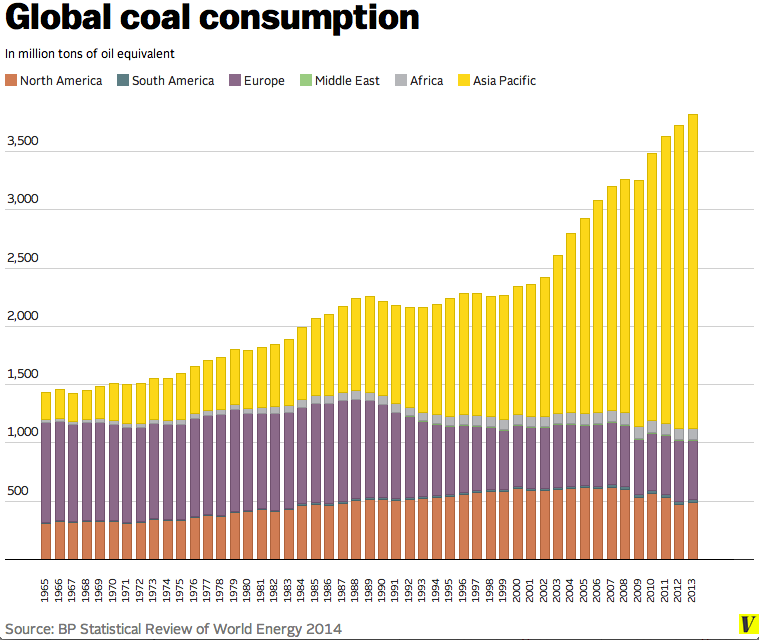
         It is not even certain that government action could have any effect on warming. If carbon dioxide is not the main cause of warming, then regulating it might be a fool’s errand. (See Claim 2.) Developed nations might curtail use of fossil fuels, but treaties proposed like Kyoto and Rio exempt developing countries. This includes China, India, and Mexico, among the largest and most industrialized developing countries in the world. Their output of carbon dioxide and pollutants from power plants and industry more than overpowers any gains from developed countries’ gains in efficiency or a change to “renewable” and “sustainable” solar and wind energy.

       Additionally, the money collected by the UN through these treaties is designated only for such unreliable energy development, not for improving the lives of impoverished peoples.  Improving the lives of these people would go much farther to protect the environment than any of these things. (Meanwhile, the development of over 200 hydroelectric dams in Africa have been prevented by activists within and outside the UN.)  People who have to worry about eating and feeding their families have no incentive to care for the environment.  Higher standards of living lead to more caring for the environment.

Global coal consumption


Bring back DDT – Save Africa and other impoverished areas

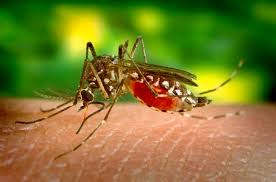
Bring back DDT – Save Africa and other impoverished areasmosquite-feeding

Over 80% of infectious diseases are caused by insects and other arthropods. DDT is desperately needed in impoverished countries where insect borne diseases kill and sicken millions every year, cutting lifespans and productivity.  Africa, India and South-Central Americas are most affected. This unpardonable crime amounts to continuing genocide of brown races by western powers.

Without these insect borne diseases, populations may increase at first, but better health will facilitate the building of infrastructure and industry that can raise millions out of poverty, ignorance and hopelessness.


“How much labor and waste of time these wicked insects do cause, but a ray of hope, in the use of DDT, is now held out to us.”            — Out of My Life and Thought: An Autobiography, Dr. Albert Schweitzer (translated from Ma Vie et Ma Pensee)


DDT worked so well that malaria and similar diseases were eradicated in most developed countries and were near eradication in poorer countries before DDT was banned in 1972 by EPA in spite of failure to find any harm to humans or the environment by an overwhelming body of research.


“To only a few chemicals does man owe as great a debt as to DDT. It has contributed to the great increase in agricultural productivity, while sparing countless humanity from a host of diseases, most notably, perhaps, scrub typhus and malaria. Indeed, it is estimated that, in little more than two decades, DDT has prevented 500 million deaths due to malaria that would otherwise have been inevitable. Abandonment of this valuable insecticide should be undertaken only at such time and in such places as it is evident that the prospective gain to humanity exceeds the consequent losses. At this writing, all available substitutes for DDT are both more expensive per crop-year and decidedly more hazardous.”

— National Academy of Sciences, Committee on Research in the Life Sciences of the Committee on Science and Public Policy, The Life Sciences: Recent Progress and Application to Human Affairs, The World of Biological Research, Requirements for the Future (Washington, D.C.: GPO, 1970), 432.                             (Emphasis added)


Rachel Carson’s 1962 book, Silent Spring, was filled with lies, half-truths, misinterpretation of research results and wild speculations.  Rather than being an attempt to protect humans and the environment as stated, it was really part of an effort to stop population increases in Africa, India and other impoverished countries.


“My own doubts came when DDT was introduced for civilian use. In Guyana, within two years it had almost eliminated malaria, but at the same time the birth rate had doubled. So my chief quarrel with DDT in hindsight is that it has greatly added to the population problem.”

                          —Alexander King, cofounder of the Club of Rome, 1990


Population Bomb by Paul Erilich (1968) was a another book based on Malthusian, eugenicist, racist lies, aka propaganda.


“The battle to feed all of humanity is over. In the 1970s hundreds of millions of people will starve to death in spite of any crash programs embarked upon now. At this late date nothing can prevent a substantial increase in the world death rate…”                              — Paul Ehrlich, The Population Bomb, 1968


Population control groups such as the Club of Rome, supported by charitable foundations such as the Rockefeller Foundation, continue to spread the myth of overpopulation.  Many rural areas have too few healthy people to build roads, other infrastructure and industry.

In 1972 DDT was banned by US EPA Administrator William Ruckelshaus in spite of overwhelming scientific evidence presented at hearings that refuted claims of harm by activist groups such as Environmental Defense Fund and Audubon Society.


“DDT is not a carcinogenic, mutagenic, or teratogenic hazard to man. The uses under regulations involved here do not have a deleterious effect on fresh water fish, estuarine organisms, wild birds, or other wildlife…and…there is a present need for essential uses of DDT.”                — EPA Administrative Law Judge Edmund Sweeney, after months of hearings, “In the Matter of Stevens Industries, Inc., et al., L.F. & R. Docket Nos. 63, et al.). Hearing Examiner’s Recommended Findings, Conclusions, and Orders, April 1972.” (40 CFR 164.32). (Consolidated DDT Hearings)  As summarized in Barrons, May 1, 1972


Beginning the 1970’s, US AID, UN WHO, UNESCO and the World Bank have pressured leaders of poor countries to discontinue DDT as a prerequisite to receiving essential aid. This continues to the present with exception of recently allowing limited spraying of interior wall in selected areas.

Although DDT is the most studied pesticide on the planet, it is still listed as an environmental toxin and possible carcinogen because the EPA listing has not changed, in spite of all of the studies that failed to find harmful effects on humans or the environment. It is much safer and more economical than any of the proposed replacements.

Verifying the Claims of Silent Spring

None of Rachel Carson’s “facts” about environmental and human harm were true. Most of the facts below, except where noted, are from “DDT: A Study in Scientific Fraud,” by J. Gordon Edwards, Journal of American Physicians and Surgeons Volume 9 Number 3 Fall 2004. (See link below)

Dr. Edwards examined each of Silent Spring’s claims and found them wrong and possibly fraudulent.

Not one person has been harmed or died from DDT.

  • The only death associated with DDT was a 3 yr. old child that drank a solution of DDT in kerosene, which is a hydrocarbon known to be toxic.
  • J. Gordon Edwards was a Ph.D. entomologist who sometimes ate a spoonful of DDT powder at his lectures as a demonstration of its safety. He suffered no significant ill effects and died of a heart attack at age 84 while hiking in the Rockies.

DDT is not carcinogenic, mutagenic or teratogenic

  • “Workers in the Montrose Chemical Company had 1,300 man-years of exposure, and there was never any case of cancer during 19 years of continuous exposure to about 17mg/man/day.”
  • “Concerns were sometimes raised about possible carcinogenic effects of DDT, but instead its metabolites were often found to be anti-carcinogenic, significantly reducing tumors in rats.”
  • Expected rise in leukemia in children and breast cancer years later in girls exposed during puberty never happened.

Bird deaths, thin egg shells and buildup in the environment have proven to be false.

  • Bird deaths at the University of Michigan, cited by Carson, were not from DDT, but were probably from soil fungicide containing mercury. In later tests, mercury was found in the soil and earthworms there. Other areas did not experience bird deaths from spraying of DDT. Carson’s Source was: Bird Mortality in the Dutch elm disease program in Michigan, Bulletin 41, Cranebrook Institute of Science by George John Wallace; Walter P Nickell; Richard F Bernard
  • According to Audubon Society Annual Christmas Bird Counts, bird populations actually increased during the thirty years of DDT use. Numbers rose from 90 birds seen per observer in 1941 to 971 birds seen per observer in 1960.
  • The eggshell thinning studies cited by Carson could not be replicated and had actually reduced dietary calcium, needed to build egg shells, of experimental birds to get that result.
  • Museum specimens compared to wild population eggs may have led to false claims of thinning because the museums used the best specimens available; natural variability in the wild may have been interpreted as thinning. “the whole idea that pesticides are concentrated as one moves up the food chain, which is crucial to Carson’s arguments about distant and delayed effects, has become increasingly dubious in the years that followed” (Fleming, New Conservation Movement, 31). Source: Reading Rachel Carson by Charles T. Rubin
  • DDT is not metabolized by birds and is rapidly excreted in their droppings.
  • “The counts of raptorial birds migrating over Hawk Mountain, Pennsylvania, indicated that there were many more hawks there during the “DDT years” than previously. The numbers counted there increased from 9,291 in 1946 (before much DDT was used) to 13,616 in 1963 and 29,765 in 1968, after 15 years of heavy DDT use.”

Aquatic life has not been harmed by DDT; it is practically insoluble in water, with only 1.2 parts per billion at saturation.

  • A study cited by Carson claimed 500 ppb DDT in seawater inhibited photosynthesis and killed algae. The problem with this study is that alcohol was added to the tank to dissolve the DDT in the water. Alcohol alone would do that.
  • The assumption of persistence of DDT in seawater for decades was also challenged. Tests showed DDT and its metabolites disappeared in as few as 38 days.

References:

See “DDT: A Study in Scientific Fraud,” by J. Gordon Edwards, Journal of American Physicians and Surgeons Volume 9 Number 3 Fall 2004. On the web at:

http://www.jpands.org/vol9no3/edwards.pdf

See also “The Truth about DDT and Silent Spring” by Robert Zubrin, adapted from Robert Zubrin’s Merchants of Despair: Radical Environmentalists, Criminal Pseudo-Scientists, and the Fatal Cult of Antihumanism, published in 2012, in New Atlantis Books series. On the web at:

www.thenewatlantis.com/publications/the-truth-about-ddt-and-silent-spring

To the Student who dreams of a Carbon free life

To the Student who is dreaming of a Carbon free life

  • First, sell your car, bicycle or other means of transportation – they were made using carbon based fuels, cars use fossil fuels and even crude handmade carts drawn by animals use and emit carbon (fodder – excrement & CO2). Even electric cars were made with carbon based fuels and use electricity from fossil fueled power plants.
  • Never buy or use solar panels or wind generators – they were produced using carbon based fuels and require fossil fueled power plants as back-up when sun and wind are absent.
  • Sell your house or give up your apartment – it was made by using carbon based fuels, uses fossil fuels to heat and cool, whether with carbon based electricity or directly from oil, gas, coal, wood. Never shelter from weather or use any heat in cold weather.
  • Sell your household goods – Chairs, tables, beds, sheets, towels, etc. – all were made using fossil fuels.
  • Sell your appliances and electronic gadgets – they were made using carbon based fuels and get their electricity from fossil fueled power plants.
  • Never drink purified water from a water system – pumps and purification all run on and were made using fossil fuels. Drink only “natural” water from streams, complete with parasites, bacteria and viruses.
  • Never buy or use any paper, plastic, cloth, wood, metal or glass products, including books and paper money, pens, pencils, dishes, pans, etc. –all are produced by using fossil fuels.
  • Never use any cleaning products, soap, cosmetics or shaving or hair care materials or implements – they were all made from and with carbon based fuels.
  • Remove and give away all of your clothes and shoes – they were made using fossil fuels, use water, detergents and electricity for cleaning and ironing.
  • Don’t buy food from stores – it was transported, processed and kept fresh using fossil fuels.
  • Never cook your food – it takes heat ultimately produced by carbon based fuels.
  • Stop eating – you are using carbon based foods and excrete carbon pollutants.
  • Stop breathing – you are emitting CO2.
  • Your short, miserable life is now over and your dead body is now polluting the planet.

Dreaming of Carbon Free Living?

To the Student who is dreaming of a Carbon free life

  • First, sell your car, bicycle or other means of transportation – they were made using carbon based fuels, cars use fossil fuels and even crude handmade carts drawn by animals use and emit carbon (fodder – excrement & CO2). Even electric cars were made with carbon based fuels and use electricity from fossil fueled power plants.
  • Never buy or use solar panels or wind generators – they were produced using carbon based fuels and require fossil fueled power plants as back-up when sun and wind are absent.
  • Sell your house or give up your apartment – it was made by using carbon based fuels, uses fossil fuels to heat and cool, whether with carbon based electricity or directly from oil, gas, coal, wood. Never shelter from weather or use any heat in cold weather.
  • Sell your household goods – Chairs, tables, beds, sheets, towels, etc. – all were made using fossil fuels.
  • Sell your appliances and electronic gadgets – they were made using carbon based fuels and get their electricity from fossil fueled power plants.
  • Never drink purified water from a water system – pumps and purification all run on and were made using fossil fuels. Drink only “natural” water from streams, complete with parasites, bacteria and viruses.
  • Never buy or use any paper, plastic, cloth, wood, metal or glass products, including books and paper money, pens, pencils, dishes, pans, etc. –all are produced by using fossil fuels.
  • Never use any cleaning products, soap, cosmetics or shaving or hair care materials or implements – they were all made from and with carbon based fuels.
  • Remove and give away all of your clothes and shoes – they were made using fossil fuels, use water, detergents and electricity for cleaning and ironing.
  • Don’t buy food from stores – it was transported, processed and kept fresh using fossil fuels.
  • Never cook your food – it takes heat ultimately produced by carbon based fuels.
  • Stop eating – you are using carbon based foods and excrete carbon pollutants.
  • Stop breathing – you are emitting CO2.
  • Your short, miserable life is now over and your dead body is now polluting the planet.


AGW Claims vs Truth: Claim 9 Oceans are more acidic due to increased CO2

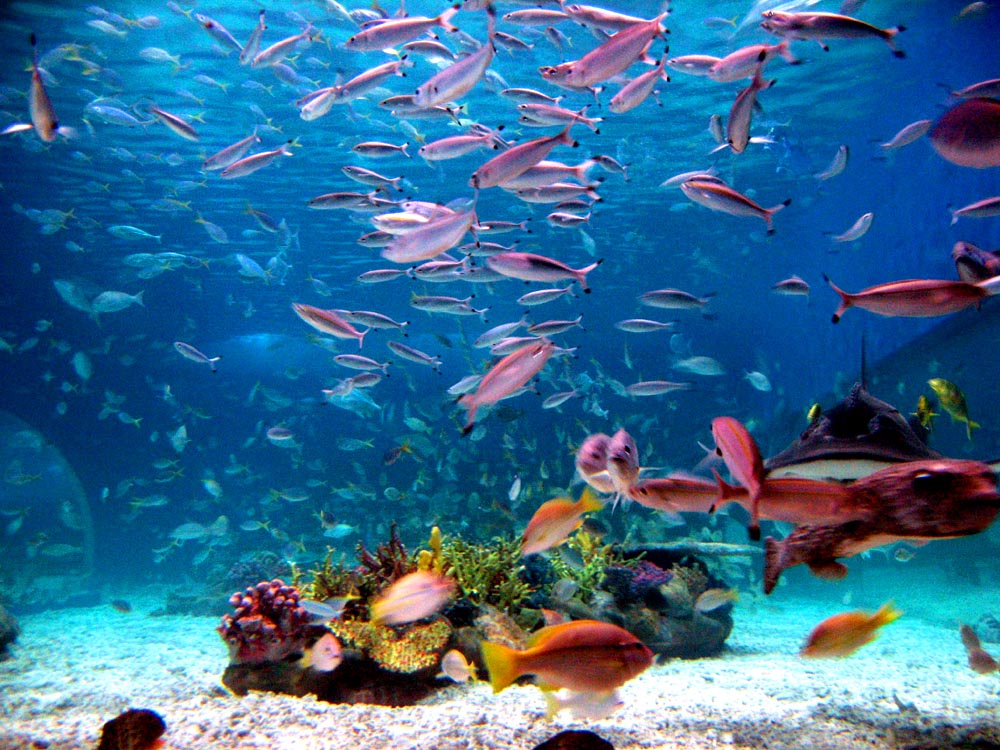
Ocean_park_wikiClaim 9: The oceans are becoming more acidic due to the increased CO2 and erosion of carbonate rocks by acidified rain, so that corals and other animals are being harmed or killed.

Truth: This is partially true, but not to the extent that is claimed. The oceans are naturally alkaline (non-acidic) and are buffered by minerals and by the activities of biological systems. (See below for explanations of pH and buffering.) The normal pH of the oceans is in the range of 8.1. Like the manmade global warming hypothesis and the progressive nitrogen limitation hypothesis, (see Claim 2b), the ocean acidification hypothesis is a model scenario based on theory, not real experimental data. The models in the IPCC reports project a maximum reduction in pH of 0.3 by 2100. They also claim that a reduction of pH will slow the growth rate of coral or worse. So, are the corals and shelled creatures in danger? Hardly.

These models use a purely geochemical approach and do not take into account the effect of living systems on pH. For example, photosynthesis is known to increase pH. Increased algae growth rate from increased CO2 can offset any drop in pH.  There is a temporary seasonal variation in pH from such processes that is greater than the projected pH changes from CO2[1]. Real experiments by bubbled CO2 through ocean water don’t result in the same pH changes projected by the models. In these experiments, no net negative effect on coral growth is seen even with actual acidification by adding hydrochloric acid. As a matter of fact, in these experiments a slight reduction in pH may have been beneficial.

As stated in Claim 2, item d, CO2 is less soluble in warmer water so temperature also affects pH. Warmer water means less CO2 is dissolved in it by giving off more CO2 to the atmosphere. A lower concentration of CO2 with warming should, if anything, raise the pH (less acid) not lower it (more acid). However, due to buffering, no net change in overall pH has been found other than temporary localized variations from other processes like photosynthesis and agricultural run-off.

CO2 becomes carbonic acid (HCO3 and H2CO3) in water. H2O + CO2 = H2CO3, a very weak acid, some of which splits to form HCO3 ions and H+. The free H+ is what erodes carbonate (CO3=) rocks. For example,  insoluble CaCO3 + H+ = Ca++ + HCO3 (both soluble).

 Understanding pH:

pH is a measure of the hydrogen ion (H+) concentration in a water solution. The more hydrogen ions there are the more acid the solution is.  However, pH is the negative log of hydrogen ion concentration, so that the higher the concentration, the lower the pH number. For example, a pH of 5 is a hydrogen ion concentration of 10-5. A pH of 8 is a hydrogen ion concentration of 10-8. With less hydrogen ions, the hydroxyl ions from water make the solution “basic” or alkaline. 10-5 = 0.00001 or 0.001 percent. 10-8 = 0.00000001 or 0.000001 percent. So pH 5 is 1000 times the hydrogen ion concentration of pH 8. Neutral water is pH 7 with equal amounts of hydrogen ions and hydroxyl ions.

Understanding buffering:

When water is buffered, it has at least two related molecules or ions in balance that resist changes in pH of the solution by changing their ionic state when acids or bases are added or when diluted. Any added hydrogen ions from a more acidic solution causes a change in the ratio of the two buffer species offsetting any tendency to change pH. Water exposed to the atmospheric carbon dioxide is never neutral pH 7. It is in the range of pH 5.4. Oceans are in the range of pH 8 so it is obvious that the oceans are “buffered” against changes in pH by rain that is naturally more acidic. Biological systems and a complex mixture of buffering molecules/ions contribute to the buffering of oceans and other bodies of water, so that pH remains relatively steady over long periods of time under various stresses from sources ranging from acid rain to volcanoes.

Example: CO2 combines with water to form one of three forms of carbonate/-ic depending on the direction the pH is being pushed. These reactions can go back and forth between species as needed to maintain a constant pH.

CO2 + H2O <=> H2CO3 <=>  H+ + HCO3_ < => CO3= + 2H+

carbonic acid      bicarbonate ion      carbonate ion

The CO2 to carbonate series is one of the most important buffer systems in the oceans and is supplemented by carbonate in its various forms from erosion of rock. This example is simplified for clarity by leaving out other ions that affect pH such as Calcium, Magnesium, sodium, chlorine and sulfite (Ca++, Mg++, Na+, Cl, SO3=). Chemicals produced by living organisms also affect buffering and overall pH.

[1] “Marine Photosynthesis and Oceanic pH,” Sherwood, Keith and Craig Idso, CO2 Science (online journal), Volume 10, Number 34: 22 August 2007 http://www.co2science.org/articles/V10/N34/EDIT.php Center for the Study of Carbon Dioxide and Global Change


AGW Claims vs Truth – Claim 8: The world is in danger of catastrophic consequences – sea level rise, polar ice and glaciers melting, growing deserts, worse storms, droughts and floods

Claim 8: The world is in danger of catastrophic consequences of global warming such as sea level rise, polar ice and glaciers melting, growing deserts, worse storms, droughts and floods.

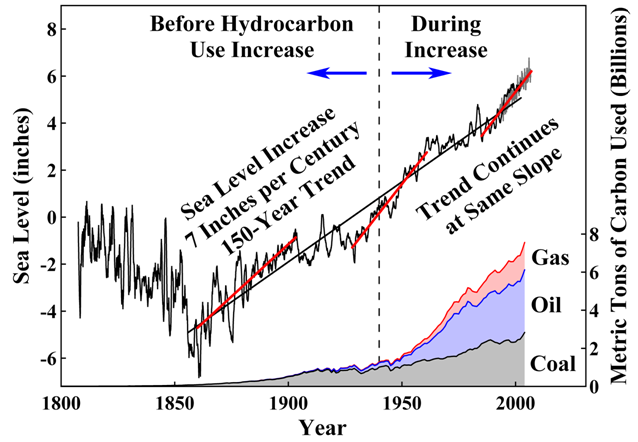
 Truth: a.) Sea levels have been rising along with warming since the Little Ice Age at an average rate of 7 inches per century due to glacier melting and expansion of seawater with warming. This rate has not changed significantly in recent times. To claim that sea levels have risen, the IPCC used a tide gauge in Hong Kong that showed tide levels rising, not because of sea level rising, but because the land is sinking (subsiding).  Those islands that were supposedly in danger of being swamped have had almost no net sea level rise in all the years since the early predictions. Globally, some land has been lost due to sea level rise and subsidence, but more land has been gained by other forces.

Sea Level Rise since the Little Ice Age

Source: “Environmental Effects of Increased Atmospheric Carbon Dioxide”[1]  Note that it is not correlated to fossil fuel consumption

b.) Polar ice caps have shrunk and grown in recent years but overall they have remained relatively unchanged since preindustrial times. The media hype is about a theory that the Larsen Ice Shelf (in the more northerly Western Antarctica peninsula) might break away from Antarctica, causing rapid sea level rise of 5 meters (16.4 ft.). Although a part broke away in 1995, most experts say rapid collapse will not happen and any collapse and sea level rise would occur over centuries[2]. Both sea ice and ice cover have grown even more in other, more southerly locations on the continent. This year northern polar sea ice was thicker than usual so that there was some concern that the polar bears might have a harder time finding seals to eat. By the way, polar bear populations have been increasing in recent years.

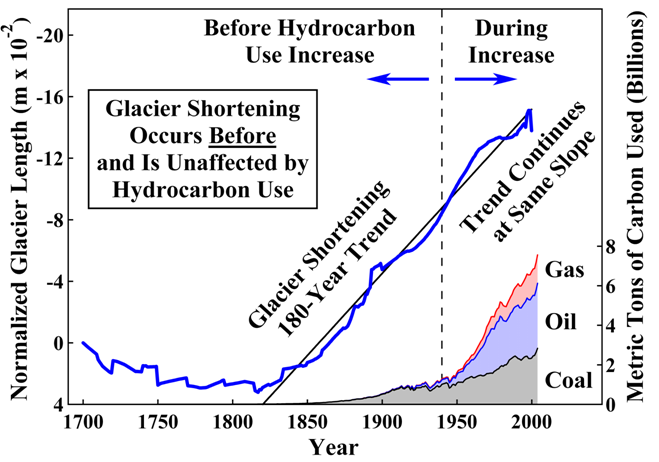
c.) Glaciers have been receding since the Little Ice Age at a relatively steady pace that, along with water expansion with warming, accounts for much of the sea level rise. Melting of floating sea ice doesn’t cause a rising sea level. It is already displacing its weight in saltwater. Ice expands as it freezes, so that melt water shrinks as it melts, resulting in the release of the same weight of water as was originally displaced. Only land-based glaciers will have any effect on sea level. While most glaciers are receding, there are some that are actually growing.

CO2 Increase since 1950 does not track Glacier Shortening

Source: “Environmental Effects of Increased Atmospheric Carbon Dioxide”[3]

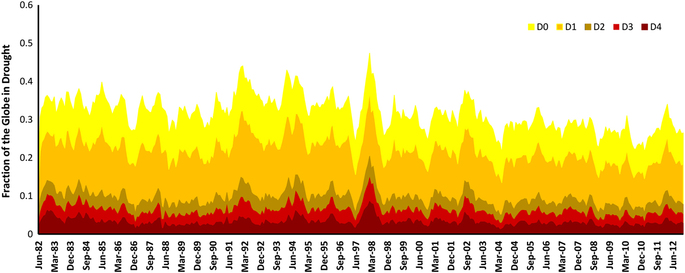
d.) Droughts have not increased in recent times. Some years are worse than others, but the overall picture has not changed.

Global drought monitoring - nature
Global drought monitoring

Global Drought: Fraction of the global land in D0 (abnormally dry), D1 (moderate), D2 (severe), D3 (extreme), and D4 (exceptional) drought condition (Data: Standardized Precipitation Index data derived from MERRA-Land)[4]

e.) Deserts are generally a result of geographic barriers and over grazing. Most of the Sahara Desert was once a grassy plain where livestock were grazed. It is a naturally dry area due to mountains to the west that block much of the moisture from the Atlantic Ocean. Overgrazing and loss of denuded top soil by winds had contributed to its expansion long before the industrial age. In most areas of the world, there has been no marked increase in the rate of desertification in recent times. Instead, deserts are greening as a result of higher CO2 levels that increase growth rates and make plants more tolerant of dry conditions by reducing the leaf pores. See previous post AGW Claims 2b The Benefits of Carbon Dioxide, answer c.

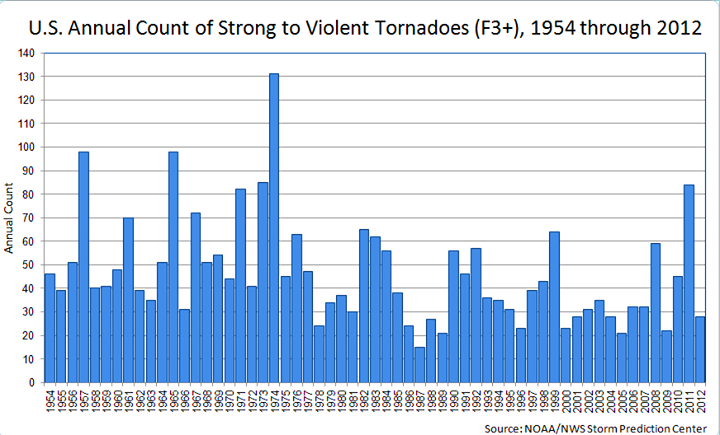
f.) Storms have not gotten worse. The dollar damages in some areas have increased due to increased urbanization, but not the severity of the storms themselves. The number of tornados has actually declined in the United States and their severity has not increased. The same is true of hurricanes and in recent years few have made landfall in the United States.

US Annual Severe Tornados

[1] Review Article: “Environmental effects of increased atmospheric carbon dioxide,” Willie Soon, Sallie L. Baliunas, Arthur B. Robinson, Zachary W. Robinson, Climate Res. 13, 149-164, (1999)

[2] Quote: “More realistically, ice-shelf deterioration is likely to be a rather slow process, and even for a major and sustained warming trend ice-sheet collapse would take several hundred years, with most of the associated rise in sea level occurring during the final century.” From Nature 277, 355 – 358 (01 February 1979); doi:10.1038/277355a0 “Effect of climatic warming on the West Antarctic ice sheet Robert H. Thomas1.), Timothy J. O. Sanderson2.) & Keith E. Rose3.) from 1.) Institute for Quaternary Studies, University of Maine at Orono, Orono, Maine 04469, 2.) British Antarctic Survey, Cambridge, UK, 3.)Scott Polar Research Institute, Cambridge, UK Present address: Department of Geophysics, Royal School of Mines, Imperial College, London SW7, UK http://www.nature.com/nature/journal/v277/n5695/abs/277355a0.html

[3] Reference: ”Extracting a Climate Signal from 169 Glacier Records,” J. Oerlemans, Institute for Marine and Atmospheric Research, Utrecht University, Princetonplein 5, 3584 CC Utrecht, Netherlands. Science 29 April 2005: Vol. 308, 675-677, doi: 10.1126/science.1107046.

[4] “Global integrated drought monitoring and prediction system,” Aengchao Hao, Amir AghaKouchak, Navid Nakhjiri, Alireza Farahmand, Nature, Scientific Data 1, Article number 140001 (2914), doi:10,1038/sdata.2014.1


AGW Claims vs. Truth – Claim 7. Temperatures have risen faster in recent years than ever before


082015_1920_1.png
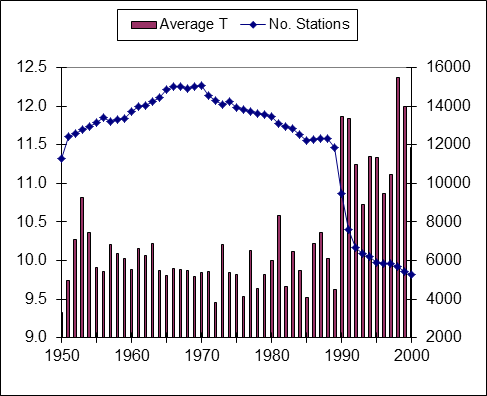
Average Global Temperatures vs Number of Reporting Stations

Truth: Remember that there is no such thing as a global temperature. It is the average of all of the reporting stations all over the world. For example, several years ago Ross McKitrick[1] using CRU data showed that the rapid rise in temperatures in the 1990s directly coincided with a decrease in the number of Siberian weather stations reporting due to the break-up of the Soviet Union.

Additionally, the “hottest year on record,” 1998, was an El Nino year so it was naturally hotter than the years just before and after. Another cause of rising average global temperatures is the urban heat island effect. Cities are hotter than rural areas.

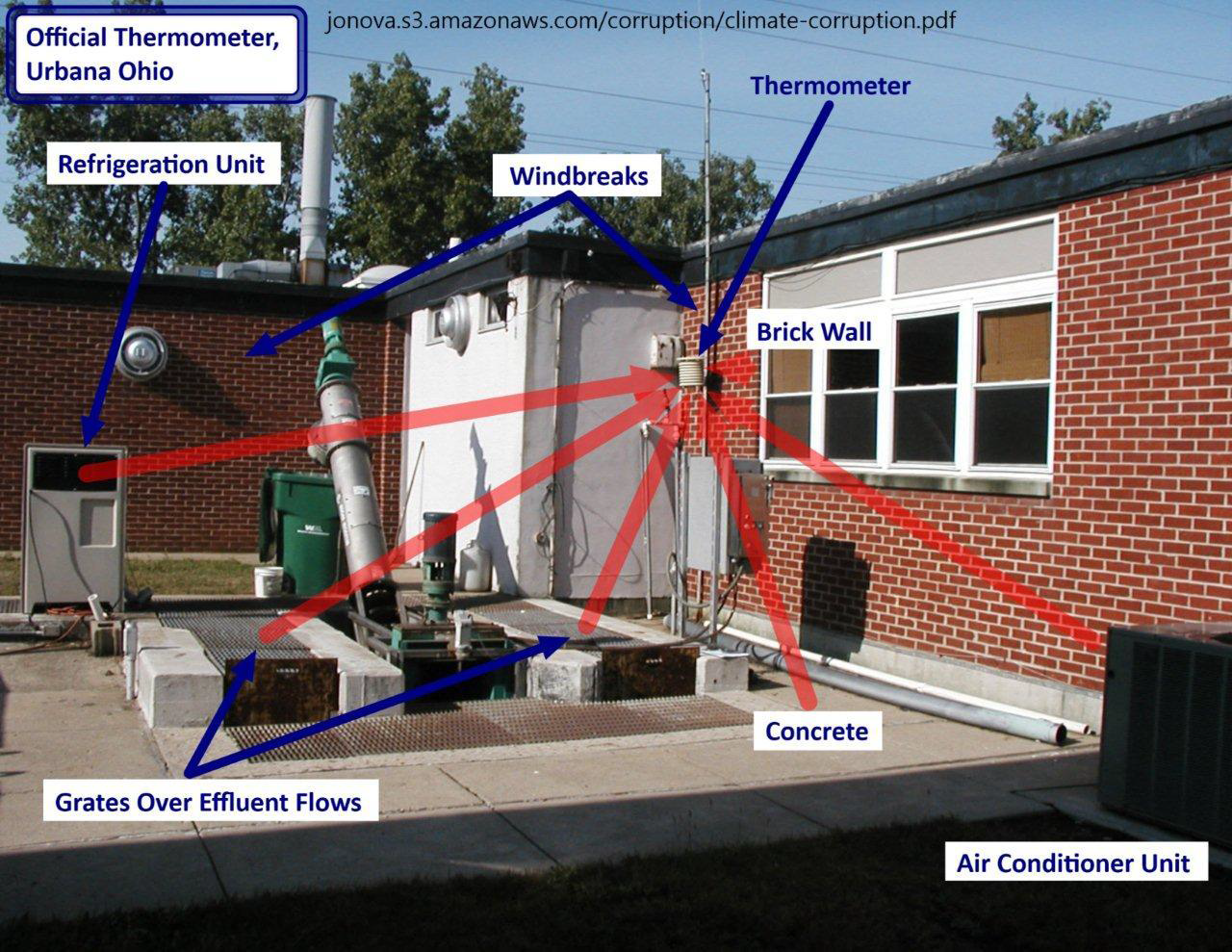
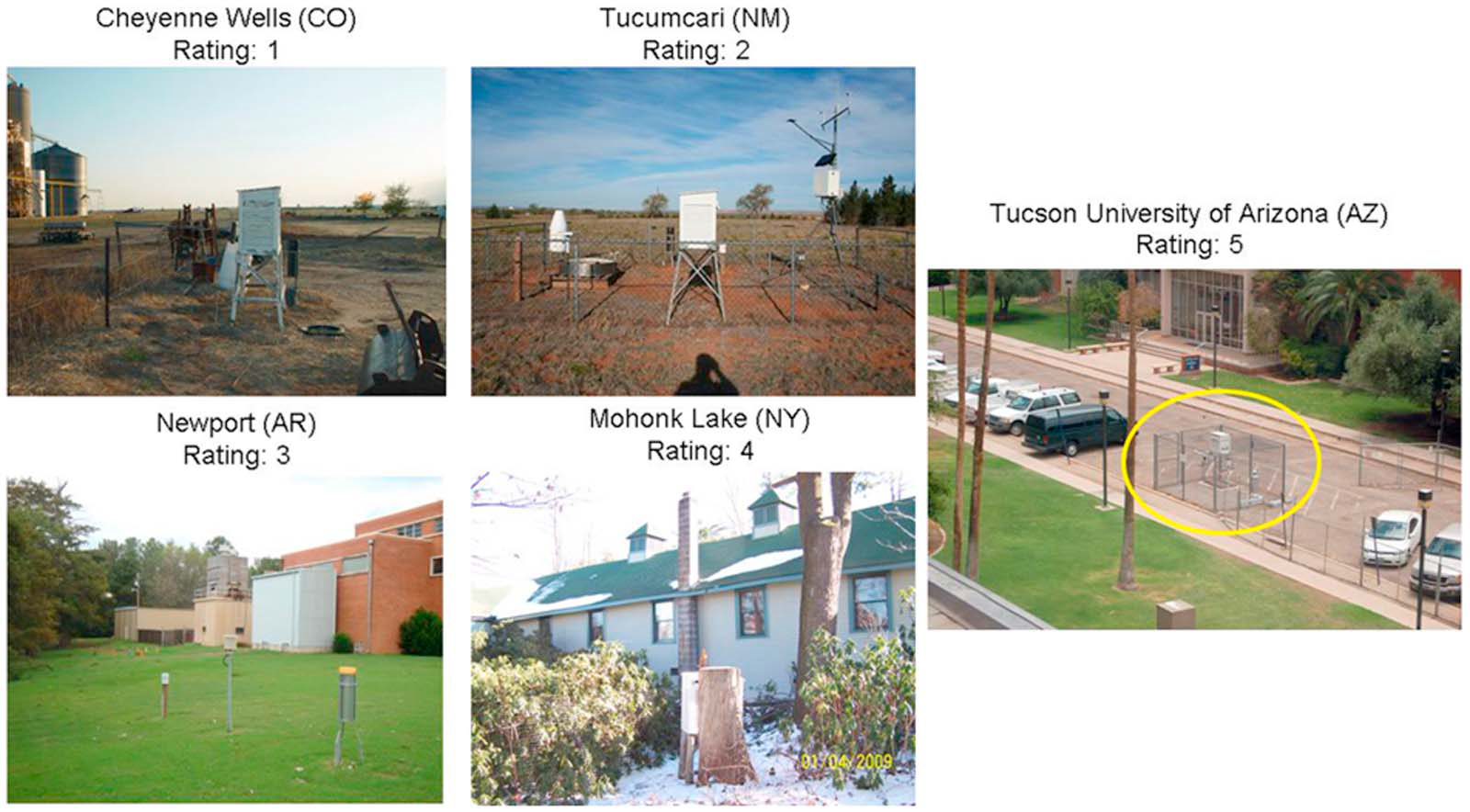
Many of the reporting stations that were once in undeveloped rural areas have experienced either suburban or urban development, or the stations have been moved to more urban settings. It is well documented that some have been, seemingly intentionally, relocated near or at heat sources such as paved parking lots and air conditioners.Urban Heat 1 One reason for relocation near buildings or other structures could be that new automatic-reporting equipment needs to be connected by cable. Rather than dig up parking lots or roads to install units in a grassy or protected area, many have opted to locate them where they can be directly connected without involving costly excavation, although such sites do not meet the stated requirements.

Urban Heat 5
Rating system for locating weather stations

Instead of excluding data from stations that are poorly situated, a convoluted mathematical algorithm (scheme) is used to “correct” it to presumed pre-industrial levels. In spite of all this, it appears that there has been no net warming since the late 1990s and even a slight cooling since 2005. One other problem with the new equipment is that it has a faster response time that records brief, transient signals such as car or plane exhausts that were not picked up by the older equipment. Because the equipment is designed to report maximum and minimum temperatures, this can create a false result.

Urban Heat 6
Urban Locations
Urban Heat 8
Plus Correction Algorithms
100_0070B
“equals” pristine natural setting


[1] Ross McKitrick, Professor of Economics and CBE Chair in Sustainable Commerce, University of Guelph, Guelph, Ontario, Canada http://www.rossmckitrick.com